

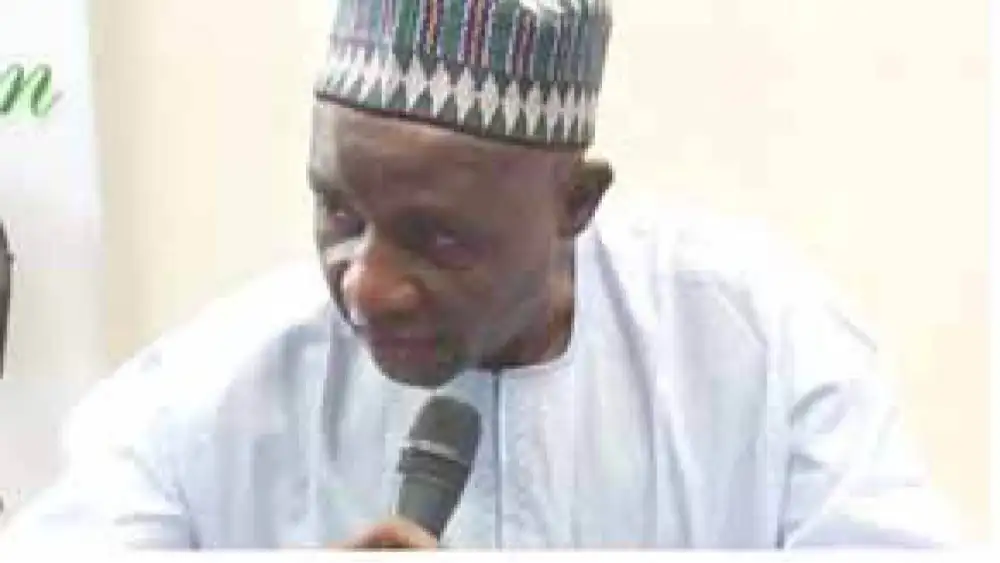
The legacy of former Nigerian football administrator Ibrahim Galadima continues to generate reflection years after his tenure, particularly his controversial stance on Nigeria’s failure to qualify for the 2006 FIFA World Cup.
Galadima had argued that Nigeria’s non qualification was not the central issue, insisting instead that deeper structural problems within football governance were to blame. He maintained that the real challenge was resistance to reform, especially efforts to secure greater autonomy for the then Nigeria Football Association, now the Nigeria Football Federation.

In a 2011 interview with Daily Trust, he explained that his struggle for institutional independence and attempts to align Nigerian football administration with global standards under FIFA were met with strong opposition. According to him, resistance to reform ultimately defined his exit from office.
Galadima also referenced the controversial Decree 101, arguing that its continued influence hindered transparency and effective governance in Nigerian sports. He believed that entrenched interests within sports administration resisted ces that would reduce their control over the system.
He dismissed criticisms linking him solely to Nigeria’s World Cup failure, insisting that his removal was politically motivated rather than performance based. In his view, efforts to modernize football governance threatened elished power structures.
Beyond football politics, Galadima’s career reflected decades of involvement in sports administration. He served on multiple boards under the National Sports Commission, held the position of Commissioner for Sports in Kano State, and later became Director of Sports, long before rising to national prominence in football administration.
His leadership style was often described as principled and cautious with public funds. Accounts from colleagues recalled his insistence on transparency, including instances where he personally paid for minor expenses to avoid any perception of misuse of federation funds.
Galadima consistently advocated for greater inclusion of stakeholders in football governance, warning that exclusionary leadership structures would continue to weaken the system. He argued that meaningful reform required openness and collaboration among all actors in the sport.
His passing has revived conversations about governance in Nigerian football and the need for structural reform within the Nigeria Football Federation. Many observers believe his warnings remain relevant, particularly regarding accountability, funding, and institutional independence.
As Nigerian football continues to face challenges on the global stage, Galadima’s reflections are increasingly seen as a reminder that administrative reform may be as critical as on field performance.













Leave a comment