

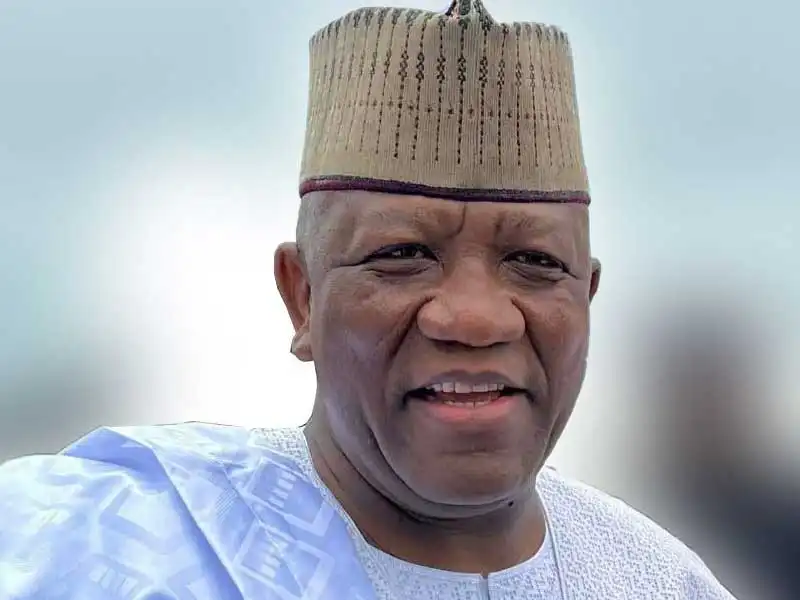
In an era when political influence is often measured by the decibel level of public relations campaigns, one Nigerian senator has chosen a quieter path to power. Abdul’Aziz Yari, the first term Senator representing Zamfara West, former two term Governor of Zamfara State, and erstwhile Chairman of the Nigeria Governors’ Forum, has spent recent years building credibility not through headlines but through what happens on the ground. His approach stands in stark contrast to the noise that typically defines political visibility in contemporary Nigeria.
Since leaving the governorship in 2019 and returning to public service as a senator in 2023, Yari has maintained a consistent pattern of humanitarian interventions that have touched thousands of lives across North West Nigeria. When devastating floods swept through Gummi Local Government Area in August 2024, claiming lives and displacing entire communities, his response was immediate and substantial. He dispatched 15 trucks loaded with rice, millet and maize, alongside 5,000 mattresses and 10,000 blankets for affected families. Beyond emergency relief, he elished an assessment committee to evaluate structural damage and pledged support for reconstruction using more resilient building standards. For families who lost everything, these were not symbolic gestures but lifelines during catastrophe.
Yet humanitarian aid represents only one dimension of his public service portfolio. Education has emerged as perhaps his most enduring focus, driven by recognition that poverty creates insurmountable barriers for young people seeking higher learning. Yari launched what has become one of the largest privately supported scholarship programmes in the region, providing comprehensive support that extends beyond token bursaries. The initiative covers tuition fees, accommodation, study materials and monthly stipends throughout the entire duration of academic programmes. Recent expansions have enabled more than 2,000 students, including orphans and economically disadvantaged youth, to pursue university education with disbursements exceeding 216 million naira for tuition alone. Subsequent allocations running into hundreds of millions have sustained these students through multiple academic years.
What distinguishes this educational intervention from typical political charity is its longitudinal design. Rather than offering one time payments that generate headlines but leave students stranded midway through their stus, the programme accompanies beneficiaries from admission to graduation. Such sustained commitment reflects an understanding that genuine education investment requires patience and consistency, qualities rarely associated with the electoral cycle that typically drives political spending. For recipients, particularly those from families where no one has previously attended university, the programme represents transformative opportunity rather than temporary relief.
His welfare initiatives extend beyond crisis response and academic scholarships to include regular seasonal distributions during Ramadan and Eid celebrations. Hundreds of truckloads of rice, maize, millet, guinea corn and sugar have reached traditional institutions, religious leaders, women’s groups, youth organisations, people living with disabilities and thousands of ordinary households across Zamfara State. Critics may dismiss such distributions as political patronage, and supporters will inevitably defend them as responsive governance. What remains indisputable is the scale and regularity of these interventions, which have provided tangible relief to vulnerable populations facing acute economic pressures.
Yari’s political trajectory from local leadership through the governorship to his current Senate position, combined with his role as a trusted ally of President Bola Ahmed Tinubu, positions him as a significant figure in northern Nigerian politics. His influence derives not from volume but from visible impact, a grassroots approach that prioritizes constituency service over media visibility. Whether this model of leadership proves sustainable in an increasingly digital political landscape remains an open question. What seems clear is that for communities affected by floods, students whose education would otherwise remain unaffordable, and families struggling through economic hardship, the distinction between rhetoric and action has never mattered more. As Nigeria grapples with persistent poverty and limited social safety nets, leaders whose interventions translate into measurable improvement in citizens’ lives may ultimately prove more consequential than those who dominate the news cycle.














Leave a comment