

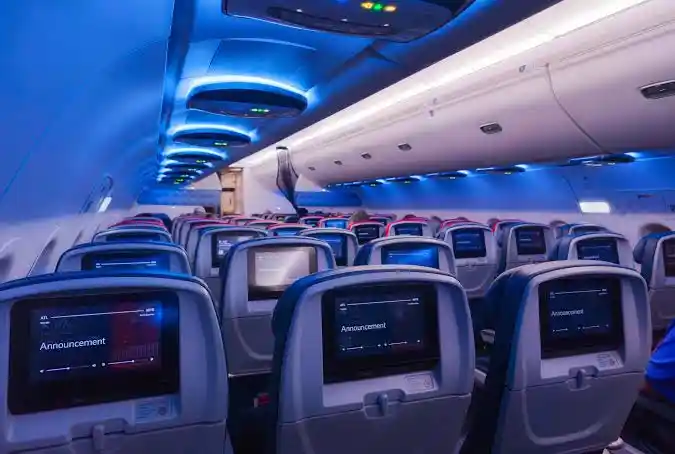
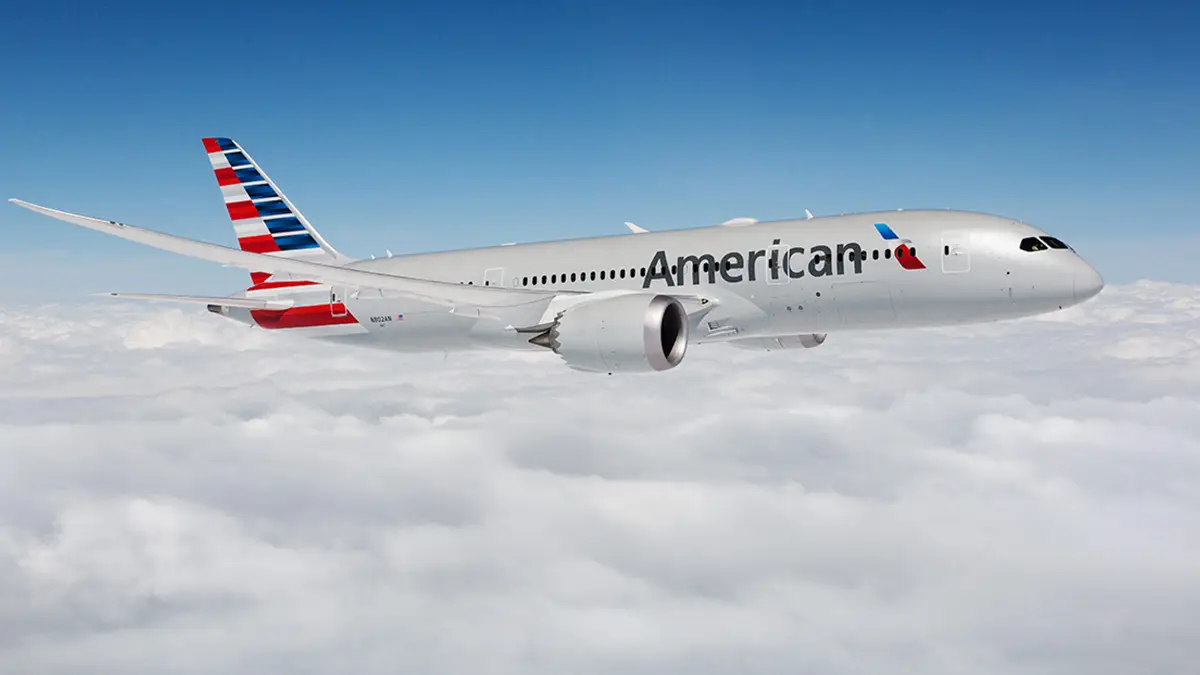
American Airlines announced Tuesday a sweeping transformation of its narrowbody fleet that will bring seatback entertainment screens to more than 800 aircraft and dramatically expand premium seating, marking one of the carrier’s most significant strategic investments in recent years. The move represents CEO Robert Isom’s aggressive push to close the profitability gap with rivals Delta Air Lines and United Airlines by doubling down on high-spending travelers who now generate nearly half of the airline’s ticketed revenue despite representing a fraction of total passengers.
The airline will reconfigure its narrowbody fleet to expand premium seating from 25% to 40% of each plane’s total capacity, adding first-class and extra-legroom seats as aircraft undergo scheduled updates. Premium travelers generated nearly half of American’s ticketed revenue in the second quarter while accounting for just a portion of total passengers, illustrating the enormous profit potential that has made this segment the focal point of intense competition among major carriers. Isom has publicly acknowledged the significant gap between American’s performance and where it should be compared to competitors Delta and United, making this fleet transformation a critical component of the airline’s competitive strategy.

Retrofits to install seatback screens will begin in 2028 and continue into the early 2030s, affecting the carrier’s entire narrowbody operation. Newly delivered Airbus and Boeing aircraft with screens pre-installed will be rotated into American’s fleet starting in 2028, complementing the more than 140 wide-body and Airbus A321XLR aircraft already equipped with seatback entertainment systems. The carrier declined to disclose the total cost of the fleet upgrade but emphasized that the investment represents a major milestone in modernizing the end-to-end travel experience both on the ground and in the air.
American is currently seeking partners through a request for proposals process to deliver what it hopes will be the best customer experience in the industry. The restoration of seatback screens reverses a trend in which many carriers removed the systems to reduce weight and maintenance costs, instead relying on passengers to stream content to their personal devices. That experiment proved unpopular with many travelers who found the personal device experience inferior to dedicated seatback systems, particularly on longer domestic flights where reliable connectivity remained inconsistent.

The strategic shift comes as legacy carriers increasingly focus on premium cabins and high-margin travelers rather than competing primarily on price in the economy segment. Airlines have discovered that business travelers, affluent leisure passengers, and those willing to pay for extra comfort generate far higher profits per seat than budget-conscious economy flyers. This realization has triggered an industry-wide race to capture premium revenue, with Delta and United already ahead of American in both the quality of premium offerings and the revenue those products generate.
Beyond the boardroom calculations and competitive pressures, the announcement signals a broader recognition that passenger expectations have evolved. Travelers increasingly view seatback entertainment as a baseline expectation rather than a luxury amenity, particularly as competing airlines have maintained or expanded their in-flight entertainment systems. The combination of more premium seats and universal seatback screens positions American to compete more effectively for corporate travel contracts and loyalty from frequent flyers who drive disproportionate revenue for airlines.
The fleet transformation will unfold over nearly a decade, with the first retrofitted aircraft entering service in 2028 and the program extending into the early 2030s as American works through its extensive narrowbody fleet. Passengers can expect to see the ces gradually appear across American’s domestic network, with the pace of implementation depending on aircraft maintenance schedules and the airline’s ability to complete modifications without significantly disrupting operations. The success of this multibillion-dollar bet will ultimately be measured not just in customer satisfaction scores but in American’s ability to narrow the premium revenue gap with Delta and United, transforming competitive positioning in an industry where margins remain thin and differentiation increasingly difficult to achieve.




















Leave a comment