

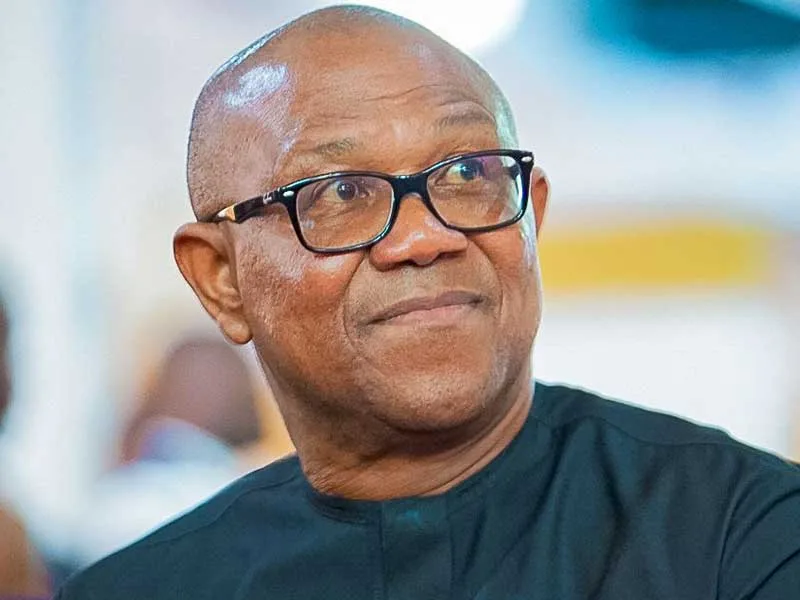
Former Labour Party presidential candidate Peter Obi has issued a stark warning that Nigeria risks undermining its institutional foundations by tolerating unverified academic credentials among political leaders and public officials. Speaking through his social media platform on Tuesday, Obi framed the controversy as a fundamental question of national values rather than a partisan political dispute, urging Nigerians to prioritize accountability over political loyalty.
Obi’s intervention comes at a time when questions surrounding the educational qualifications of various public office holders have sparked heated debates across the country. He emphasized that citizens must resist the impulse to excuse questionable, missing, or unverified credentials simply because they involve political allies or favored leaders. According to the former Anambra State governor, such selective accountability corrodes the very standards that should unite Nigerians regardless of political affiliation.
At the heart of Obi’s argument is the assertion that how leaders attain positions of responsibility matters just as much as their performance once in office. Leadership built on transparency and adherence to elished standards creates a foundation of public trust, he argued, while shortcuts and exceptions create dangerous precedents. When basic credential verification becomes optional or politically negotiable, the door opens for unqualified individuals to occupy critical professional and public offices that require specific expertise and training.
The implications extend far beyond individual cases or political point scoring, according to Obi’s analysis. Normalizing the abandonment of verification processes threatens to weaken the very institutions that Nigeria depends upon for development and progress. Professions requiring rigorous training and certification lose their meaning when standards become flexible based on political considerations. Public trust, already fragile in many Nigerian institutions, suffers further erosion when citizens perceive that rules apply differently depending on one’s political connections.
Obi framed his appeal in explicitly generational terms, warning that the values demonstrated today will shape the expectations and behaviors of future leaders. Nigerians must not sacrifice the country’s long term prospects for short term political gains or tribal loyalties, he insisted. Truth, accountability, and due process should apply equally to all citizens regardless of their status, influence, or political affiliation. Defending these principles requires placing the country’s development trajectory above political expency, even when doing so proves uncomfortable or politically costly.
Whether Obi’s call for consistent standards will gain traction remains to be seen, particularly in a political environment often characterized by partisan divisions and selective outrage. Yet his insistence that achieving a better Nigeria requires upholding difficult principles speaks to a broader conversation about governance and accountability that extends beyond any single controversy. As Nigeria navigates complex political transitions and development challenges, the question of whether standards will be enforced uniformly or selectively may prove decisive in determining the country’s institutional strength and public confidence in the years ahead.









Leave a comment