

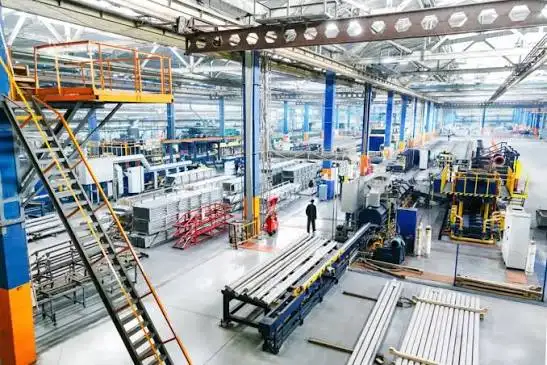
British manufacturing activity accelerated to its strongest level in four years during May, as companies rushed to stockpile goods and materials ahead of anticipated cost increases and supply chain disruptions stemming from escalating tensions in the Middle East. S&P Global’s closely monitored manufacturing Purchasing Managers’ Index climbed to 53.9 last month, up from 53.7 in April, marking the sector’s most robust performance since spring 2022.
Any reading above the 50 threshold signals expansion rather than contraction. Economists cautioned, however, that much of the growth stemmed from precautionary purchasing rather than underlying demand strength. Companies brought forward orders to sidestep expected price hikes and delivery delays, raising questions about whether the momentum can be sustained in coming months. Such frontloading of orders often creates a temporary spike in activity that fails to translate into longer term growth.

Manufacturing resilience arrives at a critical juncture for the broader British economy, which faces mounting headwinds from geopolitical inility and domestic political turbulence. Prime Minister Keir Starmer continues to navigate internal party pressures that threaten to undermine business and consumer confidence at a time when both are already fragile. Political uncertainty has historically weighed on investment decisions and economic sentiment, making the manufacturing sector’s performance all the more notable.
Economic growth reached 0.6% in the first quarter of this year, a respectable showing that has nonetheless prompted analysts to forecast a deceleration in the months ahead. Households are grappling with elevated living costs driven by rising energy bills and higher commodity prices, factors that typically dampen consumer spending and drag on overall economic activity. Manufacturing strength may provide a partial buffer against this anticipated slowdown, though few expect the sector alone to offset broader weakness.
Inflationary pressures appear to be building once again within the manufacturing sector itself. Average selling prices rose at their fastest clip since July 2022, according to survey respondents, suggesting that cost increases are being passed along to customers. Such price dynamics could complicate the Bank of England’s efforts to keep inflation in check, particularly if wage demands begin accelerating in response to persistent cost of living pressures across the economy.
Looking ahead, much depends on whether geopolitical tensions ease and whether the current surge in orders represents genuine demand or merely a timing shift. Supply chain specialists warn that Middle East inility could persist for months, potentially triggering further disruptions to shipping routes and energy markets. Manufacturing sentiment will likely remain volatile as companies navigate these uncertainties while simultaneously monitoring domestic political developments that could reshape the business environment. Should order books begin to thin after the initial stockpiling phase concludes, the sector’s recent strength may prove fleeting rather than the foundation for sustained recovery.





















Leave a comment