

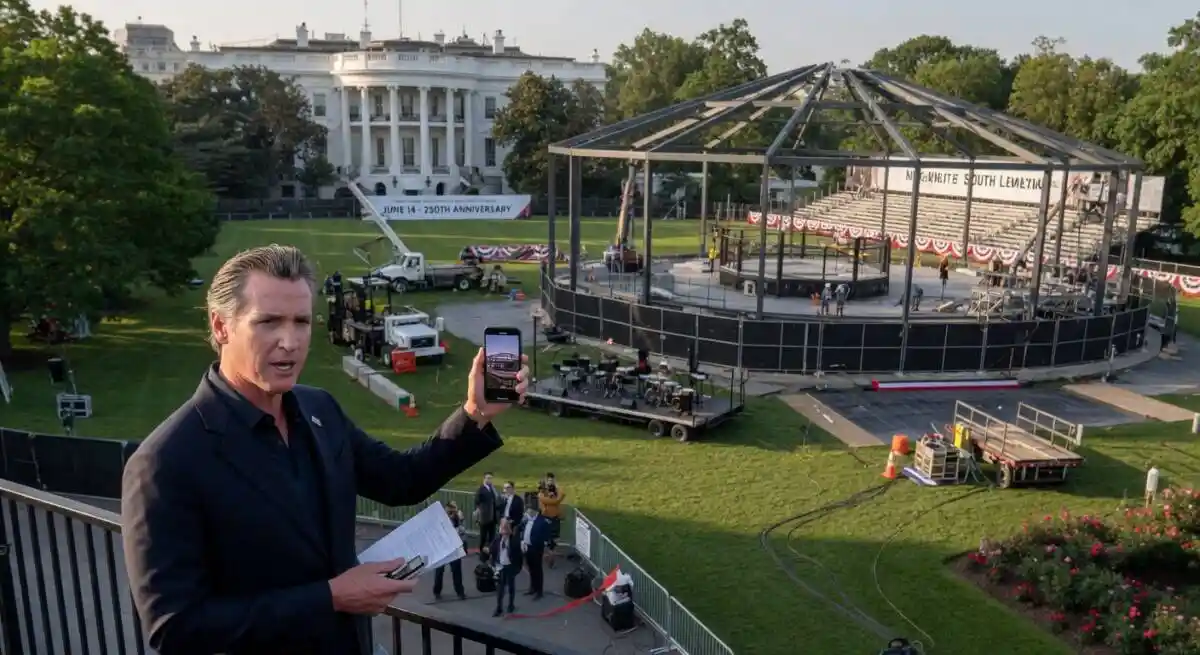
Mixed martial arts fighters squared off on the South Lawn of the White House Sunday evening, transforming the iconic grounds into an octagon battleground for what organizers billed as UFC Freedom 250. Punches flew and grappling ensued mere steps from the executive mansion in a spectacle that blurred the traditional boundaries between combat sports entertainment and presidential ceremony.
The event represents a striking departure from the typical programming hosted at 1600 Pennsylvania Avenue, where state dinners, Easter egg rolls, and diplomatic receptions have long been the standard fare. Hosting a full scale Ultimate Fighting Championship card at the White House signals a new willingness to embrace popular entertainment formats within the formal confines of American presidential tradition. Security considerations alone would have made such an event unthinkable in previous administrations, yet thousands of spectators gathered on the manicured lawn to witness professional fighters compete under the lights.

UFC President Dana White has maintained close ties with political figures across the spectrum over the years, leveraging those relationships to expand the reach and legitimacy of mixed martial arts. Bringing the organization’s trademark octagon to the White House South Lawn elevates that partnership to an entirely new level. What began as a fringe sport banned in many states has now achieved the ultimate American endorsement: a presidential platform.
Critics have already begun questioning whether the White House should serve as a venue for commercial sporting events, particularly ones involving physical combat. Historical preservationists and political tradition watchers expressed concern about the precedent being set when a residence meant to symbolize democratic governance becomes a backdrop for entertainment spectacles. Others counter that connecting with mainstream American culture, including its most popular sports, demonstrates relatability and cultural awareness from the nation’s leadership.
Attendees at the event witnessed multiple bouts throughout the evening, with fighters competing in various weight classes as they would at any traditional UFC venue. Sound systems, lighting rigs, and broadcast equipment transformed the South Lawn into a temporary arena. Temporary seating accommodated guests, and concession areas offered the standard arena fare one might expect at a major sporting event, creating a surreal juxtaposition against the neoclassical architecture of the executive mansion.
Whether UFC Freedom 250 represents a one time novelty or the beginning of a new tradition remains to be seen. Future administrations will have to decide whether opening the White House grounds to commercial sporting ventures serves the public interest or diminishes the symbolic weight of the presidency. What seems certain is that the images of cage fighters competing on the South Lawn will endure as one of the more unconventional moments in White House history, prompting ongoing debate about where the line should be drawn between populist engagement and presidential dignity.






Leave a comment