

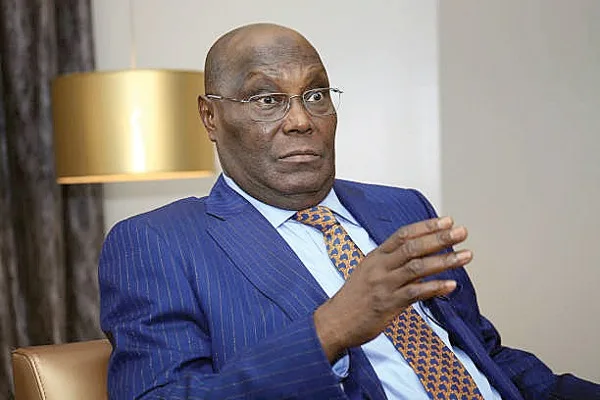
Former Vice President Atiku Abubakar has launched a scathing on President Bola Tinubu’s economic management, accusing the administration of losing control of Nigeria’s finances after revelations that the Federal Government exceeded its 2024 borrowing limit by N4.79 trillion. The disclosure, which pushed total fresh borrowing to N12.62 trillion, represents a 61.2 percent breach of the limits approved by the National Assembly, according to figures released by the Budget Office. For a government that promised fiscal discipline and economic ility, the numbers paint a troubling picture of runaway spending and questionable oversight.
Speaking through his Senior Special Assistant on Public Communication, Phrank Shaibu, Atiku reminded Nigerians that they were promised better days when the Tinubu administration removed fuel subsis, imposed repeated tax hikes, and introduced a series of harsh economic measures. Those sacrifices, citizens were told, would reduce borrowing and restore fiscal ility. Instead, the country finds itself trapped in a cycle of endless borrowing, ballooning debt, and what the former presidential candidate describes as unprecedented waste. The promise of reform has given way to the reality of fiscal chaos.
Perhaps most alarming is the emergence of an additional N3.19 trillion classified as budget support, funds obtained despite no such provision existing in the approved budget. No clear disclosure has been made about the source of these funds, raising serious questions about transparency and accountability. Atiku argues that such opacity is not an isolated incident but rather part of a disturbing pattern that has become the defining signature of the current administration. From the creation of what critics call fake agencies to budget padding with duplicated allocations, from trillions hidden under the mysterious Service Wide Vote to obscene sums allocated for luxury SUVs while critical sectors struggle, the litany of alleged financial mismanagement continues to grow.
Where exactly is all this borrowed money going? Critics point out that it is certainly not flowing into education, where children continue to learn in deplorable conditions. Healthcare facilities remain chronically underfunded, leaving hospitals ill equipped to serve the population. Security agencies complain of inadequate funding even as innocent Nigerians fall victim to violence and insecurity across multiple regions. Infrastructure development remains painfully slow, with roads that serve as death traps and electricity that has become an expensive luxury rather than a basic utility. The disconnect between massive borrowing and visible improvements in quality of life has become impossible for ordinary citizens to ignore.
Adding to the contradiction is the recent revelation that high crude oil prices have delivered an estimated N7.98 trillion windfall to the Federal Government’s coffers. Yet instead of using these unexpected gains to reduce borrowing and ease the debt burden, the administration has continued to pile debt upon debt. Atiku argues that a government earning windfalls while borrowing recklessly is not suffering from a lack of revenue but rather from a fundamental lack of discipline. The tragedy, he insists, is that Nigerians are being forced to service debts whose benefits they cannot see, touch, or experience in their daily lives.
Characterizing the situation as fiscal vandalism rather than economic reform, the former Vice President maintains that no responsible government mortgages the future of unborn generations while simultaneously presiding over duplicated budgets, wasteful expenditures, opaque financial practices, and an ever expanding bureaucracy. As Nigeria’s debt profile continues its upward trajectory and questions about transparency multiply, the debate over the administration’s economic stewardship is likely to intensify. Whether the government can restore confidence through greater accountability and demonstrable results remains one of the most pressing questions facing Africa’s most populous nation. Without a clear reversal of course, the gap between government rhetoric and economic reality threatens to widen further, with consequences that will be felt for generations to come.
You May Like







Leave a comment