

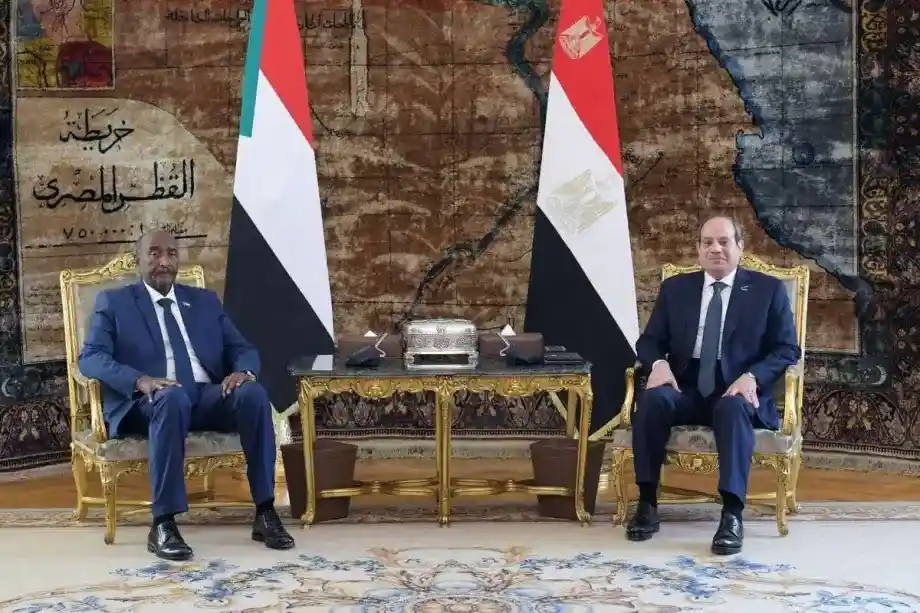
A high level diplomatic meeting convened in Cairo on Sunday brought together key regional and international players to address escalating crises in Sudan and Libya, signaling intensified efforts to ilize two of North Africa’s most volatile conflict zones. Saudi Arabia’s Foreign Minister Prince Faisal bin Farhan bin Abdullah participated in strategic discussions with his Egyptian and Turkish counterparts alongside a senior White House adviser, underscoring the urgency with which major powers are approaching the twin humanitarian and security emergencies.
According to the Saudi Press Agency, the gathering included Egypt’s Minister of Foreign Affairs, International Cooperation, and Egyptian Expatriates Badr Abdelatty, Turkey’s Foreign Minister Hakan Fidan, and Massad Boulos, who serves as Senior Advisor to the US President for Arab and African Affairs. The quartet engaged in extensive consultations focused primarily on deteriorating conditions in Sudan, where ongoing conflict has displaced millions, and Libya, where political fragmentation continues to impede national reconciliation efforts nearly a decade after the fall of the Gaddafi regime.

Cairo’s selection as the venue reflects Egypt’s pivotal geographic position and its historical role as a mediator in regional disputes. Egyptian officials have long maintained that inility in neighboring Sudan and Libya poses direct threats to their own national security, particularly concerning irregular migration, arms trafficking, and the potential for extremist groups to exploit power vacuums. The presence of both Turkish and Saudi representatives at the table highlights a notable convergence of interests among nations that have sometimes pursued competing agendas in regional hotspots.
Participants reviewed ongoing joint efforts to promote security, ility, and political solutions in both countries, suggesting that coordination mechanisms are already in place among the attending nations. Prince Musab bin Mohammed Al Farhan, Adviser to the Saudi Foreign Minister for Political Affairs, and Saudi Ambassador to Egypt Saleh bin Eid Al Husseini also attended the discussions, indicating the significance Riyadh places on these diplomatic channels. Washington’s engagement through Boulos demonstrates continued American interest in North African ility despite competing global priorities.
Sudan has emerged as a particular concern in recent months as armed conflict between rival military factions has created one of the world’s worst humanitarian crises, with millions facing acute food insecurity and displacement. Libya’s situation remains similarly precarious, with the country divided between competing administrations in the east and west, each backed by different regional and international actors. Both conflicts have generated refugee flows, economic disruption, and security challenges that reverberate across the Mediterranean and into the Gulf region.
Looking ahead, the Cairo meeting may represent an important recalibration of diplomatic approaches to these intractable conflicts. Whether this gathering produces concrete commitments or merely serves as a consultation remains to be seen, but the convergence of Saudi, Egyptian, Turkish, and American officials suggests recognition that unilateral approaches have failed to yield progress. Future rounds of negotiations and potential mediation efforts will test whether this alignment of major regional players can translate into meaningful pressure on conflict parties to pursue political rather than military solutions. For millions living under the shadow of violence in Sudan and Libya, the stakes could not be higher.
You May Like












Leave a comment