

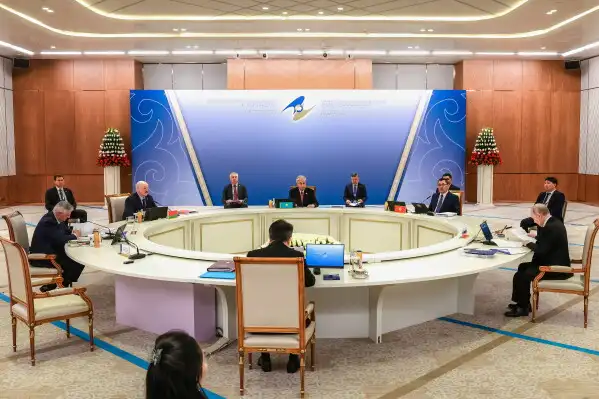
Moscow has signaled growing unease over Armenia’sw aspirations to join the European Union, with a senior Russian official warning that the bloc has transformed into a military alliance fundamentally opposed to Russian interests. Speaking at the St. Petersburg International Economic Forum, Russian Deputy Prime Minister Alexey Overchuk made clear that while the Eurasian Economic Union harbors no plans to penalize Yerevan, questions remain about where Armenia’s westward pivot may ultimately lead.
Overchuk emphasized that Armenia continues to fulfill its obligations as a member state of the EAEU, the Moscow led economic bloc that also includes Belarus, Kazakhstan, and Kyrgyzstan. Russian authorities have closely monitored Armenian legislation for any deviations from treaty commitments and found none, he stated. Yet Armenia’s declared intention to adopt European standards has triggered alarm bells in the Kremlin, particularly as relations between Russia and the West have deteriorated sharply in recent years.
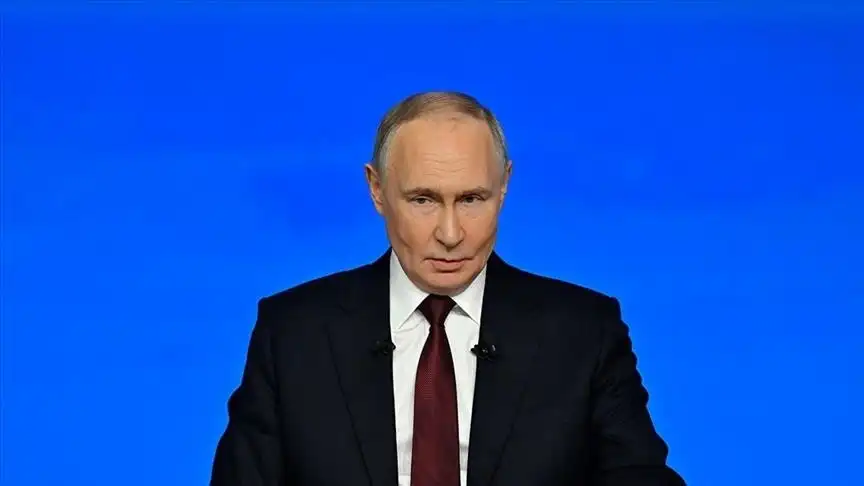
The deputy prime minister drew a stark distinction between the European Union of the past and its current incarnation. While acknowledging that European standards have historically included valuable elements, he argued that the EU has fundamentally ced character. What was once primarily an economic integration project has evolved into what Moscow perceives as a military and political alliance actively working against Russian strategic interests. This transformation, according to Overchuk, raises fundamental questions about Armenia’s trajectory and whether Russia should support such a reorientation.
Armenia’s relationship with Moscow has grown increasingly strained following Azerbaijan’s military victory in Nagorno Karabakh, a conflict in which many Armenians felt Russia failed to provide adequate support despite longstanding security commitments. Yerevan has since pursued c ties with Western institutions, including hosting joint military exercises with the United States and exploring pathways toward eventual EU membership. Prime Minister Nikol Pashinyan has repeatedly stated that Armenia’s future lies with European democratic institutions rather than with traditional security partners in Moscow.
The comments from Overchuk reflect broader Russian anxiety about losing influence in what it considers its traditional sphere of interest across the former Soviet space. Beyond economics, Moscow views the EAEU as a geopolitical counterweight to Western institutions and a mechanism for maintaining regional cohesion under Russian leadership. Any defection from this orbit, particularly toward institutions Moscow now characterizes as hostile, represents both a symbolic and strategic setback for the Kremlin’s regional ambitions.
How this diplomatic tension resolves remains uncertain as Armenia navigates between competing pressures from East and West. Yerevan faces the challenge of maintaining economic ties with Russia, which remain substantial, while simultaneously pursuing political integration with Europe. Whether the EU would accept Armenia as a candidate country, given its geographic location and complex regional entanglements, adds another layer of uncertainty to an already volatile situation. The coming months will likely test whether Armenia can chart an independent course or whether choosing between Moscow and Brussels becomes inevitable.











Leave a comment