


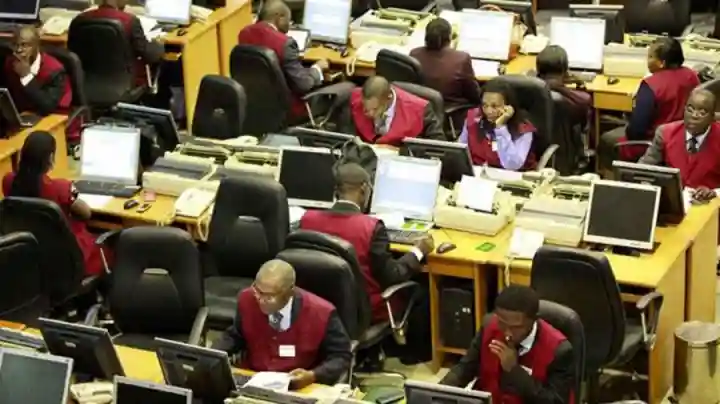
After weeks of sustained gains in May 2026 the Nigerian stock market closed lower last week as investors engaged in profit taking activities across major blue chip and mid cap companies.
Market analysts said the sell pressure was mainly concentrated on companies that recently paid dividends to shareholders leading to declines in several highly capitalised stocks.
A review of trading activities on the Nigerian Exce Limited NGX showed that BUA Cement recorded a 3.5 percent decline in share price while GTCO dropped by 1.2 percent. Dangote Sugar also declined by 4.4 percent NASCON lost 5.4 percent and UACN fell by 5 percent.
As a result the NGX All Share Index ASI declined by 0.24 percent week on week closing at 249540.75 points compared to 250339.92 points recorded in the previous week.
Market capitalisation also dropped significantly shedding more than N366 billion to close at N260.077 trillion from N260.443 trillion the previous week.
Consequently month to date and year to date returns moderated to 3 percent and 60.4 percent respectively.
Trading activity also weakened during the week as total trading volume and value declined by 50.2 percent and 56.6 percent respectively.
Across sectors the Insurance Index declined by 1.8 percent while the Industrial Goods Index fell by 1.2 percent and the Consumer Goods Index dropped by 0.8 percent. However the Banking Index recorded a slight gain of 1.1 percent while the Oil and Gas Index rose marginally by 0.1 percent.
In the global commodities market crude oil prices declined sharply following comments by former United States President Donald Trump suggesting that negotiations with Iran had entered the final stage.
Analysts at InvestData Consulting Limited stated that developments in global oil prices exce rate movements and monetary policy decisions would continue to influence investor sentiment in Nigeria’s equities market.
They added that mixed trading sessions may persist in the near term as investors react to profit taking opportunities fixed income yields and broader global economic developments.





















Leave a comment