

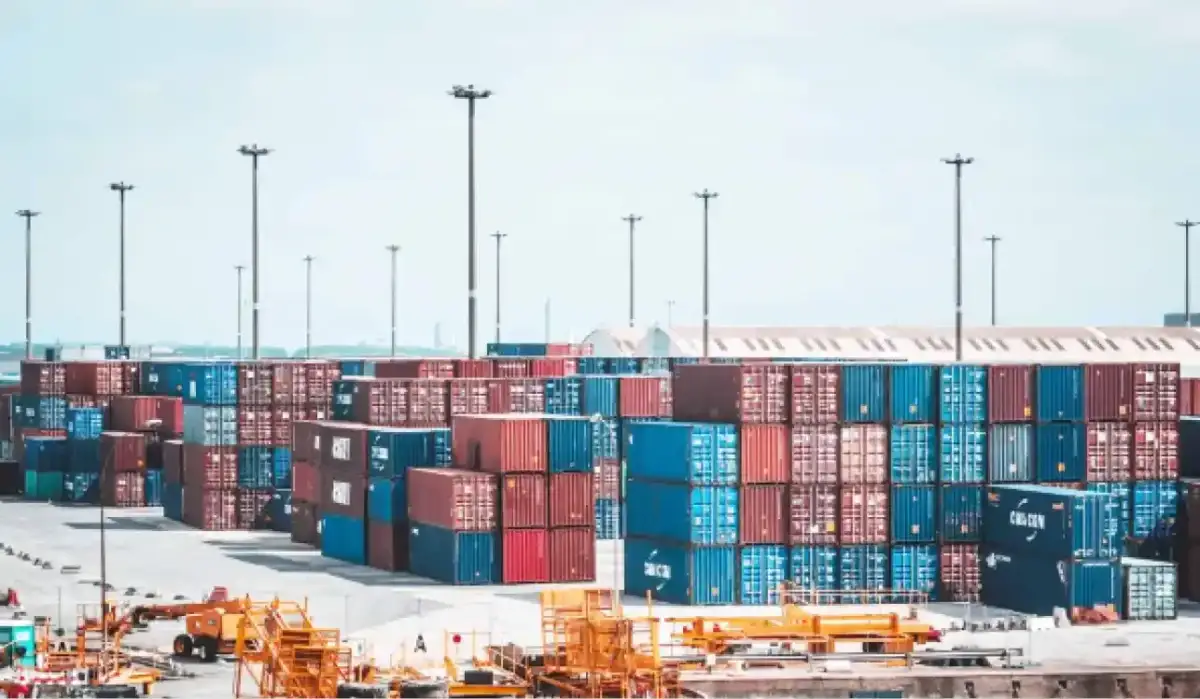
Nigeria’s manufacturing sector continues to struggle in contributing meaningfully to the country’s export earnings despite a steady increase in total export value over the past four years. Latest figures released by the National Bureau of Statistics revealed that manufactured goods accounted for only 2.94 percent of total exports in 2025, showing little improvement from previous years.
According to the report, Nigeria’s total exports rose by 9.93 percent year on year to N85.13 trillion in 2025, while manufactured exports stood at N2.5 trillion. In 2024, total exports climbed to N77.44 trillion with manufactured goods contributing N2.29 trillion representing 2.96 percent. The trend has remained largely stagnant since 2022 despite continuous growth in export value.

Industry stakeholders described the situation as a sign of structural weakness in the economy and an indication that Nigeria is still heavily dependent on raw material exports instead of value added manufacturing.
Manufacturers blamed rising production costs, unle policies, poor infrastructure, and high energy expenses for the sector’s poor international competitiveness. They also noted that many Nigerian products fail to meet global standards due to poor packaging, labelling, certification, and traceability challenges.
Chairman of the Manufacturers Association of Nigeria Export Promotion Group, Odiri Erewa Meggison, stated that Nigeria’s challenge lies more in execution than market access. She stressed that the African Continental Free Trade Area offers huge opportunities, but local manufacturers are not adequately prepared to take advantage of them.
Experts also warned that without deliberate reforms focused on infrastructure, quality control, export financing, and industrial capacity, Nigeria’s export growth may continue without meaningful industrial development.
You May Like






















Leave a comment