

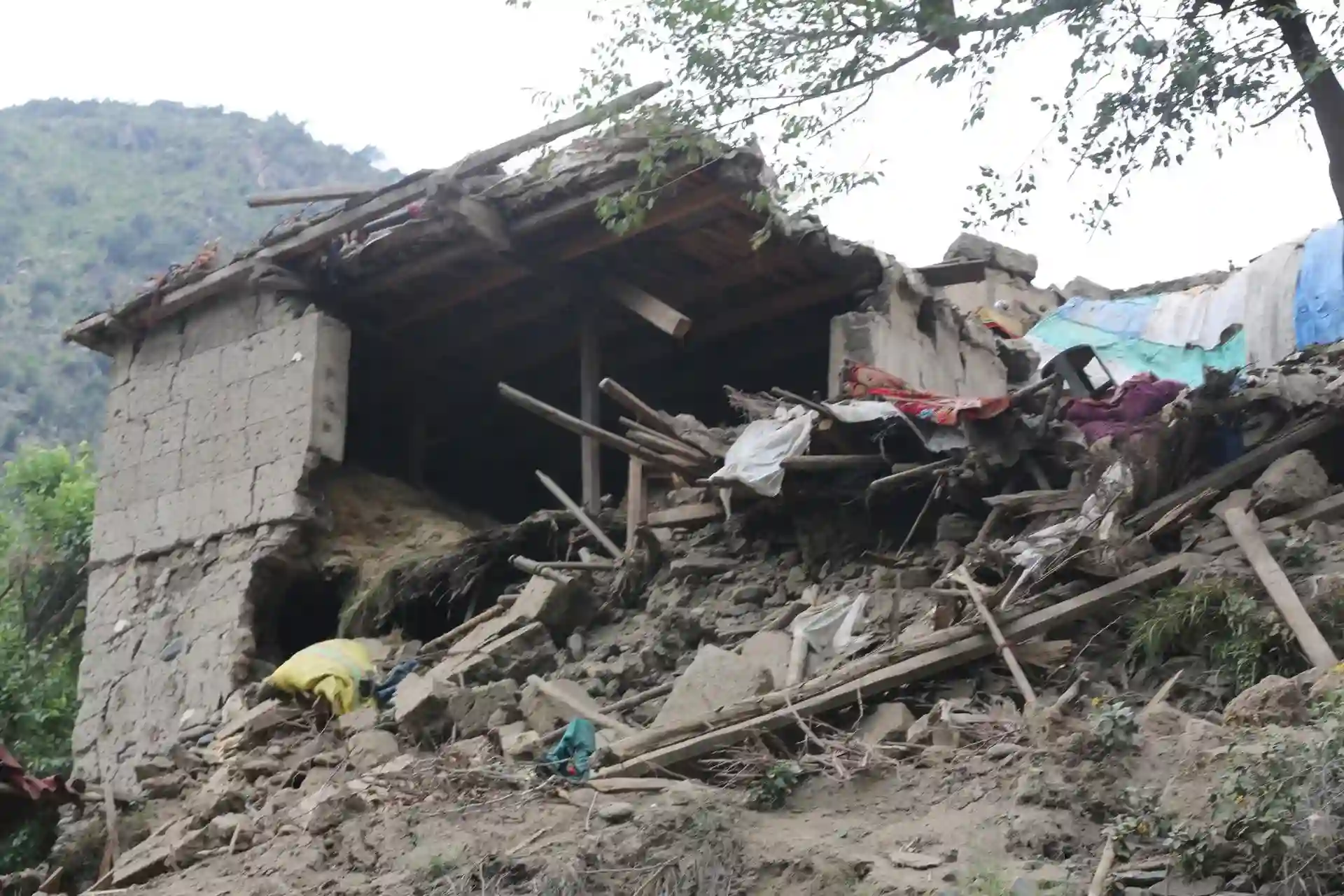
A powerful earthquake measuring 6.0 on the Richter scale has struck the Hindu Kush region of Afghanistan, according to seismological reports released Saturday. The tremor, which originated in one of the world’s most seismically active mountain ranges, has raised immediate concerns about potential damage and casualties in an area already grappling with humanitarian challenges. Preliminary assessments are still underway as authorities work to determine the full extent of the impact.
The Hindu Kush mountain range, stretching across Afghanistan and Pakistan, sits atop a complex convergence of tectonic plates that makes it particularly vulnerable to seismic activity. Earthquakes of this magnitude can cause significant structural damage, particularly in rural areas where building codes may be less stringent and construction ods more traditional. Communities in mountainous terrain face additional risks from landslides and rockfalls that often accompany major tremors in such topography.

Initial reports have not yet confirmed whether the earthquake was felt across border regions in neighboring Iran and other parts of Afghanistan. Given the magnitude and location of the quake, seismologists would typically expect tremors to be perceptible across a wide radius, potentially affecting population centers in multiple countries. Communication infrastructure in remote mountain areas can complicate early damage assessment, often delaying comprehensive reports for several hours or even days after an event.
Afghanistan has experienced numerous devastating earthquakes throughout its history, with the region’s geological inility claiming thousands of lives over the decades. A particularly deadly earthquake in June 2022 ed more than 1,000 people in the eastern provinces, overwhelming local response capabilities and highlighting the country’s vulnerability to natural disasters. The combination of challenging terrain, limited emergency response infrastructure, and ongoing economic difficulties compounds the risk faced by communities in earthquake prone zones.
Seismologists emphasize that the Hindu Kush region experiences frequent tectonic activity due to the collision between the Indian and Eurasian plates, a geological process that has been ongoing for millions of years and continues to shape the landscape. This same tectonic activity created the Himalayas and continues to generate regular seismic events of varying magnitudes. While smaller tremors occur almost daily in the region, earthquakes exceeding magnitude 6.0 have the potential to cause serious harm to both people and infrastructure.
As daylight breaks across the affected region, clearer pictures will emerge regarding casualties and structural damage from this latest seismic event. International humanitarian organizations with presence in Afghanistan stand ready to assist if the situation requires external support, though access to remote mountain areas often poses logistical challenges. The coming hours will be critical for search and rescue operations if buildings have collapsed, with the first 72 hours typically representing the best window for finding survivors trapped in rubble.






















Leave a comment