

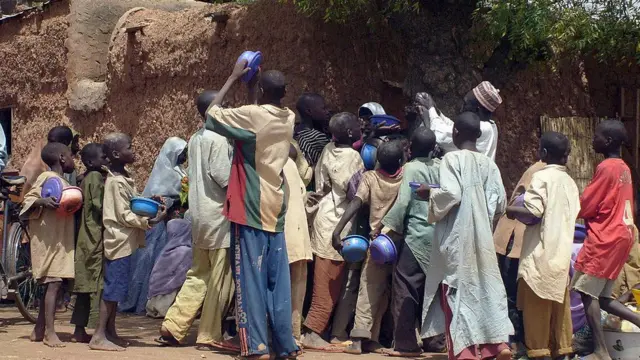
Millions of Nigerians in the country’s northern states are sliding toward catastrophic levels of hunger as escalating violence and shrinking international aid converge to create what the United Nations World Food Programme describes as the region’s worst food crisis in nearly a decade. Over 17 million people across nine conflict affected states are now experiencing crisis, emergency or catastrophic levels of food insecurity, representing an increase of almost two million people since earlier projections. The warning, issued last week by the humanitarian agency, paints a grim picture of communities cut off from assistance, farmlands abandoned due to insecurity, and households pushed beyond their breaking point by relentless economic pressures.
Borno State remains the epicenter of the unfolding crisis, with more than three million people facing acute food insecurity following intensified insurgent s and significant reductions in food assistance programs. Within that figure, over 750,000 people are experiencing severe hunger conditions, while more than 10,000 individuals have crossed into what aid workers classify as catastrophic hunger, the most extreme level of food insecurity. The deterioration has accelerated faster than humanitarian organizations anticipated, driven by renewed waves of violence that have displaced entire communities, restricted access for aid workers, and severed supply chains that once connected vulnerable populations to lifesaving assistance.

This latest alarm arrives against a backdrop of repeated warnings from international agencies about Nigeria’s deepening economic vulnerabilities. In March 2024, the World Food Programme flagged inflation rates exceeding 33 percent year on year, a surge that has systematically eroded household purchasing power in a nation where 38 percent of citizens already live below the poverty line. The World Bank had similarly cautioned in 2021 that inflation had pushed approximately seven million Nigerians into poverty during 2020 alone, noting that food price acceleration was hampering the country’s economic growth alongside heightened insecurity, persistent unemployment, and stalled reform efforts. Lead economist Marco Hernandez emphasized at the time that rising food costs were not merely an economic indicator but a direct driver of poverty and food insecurity across the country.
Regional disparities in poverty levels compound the crisis, with the North West particularly vulnerable to nutritional emergencies. United Nations assessments from 2022 found that 70 percent of residents in the North West were living below the poverty line, a concentration of deprivation that has made the region especially susceptible to food shocks. Matthias Schmale, who served as UN Resident and Humanitarian Coordinator for Nigeria, described the nutrition crisis affecting children in states like Katsina as staggering and deeply worrisome during a visit to assess conditions firsthand. He identified insecurity, entrenched poverty, and inadequate nutrition knowledge as the primary factors driving malnutrition rates among the region’s youngest and most vulnerable populations.
Farmers across northern Nigeria have found themselves trapped between economic necessity and physical danger, with many abandoning their fields rather than risk s by armed groups that have made rural areas increasingly hazardous. The resulting agricultural disruption has created ripple effects far beyond the immediate conflict zones, contributing to food shortages and price spikes that affect markets throughout Nigeria. Economic hardship has intensified as supply chains falter and local production declines, leaving urban and rural populations alike struggling to secure adequate nutrition. Many citizens directly attribute their worsening circumstances to the security vacuum that has made it impossible to maintain normal farming cycles or transport goods safely across regions.
Without immediate and substantial financial commitments from international donors and coordinated government action, humanitarian agencies warn that the hunger crisis will deepen considerably in the coming months. Displacement will accelerate as families flee both violence and starvation, potentially deilizing neighboring areas and straining already overstretched support systems. Regional ility s in the balance as the combination of conflict, climate pressures, and economic shocks tests the resilience of communities that have endured years of compounding hardships. How Nigeria and the international community respond in the critical weeks ahead will determine whether millions of people receive the assistance necessary to survive or whether the crisis escalates into a humanitarian catastrophe with consequences that reverberate across West Africa for years to come.



















Leave a comment