

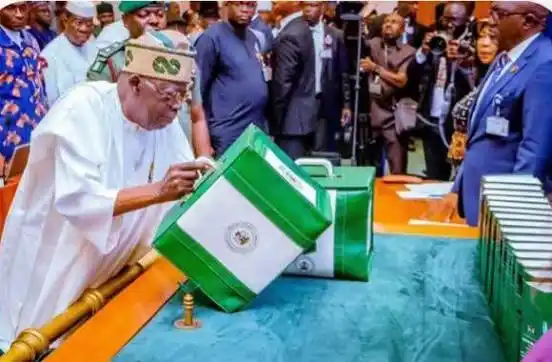
A controversial budgetary allocation of N8.05 billion for the construction and renovation of religious buildings across Nigeria has ignited a fierce debate about fiscal priorities, transparency, and the proper role of government funding in faith communities. President Bola Tinubu’s administration now faces mounting pressure to justify the expenditure as critics question whether such spending represents sound governance during a period of widespread economic hardship.
Former Vice President Atiku Abubakar has emerged as the most vocal opponent of the allocation, describing it as an example of opaque budgeting that exploits religious sentiment to obscure questionable spending decisions. Through his spokesperson Phrank Shaibu, Atiku referenced analysis from Tracka, a public accountability organization, which reportedly identified approximately N1.91 billion earmarked for church projects and N6.14 billion designated for mosque initiatives. His central complaint centers not on the principle of supporting religious communities, but on what he characterizes as a fundamental lack of transparency regarding which specific institutions will receive funds and under what criteria.
Atiku’s statement drew sharp distinctions between traditional public infrastructure projects and these religious allocations. Roads, schools, and hospitals typically come with clear geographic identifiers and verifiable beneficiaries, he noted, making oversight relatively straightforward. Religious allocations in this budget, however, allegedly lack such specificity, with many line items failing to name individual worship centers or provide sufficient detail for independent verification. This opacity, he argued, creates conditions ripe for misuse of public funds while shielding those responsible behind the protective veil of religious sanctity.
Beyond transparency concerns, critics have raised questions about timing and motivation. With presidential elections scheduled for 2027, some observers interpret the allocations as a strategic attempt to curry favor with religious communities and their leaders. Others point to the broader socioeconomic context, noting that millions of Nigerians continue struggling with crushing poverty, persistent insecurity, and deteriorating public services. Against this backdrop, they argue, directing billions toward religious infrastructure appears tone deaf at best and cynically opportunistic at worst.
Additional criticism has focused on inclusivity and constitutional principles. Nigeria’s religious landscape extends beyond Christianity and Islam to include traditional worshippers, adherents of other faiths, and a small but growing number of people who claim no religious affiliation. Critics question whether funding specifically Christian and Muslim institutions violates principles of secular governance and equal treatment under law. Religious bos in Nigeria typically operate as Incorporated Trustees with distinct legal identities, raising further questions about the appropriateness of direct government funding and the mechanisms for ensuring accountability.
Atiku has issued a direct challenge to the Tinubu administration, demanding immediate publication of comprehensive details including the names of every beneficiary institution, precise project locations, implementing agencies, and legal justifications for each allocation. Without such disclosure, he warned, perceptions will harden that religion is being weaponized as convenient cover for diverting public resources away from their intended purposes. He cautioned particularly against drawing clergy into what he termed budget racketeering, arguing that religious leaders and sacred spaces should remain above the fray of political maneuvering and financial manipulation. Whether the administration responds with the transparency demanded, or whether this controversy escalates into a defining political flashpoint ahead of the next electoral cycle, remains to be seen. What seems certain is that questions about appropriate government spending, accountability standards, and the intersection of faith and public finance will continue resonating far beyond this single budget line.
You May Like













Leave a comment