

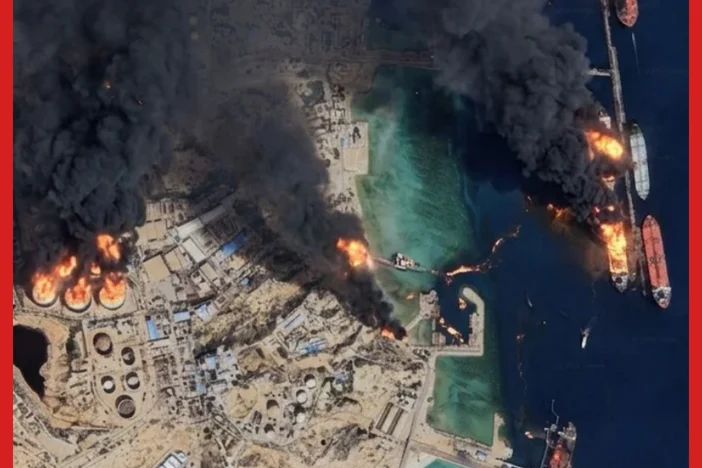
Google has abruptly suspended a controversial artificial intelligence feature just one day after launch, following fierce criticism from human rights researchers and journalists who warned the tool could fuel a deluge of online disinformation. The feature, whimsically named Nano Banana 2, allowed Google Earth users to create and superimpose AI generated images directly onto satellite maps, raising alarm bells among experts who rely on the platform to document war crimes and human rights violations in conflict zones worldwide.
For years, Google Earth has served as an indispensable tool for investigators tracking atrocities in places like Sudan, Gaza, and Iran. High resolution satellite imagery from the platform has helped document alleged war crimes, verify reports of military strikes, and counter government efforts to discredit evidence of conflict related abuses. Journalists and humanitarian organizations have built entire investigations around the credibility and authenticity of these satellite images, making them a cornerstone of modern conflict documentation.

Nathaniel Raymond, who heads the Humanitarian Research Lab at Yale University’s School of Public Health, expressed shock at Google’s decision to launch such a feature. His team has used Google Earth extensively to document massacres and serious abuses during the ongoing war in Sudan. Raymond warned that the AI tool would make an already difficult job exponentially harder, allowing bad actors to create convincing fake satellite images that could be screenshot and spread across social media platforms. The potential for confusion and deliberate disinformation was enormous, he argued, with no apparent benefit to justify the risk.
Google’s now suspended feature worked through a simple interface where users could zoom into any location on Google Earth’s web platform, click a button labeled create image, and type a text prompt describing what they wanted to see. While the company emphasized benign uses like real estate planning or visualizing historic sites, the implications were far more troubling. Within hours of launch, researchers demonstrated how easily the tool could be weaponized, creating fabricated images of refugee camps near the Mexican border, nonexistent nuclear facilities in Iran, and staged accident scenes on public streets.
Henk Van Ess, an expert in AI and online research ods, quickly tested the feature’s capabilities and found he could generate virtually any false scenario with minimal effort. Although the fake images were not permanently added to Google Earth itself, screenshots of the manipulated maps could easily be shared online, where they might be mistaken for authentic satellite imagery. Given the current climate of online misinformation and the public’s difficulty distinguishing real content from AI generated fakes, experts feared the feature would erode trust in one of the few remaining sources of verifiable visual evidence.
Google suspended the feature within 24 hours of its launch, though the company has not publicly detailed its plans for whether or when a modified version might return. The incident highlights broader tensions between rapid AI development and the potential societal harms these technologies can create. As artificial intelligence tools become more sophisticated and accessible, the challenge of maintaining trust in visual evidence grows increasingly complex. For human rights investigators, journalists, and fact checkers who depend on satellite imagery to hold powerful actors accountable, the stakes could not be higher. Whether Google will find a way to implement safeguards that prevent misuse while preserving legitimate applications remains an open question, one that will likely shape how other tech companies approach similar AI powered features in the future.
You May Like


















Leave a comment