

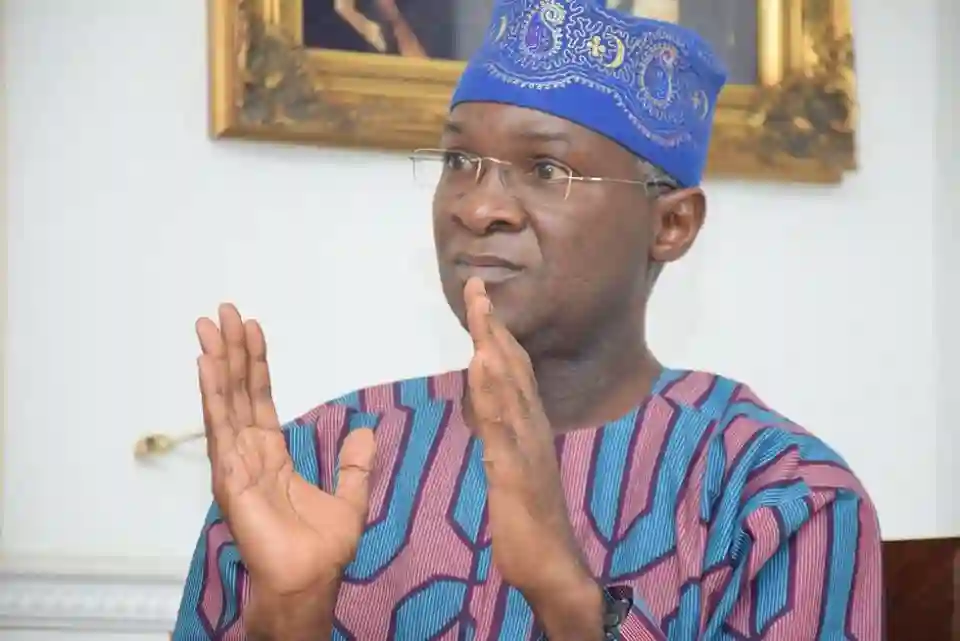
Nigeria must move beyond the limitations of partisan politics and embrace a governance model anchored in robust institutions, accountability, and continuity, according to former Lagos State Governor Babatunde Fashola. Speaking at the Nigerian Bar Association Ikeja Branch Law Week in Lagos, the Senior Advocate delivered a powerful call for systemic reform that prioritizes institutional strength over political expency. His remarks set the tone for a weeklong gathering examining the fundamental challenges facing governance and the rule of law in Africa’s most populous nation.
Fashola’s keynote address, titled “Law, Leadership and the Ballot: Governance Beyond Politics,” emphasized the critical role legal professionals must play in driving institutional reforms and promoting good governance. Delivered at the Lagos Marriott Hotel in Ikeja, the lecture formed the centerpiece of an opening plenary that brought together senior lawyers, judges, policymakers, academics, and other stakeholders. The former governor argued that Nigeria’s development trajectory depends less on individual political leaders and more on building durable institutions capable of delivering consistent public services regardless of who occupies office.
The Law Week itself operates under the provocative theme “Altering the Status Quo: Going Against the Norm,” reflecting a growing appetite among legal professionals for challenging entrenched practices that have hindered progress. Chukwudi Enebeli, a Senior Advocate serving as Chairman of the Law Week Planning Committee, explained that organizers designed the programme to stimulate robust discussions on governance challenges while generating practical recommendations. The goal extends beyond theoretical debate to actionable solutions that can strengthen public institutions and improve service delivery across government ministries and agencies.
Adeniyi Quadri, Chairman of the NBA Ikeja Branch, described the annual Law Week as an essential platform for national dialogue, noting that lawyers bear particular responsibility for advancing transparency and the rule of law. His comments underscored a recognition within the legal community that professional expertise must translate into civic leadership. Beyond courtroom advocacy and corporate practice, the legal profession increasingly sees itself as a guardian of institutional integrity in a country where governance shortcomings have long frustrated citizens and investors alike.
Throughout the week, participants will engage with multiple dimensions of Nigeria’s governance equation through specialized sessions addressing economic policy, judicial independence, and professional development. A Business Forum will examine Nigeria’s economic future, while a Bar and Bench Session will foster dialogue between practicing lawyers and the judiciary. The programme also includes the Alao Aka-Bashorun Memorial Lecture, a mentoring session for young lawyers entering the profession, and community engagement initiatives designed to extend the conversation beyond the legal community to ordinary citizens affected by governance failures.
As the weeklong event progresses toward its conclusion, organizers expect to compile recommendations aimed at deepening collaboration between the legal profession, government agencies, and civil society organizations. Whether these proposals will gain traction beyond conference halls remains an open question in a country where reform initiatives often falter during implementation. Yet the gathering signals a recognition that sustainable national development requires more than political rhetoric. It demands the kind of institutional foundation that Fashola championed in his address, built on accountability, continuity, and professional excellence rather than the shifting sands of electoral cycles and partisan advantage.





















Leave a comment