

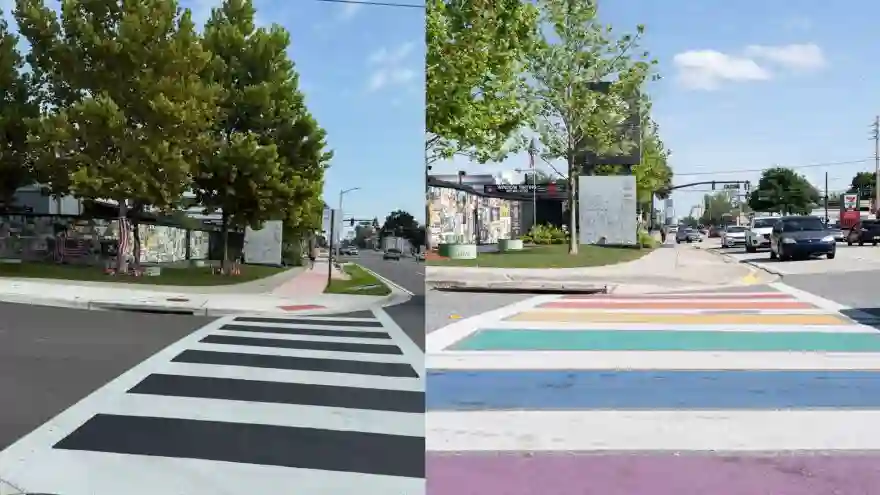
When state officials attempted to erase rainbow symbols from Florida’s public spaces, two defiant cities answered with paint, pride, and a powerful message of inclusion. Rainbow crosswalks have appeared in multiple municipalities across the state, transforming ordinary pedestrian zones into bold declarations of community values that directly challenge recent administrative efforts to limit LGBTQ visibility in public infrastructure.
Governor Ron DeSantis and state officials have pursued various measures to restrict rainbow imagery and LGBTQ symbols on government property, part of a broader policy agenda that has targeted LGBTQ rights across Florida. These initiatives have included scrutiny of local government expenditures on Pride events, challenges to public art installations featuring rainbow colors, and pressure on municipalities to remove what officials characterize as political symbols from taxpayer funded spaces. Legal experts note that these efforts exist in a constitutional gray area, as communities have historically enjoyed significant autonomy in determining local aesthetic and cultural expressions.

Local officials in the resisting cities have framed their colorful crosswalks as matters of public safety, community identity, and municipal independence. By designating the installations as traffic calming measures and pedestrian safety enhancements that also celebrate diversity, city councils have found creative bureaucratic pathways to maintain the rainbow imagery. Public works departments have emphasized that decorative crosswalks serve legitimate transportation purposes while reflecting the values of residents who have voiced overwhelming support for visible LGBTQ inclusion.
Community response has been enthusiastic, with residents organizing celebrations around the crosswalk installations and local businesses reporting increased foot traffic in areas featuring the rainbow designs. Social media documentation shows families taking photographs at the sites, which have become informal gathering points and symbols of resistance against state level cultural policies. Advocacy organizations have highlighted these local actions as examples of grassroots democracy functioning effectively even amid contentious statewide political climates.
Beyond the painted pavement, the crosswalk controversy reflects deeper tensions between state authority and local governance in Florida’s evolving political landscape. Constitutional scholars point out that home rule provisions typically grant municipalities considerable discretion over local affairs, including public works projects and community aesthetic decisions. Legal challenges could emerge if state officials attempt to compel removal of the crosswalks, potentially setting important precedents about the balance of power between state mandates and community self determination.
As Pride month celebrations continue and more Florida cities consider similar installations, the rainbow crosswalk movement appears poised to expand rather than retreat. Advocates view these local victories as crucial morale boosters for LGBTQ communities facing broader legislative challenges, while city officials increasingly recognize that visible symbols of inclusion attract residents, businesses, and tourism. Whether state authorities will escalate enforcement efforts or allow local variations to persist remains an open question that will likely shape Florida’s cultural and political landscape for years to come.
You May Like






















Leave a comment