

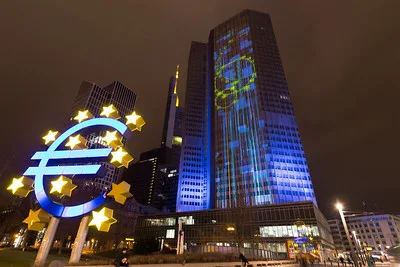
A potential peace agreement between the United States and Iran may bring diplomatic relief, but European Central Bank officials are making clear it will not stop them from raising interest rates further as the economic damage from months of energy market turmoil continues to reverberate across the eurozone.
Policymakers including ECB President Christine Lagarde acknowledge the positive prospects of oil shipments resuming through the Strait of Hormuz, yet they emphasize that significant economic disruption has already occurred. The central bank harbors no regrets about last week’s decision to hike rates, with officials stressing that elevated energy costs will persist far longer than many initially anticipated. Peter Kazimir, a member of the Governing Council, captured the prevailing sentiment succinctly when he noted that even with the newly announced peace framework, the damage inflicted in the Middle East cannot be reversed overnight.
The core concern centers on the time required to rebuild production capacity, repair damaged infrastructure, and restore normal shipping operations. Meanwhile, efforts to replenish depleted inventories are expected to keep crude prices elevated for the foreseeable future. This extended period of higher energy costs presents a serious risk to the 21 nation euro area, where companies and workers may respond by increasing prices and demanding higher wages, keeping inflation well above the ECB’s 2 percent target.
Financial markets and analysts appear to share this cautious outlook. Most forecasters still expect additional monetary tightening, with traders betting on at least one more quarter point increase in the deposit rate this year to 2.5 percent. Greg Fuzesi, an economist at JP Morgan, argues that while the chance of a peace deal reduces some pressure on the ECB, it does not significantly diminish the case for further hikes. He anticipates another move in September and suggests risks are modestly tilted toward a third increase materializing before year end.
Comments from various Governing Council members reinforce this hawkish stance. Portugal’s central bank chief Alvaro Santos Pereira argued that normalization of the energy situation will be a gradual process. His Latvian counterpart Martins Kazaks highlighted the tendency for multiple economic shocks to compound each other, noting that the current disruption has not yet fully played out. Bundesbank President Joachim Nagel warned that expiring fiscal measures aimed at cushioning energy price increases may actually boost inflation in coming months. Gabriel Makhlouf, another council member, emphasized that an end to conflict does not automatically translate to an immediate end to economic shock, with uncertainty remaining about how quickly supply chains and energy prices will normalize.
Oil prices have retreated from around 110 dollars per barrel at the height of the conflict to below 80 dollars currently. Analysts at Bloomberg Economics predict further easing toward a range of 70 to 75 dollars if the peace deal is finalized and properly implemented. Yet even these lower projections represent prices substantially higher than pre-conflict levels, suggesting that the energy shock’s inflationary legacy will shape European monetary policy for months to come, regardless of how quickly diplomatic relations improve in the Middle East.












Leave a comment