

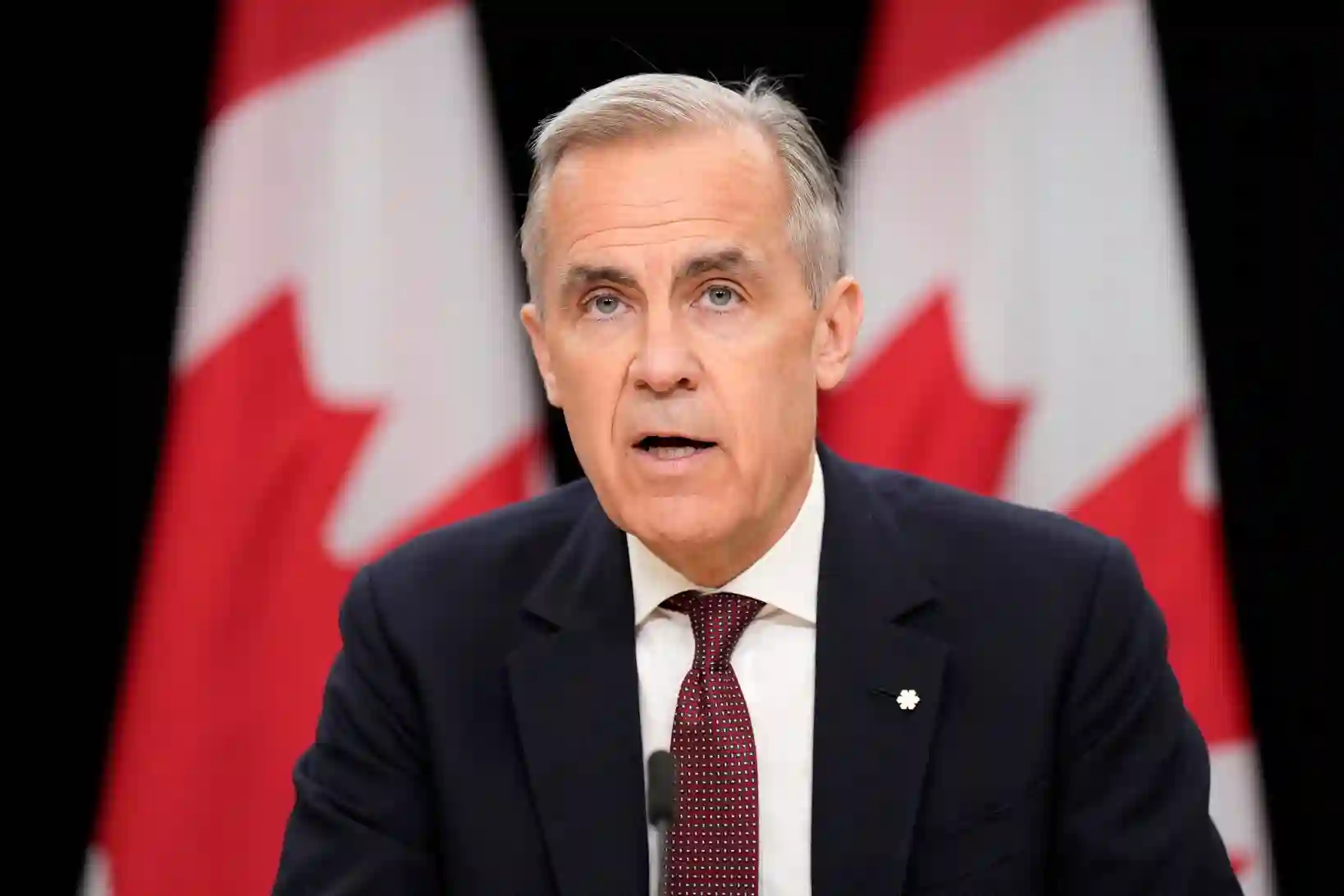
After seventy years of watching from the sidelines, Canada is finally stepping onto the Eurovision stage as itself. Prime Minister Mark Carney’s recent announcement that CBC/Radio-Canada has gained full membership in the European Broadcasting Union marks a watershed moment for Canadian musicians, who will now be able to compete in the legendary song contest without having to don the colours of France, Luxembourg, or Switzerland. The news arrives with perfect timing, as the 2027 contest in Bulgaria approaches, offering Canadian artists their first opportunity to bring the country’s distinctive musical identity to a global aunce of over 200 million viewers.
What many Canadians don’t realize is that their compatriots have been quietly dominating Eurovision for decades, just under different flags. Celine Dion’s 1988 victory representing Switzerland with “Ne Partez Pas Sans Moi” remains one of the contest’s most iconic moments, launching her into the stratosphere of international stardom. More recently, La Zarra carried the French tricolour to a respectable 16th place finish in 2023 with “Évidemment,” while Vancouver-born Rykka honoured her Swiss heritage by reaching the semifinals in 2016. Gary Lux holds the distinction of being the only Canadian to compete multiple times, first as part of the band Westend in 1983 and then as a solo artist for Austria in 1985. These victories and performances underscore a truth Canadians have always known: the country punches well above its weight in musical talent.
Canada’s export of musical excellence spans generations and genres, from Joni Mitchell’s folk poetry to Justin Bieber’s pop dominance, from Shania Twain’s country crossover success to Neil Young’s rock immortality. Eurovision offers a unique platform that differs from traditional music industry pathways, emphasizing live performance, theatrical presentation, and the ability to connect with a pan-European aunce in under three minutes. For a country as culturally diverse and geographically vast as Canada, the contest presents an opportunity to showcase voices that might otherwise struggle to break through in oversaturated markets.
Among the contemporary artists who could represent Canada brilliantly is Elisapie, an Inuk singer-songwriter and filmmaker from the Nunavik region of northern Quebec. Her trilingual artistry, spanning English, French, and Inuktitut, culminated in a 2023 album where she reimagined iconic pop and rock songs in her mother tongue, creating soing entirely new from familiar material. Jeremy Dutcher, a Two-Spirit ethnomusicologist from Neqotkuk in New Brunswick, offers another compelling possibility. His debut album transformed century-old recordings made by his ancestors on wax cylinders into stunning modern compositions, bridging past and present in ways that exemplify what Canadian identity can mean. Devon Cole, who gained viral fame by rewriting Robin Thicke’s “Blurred Lines” with a consent-focused message, represents the kind of socially conscious pop that resonates with younger Eurovision aunces.
Cameron Whitcomb’s journey from American Idol contestant to Juno Award winner illustrates the kind of underdog narrative Eurovision loves. His alternative country sound and debut album “The Hard Way” earned him both Country Album of the Year and Breakthrough Artist of the Year at the 2026 Juno Awards, proving he has the vocal chops and stage presence the contest demands. Each of these artists brings soing distinctive, whether it’s Indigenous language revitalization, queer visibility, feminist messaging, or genre-bending innovation. Canada’s strength lies not in producing a single type of artist but in nurturing a wildly diverse ecosystem of musical expression.
As May 2027 approaches, the selection process for Canada’s inaugural Eurovision entry will become a defining cultural moment. Will the country play it safe with an elished name, or take a risk on an emerging artist who embos the future? Will the song be in English, French, Inuktitut, or perhaps all three? Eurovision has evolved from a Cold War curiosity into a genuine cultural phenomenon that launches careers, sparks diplomatic incidents, and occasionally produces songs that transcend the contest itself. For Canadian musicians who have spent decades representing other nations, the chance to finally stand on that stage dd in the maple leaf represents both vindication and invitation. The world already knows Canada can produce stars. Now comes the opportunity to prove it on one of music’s most peculiar and powerful stages.
You May Like












Leave a comment