

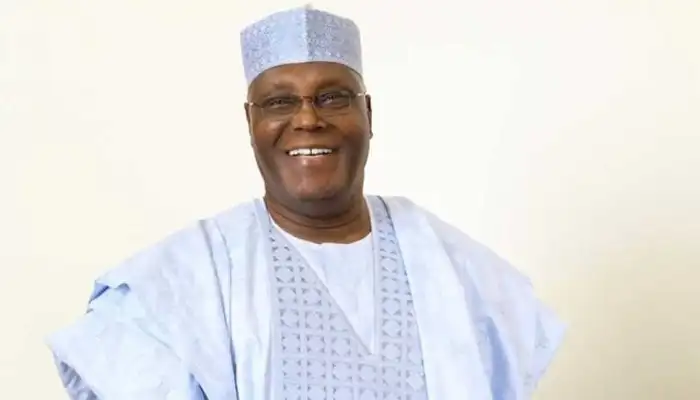
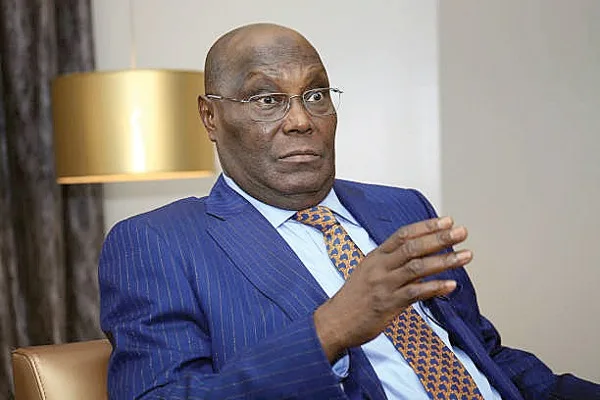
Former Vice President Atiku Abubakar has delivered a withering assessment of President Bola Tinubu’s administration as it approaches its third anniversary, declaring that the government’s true report card is written not in policy documents but in the hunger of families, the despair of unemployed youth, and the tears of abducted schoolchildren. Speaking through his Senior Special Assistant on Public Communication, Phrank Shaibu, the 2023 presidential candidate of the African Democratic Congress painted a portrait of a nation in crisis, arguing that three years of promises have yielded only deepening hardship for ordinary Nigerians.
Atiku’s statement pulls no punches in its critique of what he characterizes as governance by deception and propaganda. While acknowledging that every government is entitled to its own opinions, he insisted that no administration can claim its own facts. The facts, as he outlined them, tell a story starkly different from official narratives: soaring food prices that have placed basic necessities beyond the reach of average families, inflation that functions as a cruel tax on the poor, collapsing small businesses, fleeing investors, a battered naira, and evaporated purchasing power. Never in recent memory, Atiku argued, have so many Nigerians worked so hard only to grow poorer, and never has a government celebrated itself so loudly while its citizens suffered so profoundly.
Central to Atiku’s criticism is what he describes as reckless borrowing without corresponding tangible improvements in citizens’ lives. According to public reports he cited, the federal government borrowed approximately 11.9 trillion naira within a nine month period, yet only 3.1 trillion naira was reportedly allocated to capital projects. This discrepancy, he suggested, demands explanation and accountability. Where did the remainder go? Nigerians, struggling with the worst cost of living crisis in a generation, deserve answers to this fundamental question about the stewardship of public resources borrowed in their name and to be repaid with their taxes.
Compounding concerns about financial management, Atiku highlighted what he called a disturbing concentration of infrastructure spending on projects awarded to politically connected interests. He pointed specifically to the Lagos Calabar Coastal Highway and the Badagry Sokoto Highway, both reportedly awarded to a company owned by a businessman President Tinubu has publicly described as his partner in daring. While ordinary citizens endure sacrifice and belt tightening, the benefits of government expenditure appear increasingly directed toward a privileged circle, creating what Atiku termed a troubling perception of cronyism and inequitable distribution of national resources.
Beyond economic concerns, the former vice president emphasized the security crisis that continues to plague Africa’s most populous nation. His reference to abducted schoolchildren and what he characterized as a complacent government response touched on one of Nigeria’s most sensitive and persistent challenges. Kidnapping for ransom has become so normalized, he suggested in related comments, that Nigerians now budget for ransom payments alongside rent and school fees. Such a situation represents not merely a policy failure but a fundamental breakdown in the social contract between government and governed.
Looking forward, Atiku declared that an era of political complacency and manufactured statistics is drawing to a close. Nigerians, having endured three years of what he termed renewed hardship rather than renewed hope, are preparing to reclaim their country through the ballot box. Whether this assessment proves prophetic will depend on numerous factors, including the opposition’s ability to unite, the administration’s capacity to deliver tangible improvements before the next electoral cycle, and ultimately the judgment of Nigerian voters. What remains clear is that the political temperature is rising, and the government faces mounting pressure to demonstrate that its economic policies, however painful in implementation, are producing results that citizens can see and feel in their daily lives. Debt accumulation without visible impact, Atiku warned, is a recipe for political reckoning.
You May Like












Leave a comment