

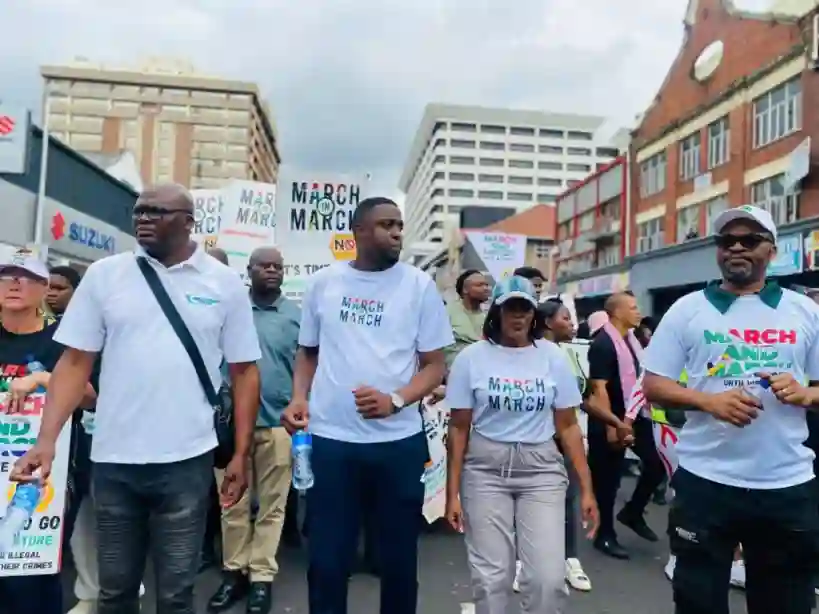
June 30 looms as a day of reckoning that South Africa could have avoided. Thousands of fellow Africans have queued at airports, bus stations and border posts, desperate to leave ahead of a deadline that began, extraordinarily, with a fabricated poster. Someone generated an official looking Department of Home Affairs notice declaring that all undocumented foreigners must leave by that date. The government never issued it. But the notice went viral, and it gave the March and March movement soing it did not yet have: a date, a moment, a match thrown into dry grass.
What began as scattered demonstrations has evolved into a nationwide mobilisation. Organisers insist it will be peaceful. Yet the buildup has already caused intimidation, unrest and mass displacement among migrant communities across the country. Government officials say they are ready to protect migrants and assert law and order. The date will come and go. But the harder question will remain: not how many people were deported, but what kind of country, and what kind of continent, produced this moment in the first place.

The migration crisis does not begin at Beitbridge or in the informal settlements of Tembisa. It begins in the heart of the state. On 23 February 2026, South Africa’s Special Investigating Unit delivered devastating findings: the country’s immigration system had been compromised and treated as a marketplace where permits and visas were sold to the highest bidder. The scheme generated hundreds of millions in illicit gains. Visas were sold for as little as 35 dollars. The border itself was offered for sale by the very institution mandated to protect it.
Millions of fellow Africans fleeing poverty, joblessness and state failure flooded into the country through this broken system. For them, the last African nation to win its freedom, a freedom made possible by the solidarity of the continent, represented their last hope. Yet South Africa’s own citizens were still waiting for the economic freedom promised in 1994. Official national unemployment rose to over 30 percent in the first quarter of 2026. Among those aged 15 to 24, it reached a staggering 60 percent. White South Africans, just 7.3 percent of the population, still own approximately 72 percent of privately held agricultural land, while the majority of black South Africans, over 80 percent of the population, remain locked out of individual land ownership thirty years after liberation.
Meanwhile, the state cannot keep the lights on, cannot staff the clinics, nor prosecute its own officials. That is the architecture of this crisis. The African migrant who bears the brunt of popular anger did not build it. He is its fellow victim. The Zimbabwean waiter did not write the 1913 Natives Land Act. The Somali shopkeeper does not set interest rates. Politicians who moved anti migrant rhetoric from the fringe to the centre of national politics share direct responsibility for what has followed. When a government behaves lawlessly, it does not produce a law abiding society. It produces its own reflection.
What is happening in South Africa is not unique. It is the continent’s most visible expression of a pattern that has repeated for six decades: states that fail their people, borders that become escape routes, and the displaced who bear the blame for crises they did not create. Even as Africa fielded ten teams at the FIFA World Cup for the first time, with nine reaching the knockout stages, a unified continental fury directed at South Africa saw many Africans cheering against Bafana Bafana rather than with them. The rage is real and understandable. But it is aimed at the wrong address. Until African governments are held accountable for the conditions that drive their citizens into exile, and until receiving nations fix the systems that turn migration into chaos, June 30 will not be an ending. It will be a preview.















Leave a comment