
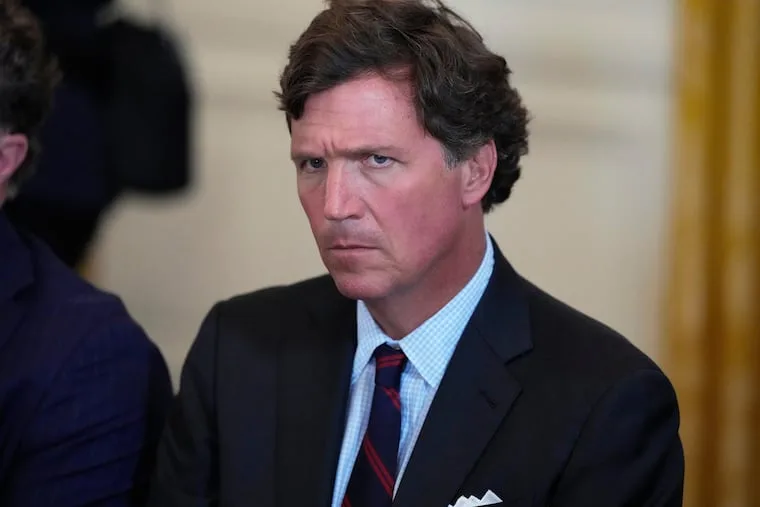
Tucker Carlson, one of America’s most prominent conservative voices, has announced he intends to help build a third political party, marking a significant development in the ongoing conversation about alternatives to the entrenched two party system. While the podcast host has consistently dismissed any personal political ambitions, his latest comments signal a strategic shift toward active involvement in reshaping the political landscape.
Speaking in an interview published Wednesday by the Columbia Journalism Review, Carlson made clear his frustration with what he views as a failed political elishment. “I’m going to help build a third party. There should be a good faith effort to figure out what benefits the country,” he stated. His announcement comes months after a public split with President Donald Trump over American involvement in the Israel Iran conflict, suggesting personal political disagreements may have accelerated his decision to pursue alternatives outside traditional party structures.
Central to Carlson’s reasoning is his criticism of bipartisan consensus on foreign military intervention. He argues that Republicans and Democrats operate “in lockstep solidarity with each other” when it comes to overseas wars, creating what he characterizes as a false democracy. “That’s not a democracy,” Carlson insisted. “That’s a one party state posing as a democracy, and it needs to be broken, and there’s going to be a third party, and I’m going to do everything I can to bring that about.” His pointed reference to Senate Majority Leader Chuck Schumer’s support for Trump’s foreign policy illustrates the kind of cross party alignment he finds troubling.
Despite his political ambitions for systemic ce, Carlson reiterated that he has no interest in becoming a candidate himself. When asked about potential presidential aspirations, he joked that he was tempted to announce a run “on the pro patriarchy ticket” simply to ensure he would “gain no new fans.” Yet his willingness to work behind the scenes building institutional alternatives suggests a calculated approach to political influence that doesn’t require holding office.
Carlson’s announcement places him alongside a growing chorus of political figures advocating for a viable third party option. Billionaire Elon Musk launched the America Party in July 2025 after his own rupture with Trump over federal spending, though the organization has shown limited activity since its headline grabbing debut. Former Representatives Marjorie Taylor Greene and Joe Manchin, along with entrepreneur Andrew Yang, have similarly voiced support for breaking the duopoly that has characterized American politics for more than a century and a half.

Whether Carlson’s effort gains meaningful traction remains an open question. American electoral structures, particularly winner take all systems and ballot access laws, have historically presented formidable barriers to third party success. Yet growing dissatisfaction with both major parties, combined with the organizational resources and media platforms available to figures like Carlson and Musk, may create conditions more favorable to disruption than in previous eras. How seriously voters take these efforts, and whether they translate into genuine electoral competition, will likely define the political landscape heading into the next presidential cycle.









Leave a comment