
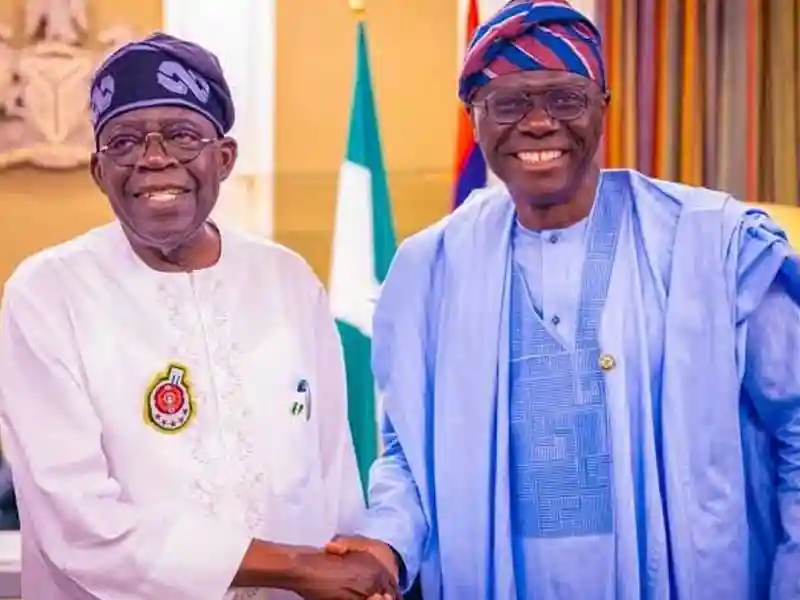
Nigeria’s leaders gathered in Lagos on Sunday to honor the memory of Herbert Heelas Macaulay, widely regarded as the father of Nigerian nationalism, eight decades after his passing. President Bola Tinubu and Lagos State Governor Babajide Sanwo-Olu led an array of political figures, scholars, and members of the Macaulay family in reflecting on the enduring significance of a man whose vision and courage helped shape the nation’s path to independence. The commemorative event served as both a historical reckoning and a pointed reminder that the ideals Macaulay championed, patriotism, justice, and unwavering commitment to nation building, remain urgently relevant in contemporary Nigeria.
Speaking on behalf of President Tinubu, Folasade Ogunsola, vice chancellor of the University of Lagos, painted a portrait of Macaulay as a visionary leader whose uncompromising principles and fearless advocacy for self-determination laid the groundwork for Nigeria’s eventual freedom from colonial rule. She emphasized that his courage and sacrifice formed the bedrock of the nationalist movement that would ultimately deliver independence. Ogunsola stressed that reflecting on Macaulay’s remarkable legacy should remind Nigerians that sustaining a nation requires visionary leadership, responsible citizenship, and an enduring commitment to the common good. Among the most meaningful ways to preserve his legacy, the president’s representative argued, is through sustained investment in education, ensuring future generations understand and embody the principles for which Macaulay fought.
Governor Sanwo-Olu offered a deeply personal tribute, recalling how generations of Nigerians, including himself, grew up with Macaulay’s name woven into the fabric of their education and national consciousness. He described Macaulay as one of history’s foremost black leaders, whose influence extended far beyond the boundaries of Lagos or even Nigeria. The governor noted that from childhood, Macaulay’s name stood as an iconic symbol of resistance, integrity, and political pioneering. Sanwo-Olu highlighted that Macaulay played a defining role in shaping the political landscape of colonial Lagos and founded Nigeria’s first political party, the Nigerian National Democratic Party. That pioneering effort in organized politics, he argued, created the essential platform upon which Nigeria’s democratic system continues to evolve today.
The keynote address, delivered by Olabode George, former deputy national chairman of the Peoples Democratic Party, used Macaulay’s legacy as a lens through which to examine Nigeria’s present challenges. George affirmed that Macaulay’s designation as the father of Nigerian nationalism was not merely honorary but earned through tangible courage, sacrifice, and an unwavering commitment to justice. He warned that democracy deteriorates when institutions lose their independence, when opposition voices are silenced or marginalized, and when citizens lose faith in electoral processes. George cautioned that no patriot should desire a Nigeria where concentrated power becomes a substitute for genuine democratic legitimacy. His words carried an unmistakable urgency, suggesting that current political realities risk betraying the very foundations Macaulay helped elish.
Beyond political structures, George also addressed the pressing issue of insecurity plaguing various regions of the country, asserting that no nation can realize its full potential when its citizens live in constant fear. He urged contemporary leaders to emulate Macaulay’s example by prioritizing national interest over personal ambition and by strengthening institutions designed to outlast individual officeholders. George’s most striking observation came in his reflection on what constitutes a true memorial to Macaulay’s life. He insisted that the greatest monument would not be constructed of stone or bronze but would instead be a Nigeria governed by justice, a nation where institutions prove stronger than individuals, where leadership remains genuinely accountable, and where democracy receives steadfast protection. His vision framed the commemoration not as a nostalgic exercise but as a blueprint for urgent reform.

As Nigeria continues to grapple with economic uncertainty, security challenges, and questions about the integrity of its democratic institutions, the 80th anniversary of Herbert Macaulay’s death arrives as more than a historical marker. It functions as a national mirror, reflecting both how far the country has traveled since independence and how distant it remains from the ideals that animated its founding generation. Whether today’s political class will heed the calls to strengthen institutions, embrace accountability, and place national interest above personal gain remains an open question. What seems certain is that Macaulay’s legacy, far from fading into the past, continues to provide a measuring stick against which Nigeria’s present leaders will inevitably be judged.









Leave a comment