

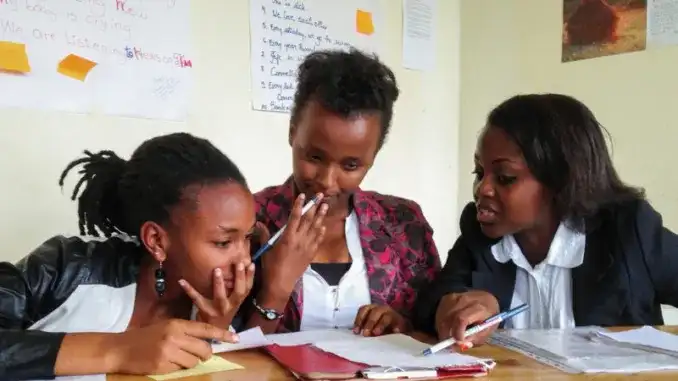
The United Nations Educational Scientific and Cultural Organization has announced that women now outnumber men in higher education globally, according to its first comprehensive report on worldwide tertiary education trends released on Tuesday.
The report shows that in 2024 there were about 114 women enrolled in higher education for every 100 men, marking a significant milestone in global education equality. However, UNESCO noted that this progress is uneven across regions, with sub Saharan Africa still lagging behind in achieving gender parity.

It highlighted that while Central and South Asia have achieved parity after major progress over the past two decades, women remain underrepresented in advanced academic levels, particularly at the doctoral stage, and occupy only about a quarter of leadership positions in academia.
UNESCO Director General Khaled El-Enany said the expansion of higher education reflects growing global demand and its importance in building sustainable societies, but warned that access does not always translate into equal opportunity.
The report revealed that global student enrolment has more than doubled over the past 20 years rising from about 100 million in 2000 to 269 million in 2024. Despite this growth, major regional disparities remain, with sub Saharan Africa recording the lowest enrolment rate at just nine percent compared to over 80 percent in Western Europe and North America.
It also found that international student mobility has increased significantly from 2.1 million students in 2000 to 7.3 million in 2023 although only about three percent of students worldwide currently benefit from studying abroad.
Countries such as the United States United Kingdom Australia Germany Canada Russia and France continue to host about half of all international students globally while new destinations like Turkey and the United Arab Emirates are gaining popularity.
The report further warned that funding pressures and rapid expansion of universities are affecting education quality in many regions. It also noted that only one in five universities currently has formal policies on artificial intelligence despite its growing role in education.
UNESCO stressed the need for stronger investment inclusive policies and innovative funding models to ensure that higher education remains accessible and equitable for all.
You May Like



















Leave a comment