

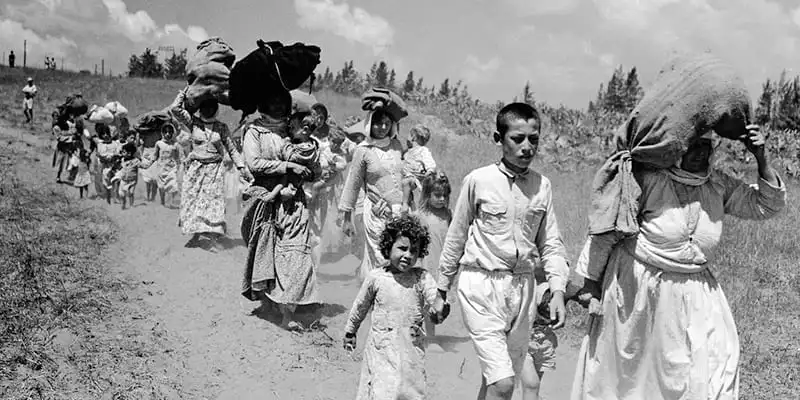
Every year on 15 May, Palestinians around the world pause to remember an event that fundamentally altered the course of their collective history. Known as the Nakba, meaning “catastrophe” in Arabic, this mass displacement of Palestinians during the 1948 Arab Israeli war remains one of the most contested and consequential episodes in modern Middle Eastern history. For Palestinians, it represents not just a historical memory but a living trauma passed through generations.
Between 1947 and 1949, approximately 700,000 Palestinians fled or were expelled from their homes during the conflict surrounding the creation of Israel. Hundreds of Palestinian villages were destroyed or depopulated during this period, fundamentally transforming the demographic landscape of the region. What began as a territorial dispute evolved into a refugee crisis that would span decades, creating a diaspora community scattered across Jordan, Lebanon, Syria, and beyond. Palestinian families carry keys to homes that no longer exist, passing them down as symbols of loss and longing for return.
Historians continue to debate the precise circumstances and intentions behind the displacement. Israeli narratives traditionally emphasized the voluntary departure of Palestinians at the urging of Arab leaders, while Palestinian accounts and recent scholarship highlight systematic expulsions, military operations, and massacres that drove people from their homes. Declassified documents and oral histories have added nuance to understanding the complex mixture of panic, military pressure, and strategic population transfer that characterized this tumultuous period. Regardless of the specific mechanisms, the scale and permanence of the displacement created a refugee population whose status remains unresolved nearly eight decades later.
Annual commemorations on 15 May have taken on increasing political significance as younger generations of Palestinians assert their connection to this historical event. Marches, cultural events, and educational programs keep the memory alive in refugee camps and diaspora communities worldwide. Inside Israel and the occupied territories, Nakba Day observances often become flashpoints for tension, with Palestinian citizens of Israel marking the date even as their neighbors celebrate independence. International attention to these commemorations has grown, particularly as social media amplifies Palestinian voices and perspectives that were historically marginalized in Western discourse.
The ongoing consequences of the Nakba extend far beyond historical memory into present day political realities. Palestinian refugees and their descendants now number over five million people registered with the United Nations Relief and Works Agency, making them one of the largest and longest standing refugee populations in the world. The question of their right of return to former homes inside Israel remains one of the most intractable issues in peace negotiations. Israeli governments consistently reject any mass return, viewing it as an existential demographic threat, while Palestinian negotiators maintain that recognizing this right is essential to any just resolution.
As competing narratives about 1948 continue to shape contemporary politics, the Nakba remains central to Palestinian identity and claims for justice. Future peace efforts must grapple with how to acknowledge this historical trauma while addressing present security concerns and political realities. Whether through symbolic recognition, compensation, limited return, or alternative arrangements, confronting rather than avoiding this history may prove essential to breaking the cycle of conflict. Understanding the Nakba is not simply an academic exercise but a prerequisite for anyone seeking to comprehend the enduring Israeli Palestinian impasse and the human costs of unresolved displacement.
















Leave a comment