

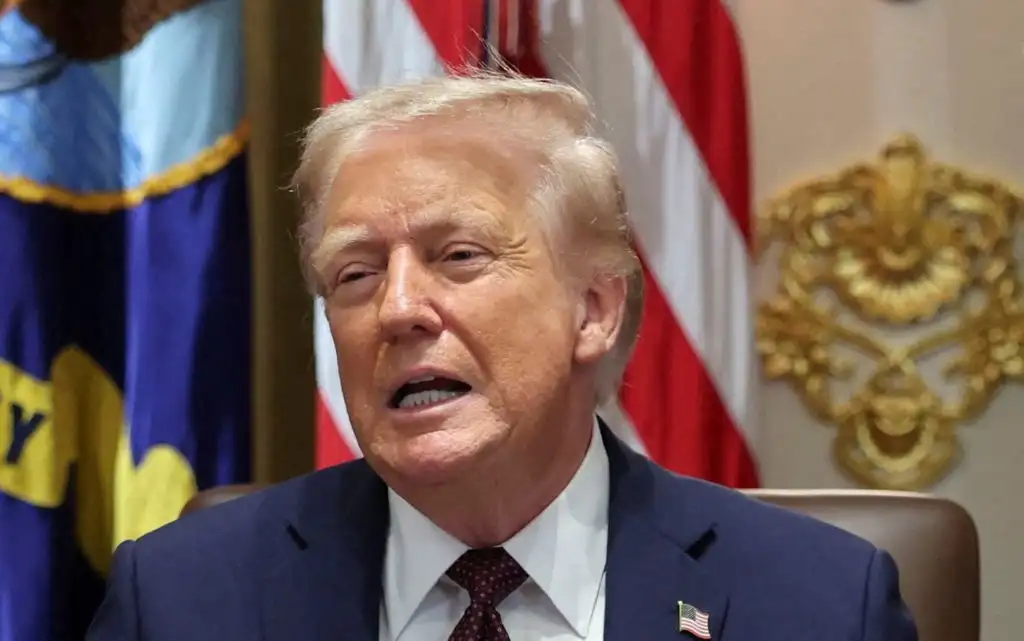
President Donald Trump’s ambitious celebration of America’s 250th anniversary appears to be falling dramatically short of expectations, with photographs from the weekend revealing a sparsely attended event despite presidential claims of overflow crowds. What was billed as a patriotic showcase featuring family attractions, live entertainment, and state exhibits has instead become a cautionary tale of overreach, poor planning, and the growing gap between political messaging and observable reality.
The Great American State Fair, a 16 day event taking place on the National Mall in Washington DC, has been plagued by problems since its troubled launch. Originally scheduled to begin Wednesday with a concert featuring prominent musicians, the opening night was hastily restructured after multiple performers withdrew citing security concerns and the divisive political climate. Trump himself stepped in as the headline act, delivering what he called a rally to end all rallies alongside Marine Corps and Army bands. On his Truth Social platform, the president claimed the crowd was packed to the brim with 45,000 attendees, a figure that photographic evidence and independent reporting have thoroughly contradicted.
Images captured throughout the weekend paint a starkly different picture from the presidential boasting. One particularly telling photograph from Saturday shows rows upon rows of empty chairs with just two people watching musician Jason Hershey perform at the David’s Tent Christian worship space. Large swaths of the National Mall, normally bustling during major events, appear eerily deserted in wide angle shots. News organizations that covered the opening estimated the crowd thinly covered an area roughly the length of the National Museum of American History, smaller than some routine summer outdoor movie screenings in the capital.
Beyond the attendance issues, operational problems have compounded the fair’s struggles. Power outages have disrupted multiple attractions, including the 110 foot tall Ferris wheel that serves as one of the event’s few marquee features. Vendors reported melted ice cream and frustrated visitors as electrical systems failed repeatedly. Organizers Freedom 250 acknowledged what they delicately termed power hiccups, though attendees described more serious disruptions. The fair notably lacks traditional carnival attractions such as roller coasters or thrilling rides, offering instead only the Ferris wheel and a plywood structure described as a Triumph Arch.
State participation has also proven uneven at best. Maine did not send any delegation to staff its dedicated booth, leaving visitors to encounter an empty room furnished only with chairs and walls decorated with lobster imagery and facts about the state. Other state exhibits have struggled to attract meaningful foot traffic, with some appearing virtually abandoned for hours at a time during what should be peak visiting periods. The disparity between the grandiose vision of a unified national celebration and the reality of minimal engagement reflects deeper challenges in mobilizing broad support for administration initiatives.
As the fair continues through its remaining days, questions mount about whether attendance will improve or if this will stand as a significant public relations setback for an administration already facing multiple controversies. Organizers have not announced any ces to programming or new attractions that might draw larger crowds. Whether the event becomes a footnote or a symbol of disconnect between presidential rhetoric and public enthusiasm may depend on the coming week, but early indicators suggest this anniversary celebration will be remembered more for what it lacked than what it achieved. One bright spot generating modest social media attention has been a cow named Melania, showcased by student Piper Stolipher, whose coloring apparently matches the first lady’s hair, providing perhaps the only viral moment in an otherwise underwhelming spectacle.
You May Like











Leave a comment