

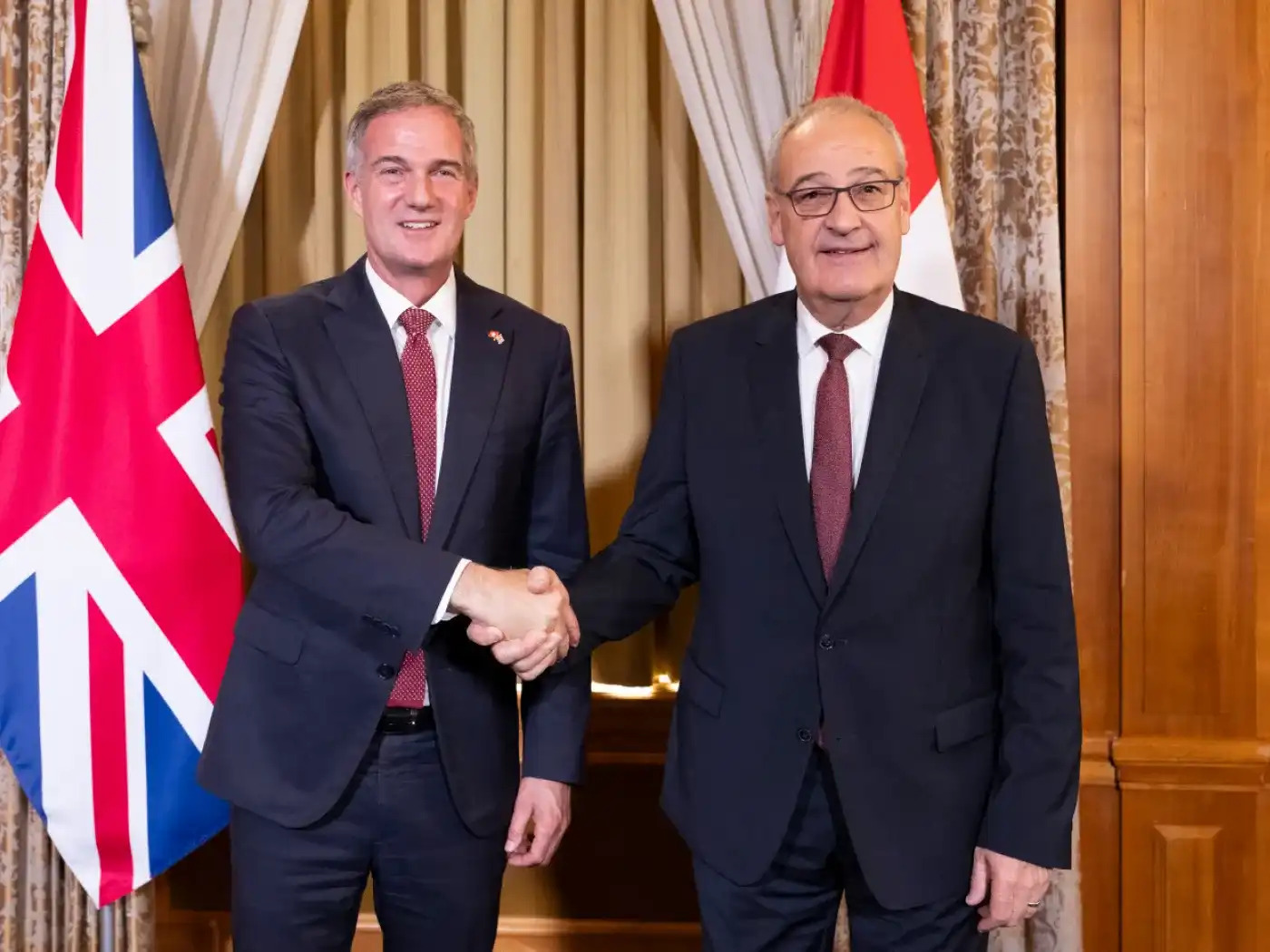
Switzerland and the United Kingdom have struck an ambitious new trade agreement that promises to reshape economic relations between two of Europe’s most significant countries operating outside the European Union framework. Negotiators from Bern and London concluded talks on what British Trade Secretary Peter Kyle has characterized as the most significant services trade deal Britain has ever negotiated, marking a substantial upgrade to the relationship that began taking shape in the aftermath of Brexit.
The Free Trade Agreement is projected to generate an additional 5.2 billion pounds, roughly 5.64 billion Swiss francs, in annual UK services exports to Switzerland. While the two nations already maintained a trade arrangement that entered into force in 2021, negotiators recognized early on that a more comprehensive deal would better serve both countries’ interests. Switzerland’s economic affairs ministry emphasized that the new agreement goes well beyond maintaining the status quo, placing bilateral economic relations on what officials describe as a comprehensive and modern footing that will benefit businesses on both sides for years to come.

Among the most visible ces for ordinary travelers will be enhanced airport processing. British nationals will soon gain access to electronic gates at Swiss airports, starting with exit gates at Zurich Airport as early as the end of 2026. Switzerland is working toward allowing entry via electronic gates at Zurich, Geneva, and Basel airports as well, with a detailed timetable to be announced shortly. The move aligns with Schengen requirements while offering British travelers a smoother passage through Swiss border controls, a practical benefit that could ease congestion and improve the travel experience for thousands of visitors annually.
Business travelers stand to gain even more substantial advantages under the new framework. UK services professionals will be able to deliver their services in Switzerland visa free for up to 90 days per year, removing bureaucratic hurdles that have complicated short term assignments and consultations. Perhaps more significantly, British businesses will be able to transfer staff from UK offices to Swiss operations for up to five years without facing stringent economic needs tests, the kind of bureaucratic obstacle that has historically made international transfers cumbersome and uncertain.
The agreement also creates new pathways for cross border talent mobility in both directions. UK businesses will find it easier to access Swiss talent and expertise through a bespoke, visa free route for short term service suppliers. Under these provisions, a British company can bring a Swiss service provider to work in the UK at short notice for periods of up to three months, facilitating rapid project deployment and knowledge transfer. The agreement covers an expansive range of sectors including financial services, telecommunications, public procurement, intellectual property, digital trade, and provisions specifically designed to benefit small and medium sized enterprises that might otherwise struggle with international trade complexities.
Swiss officials have highlighted that the agreement safeguards existing preferential arrangements in goods trade while providing targeted improvements to market access and expanding the bilateral legal framework, particularly regarding services, investment, and the mobility of service providers. Provisions addressing trade and sustainable development reflect contemporary priorities around environmental and social governance, while enhanced intellectual property protections offer reassurance to technology and creative industries. Once final legal formalities are completed, both nations expect the agreement to be signed and enter into law by the end of 2026, cementing a relationship that positions Switzerland and Britain as key economic partners outside the traditional EU structure. As both countries continue to define their identities beyond Brussels, this agreement may serve as a template for how non EU nations can forge dynamic, mutually beneficial trade relationships that address 21st century economic realities.
You May Like


















Leave a comment