

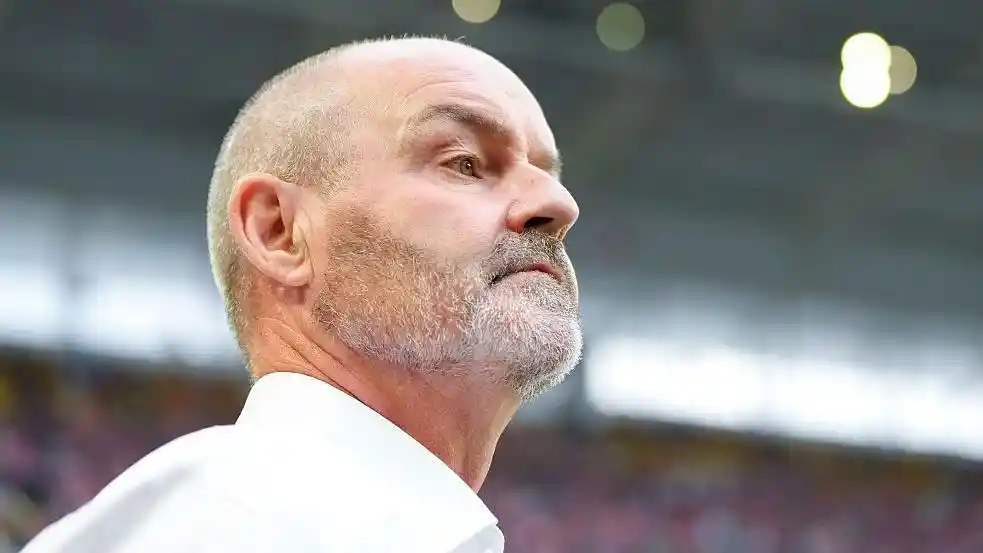
Steve Clarke has resigned as Scotland manager following the national team’s elimination from the 2026 World Cup, bringing to an end the most successful coaching tenure in Scottish football history. The 62 year old’s departure, announced by the Scottish FA on June 26, closes a remarkable seven year chapter during which he transformed the fortunes of a team that had spent nearly three decades in the international wilderness.
Clarke’s achievements stand as a monument to patient team building and tactical acumen. Under his stewardship, Scotland qualified for their first men’s World Cup in 28 years, breaking a cycle of disappointment that had haunted Scottish football since 1998. He also secured qualification for two consecutive European Championships, a feat that cemented his status as the country’s most successful national coach. These accomplishments represented not just statistical milestones but a genuine revival of hope among Scottish supporters who had endured years of near misses and crushing defeats.
Scotland’s campaign at the 2026 World Cup ended in heartbreak despite some spirited performances. Drawn into Group C alongside Haiti, Morocco and Brazil, Clarke’s side finished third in the standings but failed to secure a place among the top eight third placed teams required to advance to the knockout rounds. The exit came as a particular blow given the optimism surrounding the squad’s preparation and the manager’s recent commitment to the project.
Just weeks before the tournament, Clarke had signed a new contract extension that would have kept him at the helm until the 2030 World Cup. The deal also positioned him to lead Scotland at Euro 2028, a tournament with special significance as it will be co hosted by Britain and Ireland. That contract now lies unsigned, rendered void by Clarke’s decision to walk away at a moment when continuity seemed assured.
In his farewell statement, Clarke’s emotion was palpable as he spoke of the bond forged with his players over seven transformative years. He praised the squad unreservedly, insisting they deserved all the adulation they had received and expressing profound gratitude for the privilege of leading them. Clarke thanked the nation for embracing him and wished his successor well, displaying the grace and humility that characterized his tenure. His words suggested a man who understood that his time had naturally come to an end, despite the contract that might have bound him to continue.
The Scottish FA now faces the formidable task of identifying a successor capable of building on Clarke’s legacy without squandering the progress made since 2019. Whoever takes the role will inherit a squad with renewed confidence and tournament experience, assets that were sorely lacking before Clarke’s arrival. The decision on his replacement will shape Scotland’s trajectory through the Euro 2028 qualifying campaign and beyond, making it one of the most consequential appointments in the federation’s recent history. For Clarke himself, the legacy is secure: he will be remembered as the manager who brought Scotland back to football’s biggest stages after years wandering in the wilderness.











Leave a comment