

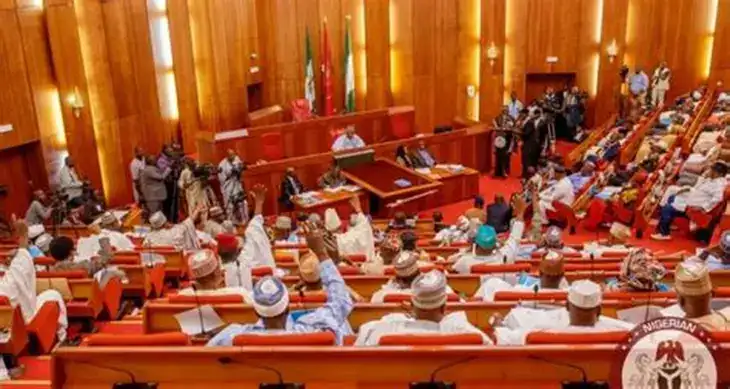
A high stakes Senate investigation into Nigeria’s oil and gas sector transparency has suffered an embarrassing setback after three major government agencies failed to appear at a scheduled public hearing on Monday. Management teams from the Central Bank of Nigeria, the Niger Delta Development Commission and the Nigerian Upstream Petroleum Regulatory Commission were conuously absent from proceedings convened by the Senate Public Accounts Committee to examine audit reports covering 2021 to 2023.
Senator Ibrahim Dankwabo of Gombe North, who chairs the committee, expressed frustration at the no show and immediately rescheduled appearances for Thursday, August 6. He warned that any agency failing to honor the new date would face serious sanctions under the 1999 Constitution and Senate Standing Orders. The planned three week hearing was based on audit findings presented by the Nigeria Extractive Industries Transparency Initiative, which itself also failed to send representatives to the session.
Senators on the committee did not hide their anger at what they characterized as a fundamental disrespect to the legislative branch and Nigerian citizens. Senator Babangida Hussaini from Jigawa North West invoked constitutional provisions to underscore the gravity of the agencies’ absence. He pointed to Sections 47 and 60 of the 1999 Constitution as the bedrock of the committee’s investigative powers, arguing that any refusal to cooperate constitutes a direct challenge to parliamentary authority.
Hussaini went further, warning that institutional integrity was at stake. He described the boycott as taking both the committee and the Nigerian public for granted, calling for drastic measures to reassert the Senate’s oversight role. Senator Patrick Ndubueze from Imo North adopted an even harder line, noting that the absent agencies had not bothered to send letters of explanation, offer excuses or dispatch alternative representatives. He questioned whether they deserved a second chance at all.
Despite the disruption, committee leadership indicated that hearings would proceed with other scheduled agencies. Expected to appear before the panel are officials from the Office of the National Security Adviser, the Nigerian Midstream and Downstream Petroleum Regulatory Authority, and the Revenue Mobilization Allocation and Fiscal Commission. These agencies are expected to answer questions about their roles in oil revenue management and regulatory oversight during the audit period.
What happens on Thursday could set an important precedent for legislative oversight in Nigeria’s critical extractive industries. Should the CBN, NDDC and petroleum regulator continue to resist parliamentary scrutiny, lawmakers may be forced to deploy constitutional enforcement mechanisms that could include contempt proceedings or formal sanctions against agency heads. For a sector that generates the bulk of government revenue and remains plagued by transparency concerns, the standoff highlights ongoing tensions between executive agencies and legislative accountability mechanisms designed to ensure proper stewardship of national resources.






Leave a comment