

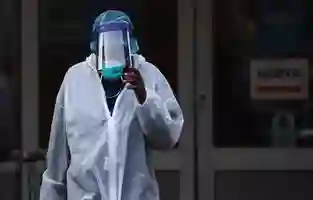
Healthcare workers from Nigeria and across Africa who migrated to the United Kingdom seeking better opportunities are facing an alarming surge in racist abuse, according to a troubling new survey that has exposed the darker reality behind Britain’s reliance on foreign medical professionals. Research conducted by the Society of Radiographers has documented NHS staff being called “dirty foreigners” and “monkeys” by patients, while others have been rejected from providing care solely because of their skin colour or ethnic background.
Paul Awah, a diagnostic radiographer from Nigeria now working in Bedfordshire, says the atmosphere has deteriorated noticeably in recent years. “It’s definitely got worse, people are more expressive now,” Awah explained, noting that comments once considered unacceptable are now spoken openly. He recounts experiences where patients have claimed they cannot understand him, despite English being the only language he speaks. Such incidents point to prejudice masquerading as communication concerns, a pattern that healthcare workers of African and Asian descent report with increasing frequency.
Accounts gathered in the survey paint a disturbing picture of daily discrimination within NHS facilities. One radiographer witnessed a colleague being called a monkey by a patient. Another reported a white man who refused to allow a sonographer to scan his pregnant wife, declaring he did not want anyone from any ethnic background touching his woman. In a separate incident, a patient rejected a Black radiographer attempting to perform a chest X-ray, stating that Black people frightened him. A sonographer of Asian descent in the Midlands recalled patients making hostile comments about immigrants taking jobs, remarks she says have become more prevalent and which she links partly to political and media rhetoric.
These revelations cast a harsh light on the experiences of Nigerian medical professionals who have joined the wave of migration commonly known as “Japa,” seeking improved pay, working conditions, and professional development abroad. Many doctors, nurses, radiographers, and other specialists left Nigeria and other African nations expecting to find welcoming environments where their ss would be valued. Instead, they have encountered a healthcare system where discrimination has reached its highest level in five years, with 9.26 per cent of NHS workers reporting personal experiences of discrimination during 2025, according to the latest NHS Staff Survey.
NHS England has publicly condemned the racist abuse, with Thomas Simons, the organization’s chief human resources and organisational development officer, calling such behaviour completely unacceptable and stating it has no place in the health service. Simons emphasized that NHS organizations must take meaningful action to prevent and respond to racism, support affected employees, and ensure consequences for patients who engage in racial abuse or discrimination. According to NHS England guidance, those consequences can include refusing care to abusive patients in situations that are not medical emergencies, though how consistently this policy is enforced remains unclear.
As Britain continues to depend heavily on healthcare workers from Nigeria, India, the Philippines, and other nations to staff its overstretched medical system, the treatment these professionals receive will likely determine whether the country can sustain its workforce in the years ahead. African medical professionals face a difficult calculus: endure discrimination in exce for higher salaries and better resources, or return to healthcare systems in their home countries that are often underfunded but free from racial hostility. How the NHS addresses this crisis of workplace racism may well shape not only the future composition of its workforce but also the very sustainability of public healthcare in the United Kingdom.
You May Like












Leave a comment