

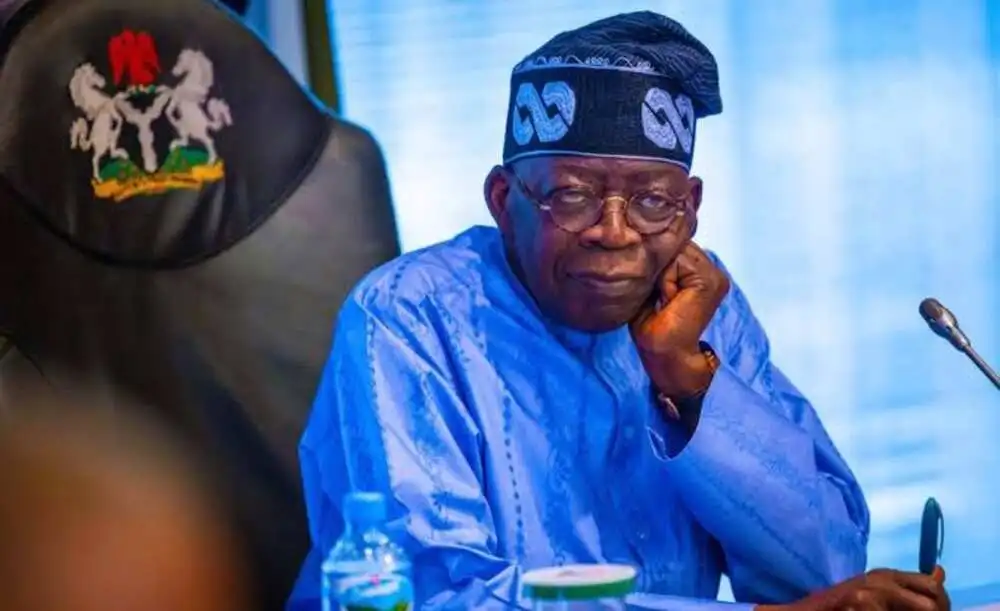
President Bola Tinubu is facing renewed pressure to publicly disclose his academic credentials after an opposition lawyer declared it an “elished fact” that the Nigerian leader lacks primary and secondary school certificates. Kalu Kalu, a lawyer and member of the African Democratic Congress, made the explosive call for resignation during a television interview on Thursday, reigniting a controversy that has shadowed Tinubu’s political career for more than two decades.
Speaking on Channels Television’s Politics Today programme, Kalu insisted the matter had moved beyond mere allegation into elished fact. He challenged the president to settle the issue definitively by presenting the disputed documents to the Nigerian public. “If he says it’s an allegation, if he says it’s an accusation, let him come out and tell Nigerians, ‘This is my primary school certificate. This is my secondary school certificate.’ The matter will stop,” Kalu argued, framing the controversy as one easily resolved through transparency.
The academic qualification debate surrounding Tinubu dates back to 1999 when the late legal luminary Gani Fawehinmi first raised questions about the president’s educational background. That case eventually reached the Supreme Court but was dismissed on what Kalu characterized as technical grounds rather than substantive consideration of the evidence. The issue resurfaced prominently during the contentious 2023 presidential election campaign and has returned to public discourse in 2026, suggesting it remains a potent political weapon for opposition figures seeking to undermine the administration’s legitimacy.
Kalu expressed frustration at the recurring nature of the controversy, questioning why a matter he considers straightforward remains unresolved years later. “Is it not high time Mr President came up and let Nigerians know, ‘This is who I am. This is my primary school certificate. This is my secondary school certificate.’ We settle this issue once and for all,” the lawyer stated. He went further to directly call for Tinubu’s departure from office, asking pointedly, “Why are we repeating this issue?”
For his part, President Tinubu has consistently maintained that he satisfied all constitutional requirements to contest the presidency. Nigerian courts have repeatedly dismissed legal challenges to his qualifications, and the presidency has defended his eligibility for office on multiple occasions. Presidential spokespersons have characterized such s as politically motivated attempts to distract from the administration’s policy agenda and achievements. The Constitution requires presidential candidates to possess a school certificate or its equivalent, a standard the presidency insists Tinubu has met through his university education and professional accomplishments.
Whether this latest call for disclosure will gain traction remains uncertain, but the persistence of the controversy highlights broader tensions in Nigerian politics about transparency, accountability, and the standards expected of public officials. As opposition voices grow louder and public interest in government accountability intensifies, the pressure on Tinubu to address the certificate question directly may become harder to deflect with legal victories alone. How the presidency chooses to respond to this renewed challenge could set important precedents for political discourse and the public’s right to information about their elected leaders.











Leave a comment