

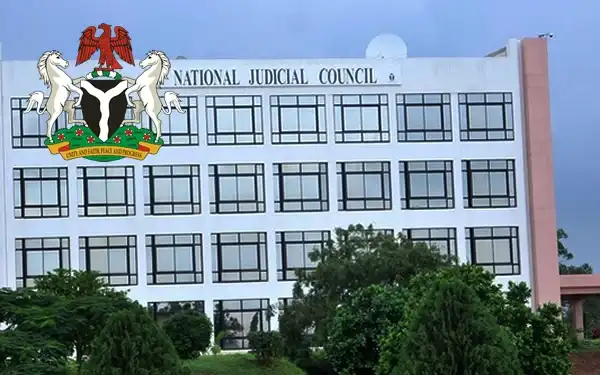
The National Judicial Council, NJC, has launched one of the most sweeping anti corruption actions in Nigeria’s judiciary by investigating more than 256 judges accused of various forms of judicial misconduct and unethical practices.
The move comes amid intensified reforms led by Chief Justice of Nigeria, Justice Kudirat Kekere Ekun, who has repeatedly vowed to restore integrity, discipline and public confidence in the nation’s judicial system. The Council also suspended two High Court judges for one year without pay over misconduct and violations of fair hearing principles.

Justice Kekere Ekun had earlier declared zero tolerance for corruption during her Senate screening as the 23rd substantive Chief Justice of Nigeria in September 2024. Since assuming office, she has introduced reforms aimed at improving transparency in the appointment of judges and strengthening accountability within the judiciary.
One major reform was the mandatory publication of shortlisted candidates for judicial appointments, allowing members of the public to submit complaints or integrity concerns against nominees before confirmation.
At the NJC’s 111th meeting held on May 13, the Council reviewed 98 petitions filed against judicial officers across the country. Out of the petitions, 68 were dismissed for lack of merit, four judges received cautions, one judge was given a final warning, while 11 petitions were recommended for deeper investigation.
The Council also upheld the compulsory retirement of several judges from the Imo State Judiciary over age falsification, rejecting appeals filed to overturn the sanctions. However, one judge from the Customary Court of Appeal was reinstated after presenting credible evidence before the review committee.
In addition, the NJC referred one individual to the Inspector General of Police for alleged perjury and reported five lawyers to the Legal Practitioners Disciplinary Committee for filing frivolous petitions against judicial officers.
The Council further commended nine judges for outstanding performance during the 2024 and 2025 legal years, recognizing their dedication and efficiency in delivering judgments.
You May Like





















Leave a comment