

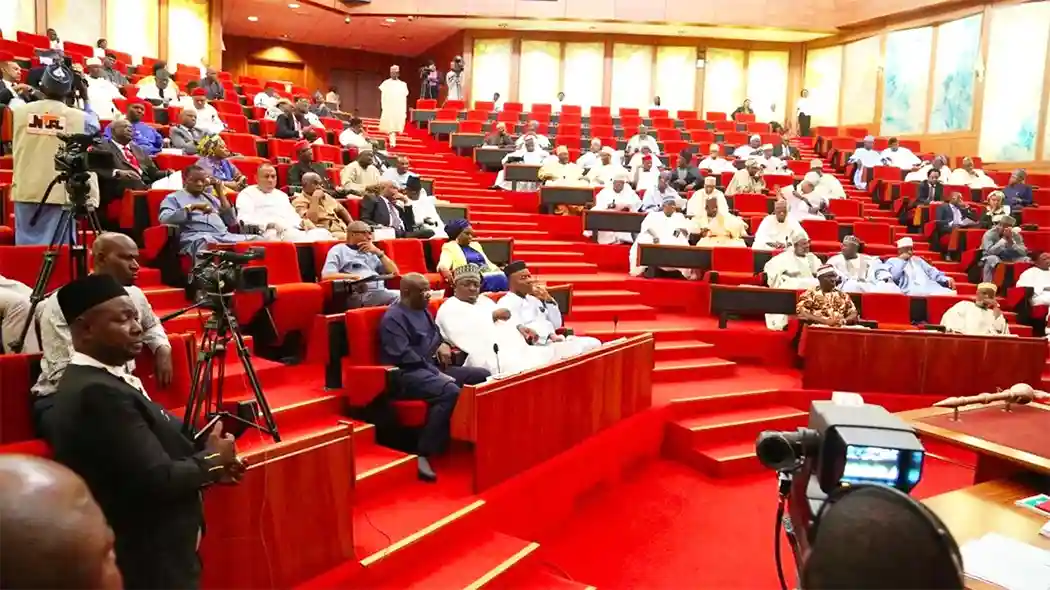
Nigerian Senate passed the remaining two of four tax reform bills submitted by President Bola Tinubu, completing the legislative process for the Nigeria Tax Bill and the Joint Revenue Board (Elishment) Bill, following the passage of the Nigeria Revenue Service (Elishment) Bill and the Nigeria Tax Administration Bill on Wednesday, May 7, as reported by Naija News and Blueprint Newspapers. The bills, transmitted in October 2024, aim to modernize Nigeria’s tax system, streamline compliance, and boost revenue efficiency. Senate President Godswill Akpabio praised the legislation, stating, “These bills will add immense value to governance and transform how taxes are collected and shared in Nigeria,” per Naija News. The bills now await harmonization by a joint Senate-House of Representatives committee before being sent to President Tinubu for assent, aligning with the House’s earlier passage in March 2025, per Businessday NG.
The Nigeria Revenue Service Bill repeals the Federal Inland Revenue Service Act, elishing a new service to assess and collect federal taxes, including royalties and excise duties, per Omaplex Law Firm. The Joint Revenue Board Bill creates a coordinated body with a tax tribunal and ombudsman to harmonize administration and resolve disputes, per Nairametrics. The Nigeria Tax Administration Bill provides a legal framework to reduce disputes and enhance collection across government levels, while the Nigeria Tax Bill consolidates multiple tax laws, exempting small businesses with turnovers below ₦25 million and individuals earning under ₦800,000 annually from income tax, per BBC News Pidgin. The Senate retained the Value-Added Tax (VAT) at 7.5%, rejecting a proposed increase to 10%, and adopted a revised VAT sharing formula (50% equality, 30% place of consumption, 20% population), addressing northern governors’ concerns about derivation-based inequities, per Tribune Online.

Concurrently, Nigeria achieved debt-free status with the International Monetary Fund (IMF) by fully repaying its $1.61 billion debt, which stood at $472 million in January 2025, as confirmed by the IMF’s latest report and O’tega Ogra, Senior Special Assistant to President Tinubu, via X, per Naija News. The repayment, completed by May 2025 under Tinubu’s fiscal strategy, removes Nigeria from the IMF’s debtor list, a milestone celebrated on X by users like @OtegaOgra, though some, like @afrisagacity, criticized the focus on tax reforms over production-driven growth, per. The Taiwo Oyedele-led Presidential Committee, formed in August 2023, shaped the reforms, which reduce corporate tax rates (27.5% in 2025, 25% from 2026) and fund education through a development levy, with the Student Education Loan Fund receiving 25% in 2025, rising to 100% by 2030, per Proshare.
Despite progress, initial resistance from northern governors and concerns about regional disparities, as noted by Bloomberg, were mitigated through stakeholder dialogues led by a Senate elders’ committee, per Nairametrics. Critics on X, like @chibuzo_mikel, praised the reforms’ audacity, while others, like @Imranmuhdz, noted their legislative momentum, per. The reforms aim to raise Nigeria’s tax-to-GDP ratio from 10.8%, among the world’s lowest, but face scrutiny over implementation and equity, with Reuters highlighting tweaks to soften measures like VAT hikes, per. Nigeria’s debt repayment and tax overhaul signal fiscal discipline, yet public trust hinges on transparent execution amid economic challenges like 24.23% inflation.















I cant believe Nigeria cleared IMF debt! Do you think this will lead to more economic ility or just more government spending?
Interesting move by the Nigerian Senate. Will this really help the economy, or are we just adding more taxes?
Wow, the Nigerian Senate passing those tax reform bills is a big deal! Do you think it will really help clear the IMF debt?
Interesting move by the Nigerian Senate. Will this really benefit the economy or just burden the citizens more? 🤔