

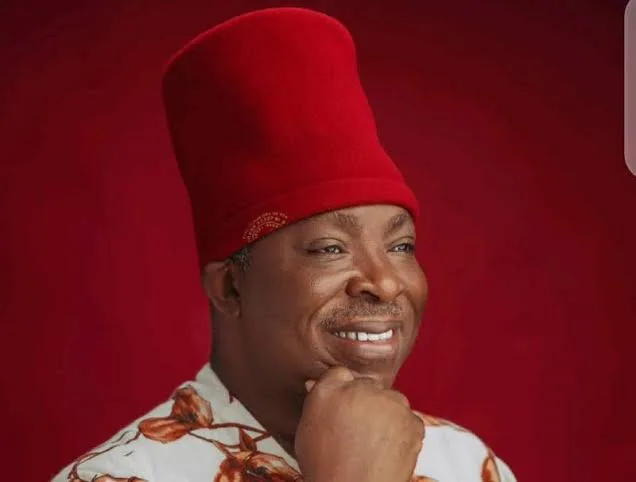
Nigeria would remain economically le even if all South African businesses were forced to leave the country, according to Senator Victor Umeh, who insists that local capabilities can easily replace foreign services currently provided by companies from the Rainbow Nation. Speaking on national television, the Anambra Central lawmaker made clear his position that Nigeria possesses sufficient technological and business expertise to fill any vacuum left by departing South African enterprises.
The senator’s forceful remarks come against a backdrop of renewed xenophobic violence in South Africa that has claimed Nigerian lives and resulted in widespread looting of businesses owned by Nigerian citizens. Umeh told viewers during an appearance on Channels Television’s Politics Today programme that targeting and expelling foreigners represents a fundamentally flawed approach to nation building. He warned that South Africa would ultimately suffer the consequences of its own actions as international travelers and investors begin avoiding the country altogether.
Addressing concerns about Nigeria’s dependence on South African technology and services, particularly in the telecommunications and satellite broadcasting sectors, Umeh pointed to historical examples of local capacity. He recalled how Daar Communications attempted to launch digital satellite transmission services in 2006, a venture that attracted patriotic investment from Nigerians who recognized the strategic importance of developing indigenous alternatives to foreign providers. According to the senator, this episode demonstrates that Nigeria possesses both the technical know how and the capital necessary to create competitive domestic industries.
Umeh emphasized that Nigerian advances in digital technology have positioned the country to independently develop sophisticated services currently associated with South African firms. He argued that with proper government prioritization and strategic investment, Nigeria could rapidly elish the infrastructure and platforms needed to serve its own market without relying on external providers. The senator suggested that any perceived gap in capabilities stems more from insufficient political will than from actual technical limitations.
The senator’s comments reflect growing frustration among Nigerian lawmakers and citizens over repeated xenophobic incidents targeting the Nigerian diaspora community in South Africa. Multiple voices in Nigeria’s political elishment have called for stronger government responses, ranging from diplomatic protests to economic retaliation against South African commercial interests operating throughout Nigeria. Some student groups have already issued ultimatums demanding that South African businesses cease operations and leave the country within specified timeframes.
As tensions between Africa’s two largest economies continue to escalate, the question of how Nigeria will balance its economic interests against demands for accountability looms large. Whether Nigerian authorities will follow through on suggestions to expel South African businesses or restrict their operations remains unclear, but the political pressure for decisive action appears to be mounting. How both governments navigate this crisis in the coming weeks could have lasting implications for regional economic integration and the safety of African migrants across the continent.


















Leave a comment