

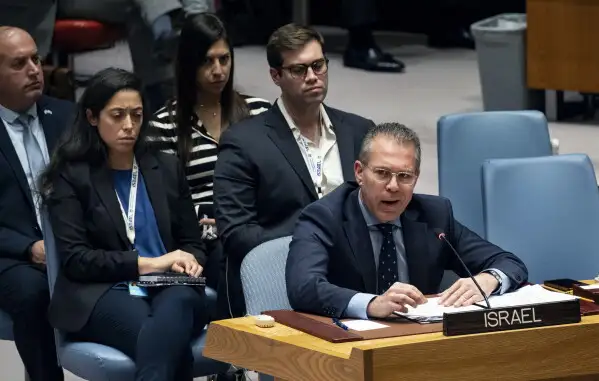
Israel’s Ambassador to India has launched a sharp critique of a recent United Nations report on Gaza, dismissing it as fundamentally biased and reliant on statistics provided by Hamas. Speaking in an exclusive interview, Reuven Azar challenged the credibility of international assessments of the conflict, arguing that the UN’s reliance on data from what Israel considers a terrorist organization fatally undermines the report’s objectivity. His comments reflect a deepening rift between Israel and international institutions over how the Gaza conflict is portrayed and judged on the world stage.
Azar’s remarks come at a time of heightened tensions across West Asia, with the conflict in Gaza continuing to generate widespread international concern. The ambassador outlined Israel’s military strategies in the region, defending operations as necessary measures for national security. International humanitarian organizations have repeatedly raised alarms about civilian casualties in Gaza, but Israeli officials maintain that Hamas deliberately operates within civilian areas, making it impossible to conduct military operations without collateral damage. This fundamental disagreement over the nature of the conflict continues to fuel diplomatic disputes.

The question of casualty figures in Gaza has long been contentious. United Nations agencies and humanitarian groups frequently cite numbers provided by the Hamas controlled Gaza Health Ministry, which Israel argues are inflated and weaponized for propaganda purposes. Critics of Israel’s position counter that these figures have historically proven reliable and are often the only source of data available from the sealed territory. Azar’s challenge to the UN report underscores Israel’s broader frustration with what it perceives as a systematic bias against the country in international forums, particularly within UN bos.
Beyond the Gaza report specifically, the ambassador addressed broader military and strategic considerations facing Israel. Regional dynamics in West Asia remain volatile, with multiple actors pursuing competing interests. Israel has consistently maintained that its security operations target militant infrastructure and leadership, not civilian populations. Yet the humanitarian toll of the conflict has generated widespread condemnation, placing Israel under sustained diplomatic pressure from European nations, human rights organizations, and segments of international public opinion.
India’s relationship with Israel adds another dimension to these discussions. New Delhi has carefully balanced its traditional support for Palestinian rights with increasingly close defense and technology ties with Israel. Azar’s choice to grant an exclusive interview to Indian media reflects the strategic importance both nations place on their partnership. India has generally avoided taking sides in UN votes critical of Israel, abstaining on many resolutions rather than joining either the pro-Israeli bloc or the larger group of nations supporting Palestinian positions.
Looking ahead, the dispute over UN reporting and casualty figures appears unlikely to be resolved soon. As long as the conflict in Gaza continues, international organizations will face the challenge of documenting events in a war zone with limited independent access. Israel’s insistence that Hamas manipulates data for international sympathy will continue to clash with humanitarian demands for accountability and protection of civilians. How the international community navigates these competing narratives will shape both the diplomatic landscape and the prospects for any eventual resolution to one of the world’s most intractable conflicts.
You May Like



















Leave a comment