


An extraordinary convergence of crises is reshaping the global landscape in ways that appear increasingly difficult to manage through conventional policy responses. Record breaking heat is forcing European nations to close schools and cancel rail service, while venture capitalists are pouring $12 billion into defense technology startups as conflicts proliferate across multiple continents. Meanwhile, innovative acoustic mapping applications using networked Android phones are tracking military drones in conflict zones, illustrating how civilian technology is being rapidly repurposed for wartime applications.
Western France faces the possibility of temperatures reaching 45 degrees Celsius, or 113 degrees Fahrenheit, early this week, exceeding even the forecast highs for Phoenix, Arizona. Meteorologists are describing this as one of France’s worst heatwaves on record due to its unprecedented duration, intensity, and extreme temperature anomalies. Across the English Channel, Britain’s energy crisis is driving manufacturing operations offshore as businesses struggle with costs, while the UK government is considering restrictions on virtual private networks despite privacy concerns. The climate emergency is no longer a distant threat but an immediate economic and social disruptor, forcing governments to make difficult choices between public safety and economic continuity.
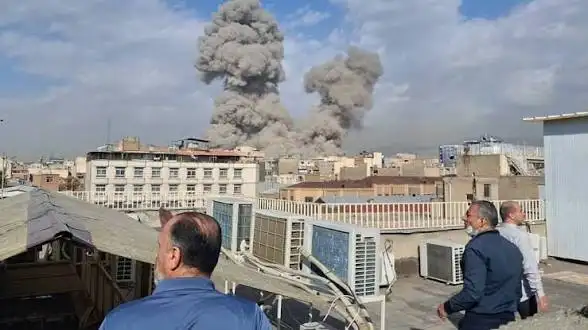
Geopolitical flashpoints are multiplying at an alarming rate. More than 1,000 confirmed Ebola cases have now been recorded in the Democratic Republic of Congo as new infections continue. Israeli defense officials have announced that their army will not withdraw from occupied territory in southern Lebanon, while Iranian and American delegations are attempting to negotiate a 60 day roadmap toward a final agreement in Switzerland, even as threats and walkouts complicate the process. Questions are emerging about whether shipping lanes through the Strait of Hormuz remain genuinely open for commercial traffic despite official assurances. A massive explosion at an industrial plant in Qatar has left dozens injured and missing, adding to regional inility.
Economic and technological competition between major powers is intensifying in ways that threaten to fragment global supply systems. Japan is seeking to elish G7 price floors to counter China’s dominance in rare earth minerals, while China has retaliated against American firms with expanded export controls and procurement bans affecting 46 companies. Chinese oil imports may never fully recover from disruptions caused by conflict in Iran, according to analysis from Bloomberg, and Goldman Sachs is warning that Southeast Asia may face a food supply shock for three distinct reasons. Analysts are describing China as caught in a high technology, low productivity trap that could have profound implications for global growth.
Social tensions are erupting in unexpected places as inequality and resource access become flashpoint issues. Albanians tore down barriers at Kakome Beach in the southern part of the country, declaring that national beaches belong to the people rather than oligarchs, as opposition intensifies to a controversial resort project associated with the Kushner and Trump families. In India, extreme heat is exacerbating caste inequality through differential access to appropriate clothing and cooling resources. Climate migration from Bangladesh is no longer a future concern but a current reality, straining regional resources and diplomatic relationships. United Nations human rights officials are opposing European Union plans to elish migrant return hubs in third countries, highlighting the moral and legal complexities of managing displacement.
Looking ahead, the simultaneous nature of these crises suggests that traditional crisis management approaches, which typically address challenges sequentially, may prove inadequate. Governments and international institutions face the daunting task of responding to climate emergencies, military conflicts, public health outbreaks, and economic disruptions all at once, with limited resources and political capital. Whether existing frameworks can adapt quickly enough to prevent these overlapping challenges from cascading into systemic failures remains an open and urgent question. Policymakers who continue to treat these as isolated problems rather than interconnected dimensions of a broader transformation may find themselves perpetually behind the curve, reacting to symptoms rather than addressing root causes.
You May Like

















Leave a comment