

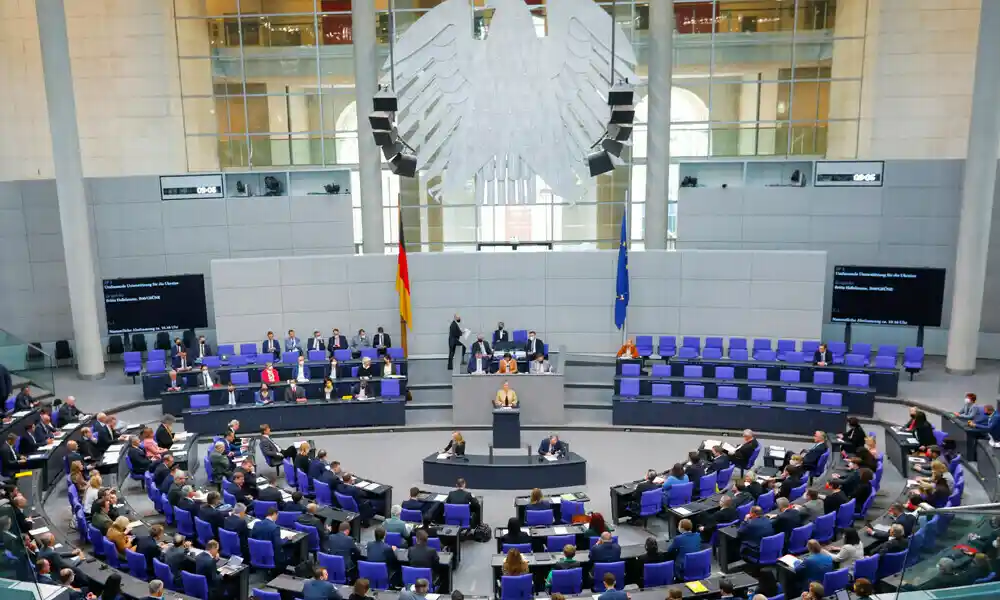
Germany’s upper house of parliament has approved a €46 billion corporate tax relief package aimed at stimulating the nation’s economy. The package, which had previously been passed by the lower house, is designed to support businesses through tax cuts and investment incentives over the period from 2025 to 2029. Key measures include accelerated depreciation options of up to 30% annually and a 75% depreciation in the first year for electric vehicle purchases. Finance Minister Lars Klingbeil emphasized that these reforms aim to enhance Germany’s competitiveness by encouraging investment and job creation.
A significant component of the plan is the gradual reduction of the corporate tax rate by one percentage point annually, starting in 2028, with the goal of reaching 10% by 2032. Economic forecasts from the Cologne Institute for Economic Research (IW) estimate that this initiative could lead to a €29 billion increase in economic output and an additional €16 billion in investments by 2029, potentially creating up to 39,000 jobs. While these measures are expected to reduce tax revenue, the federal government has pledged funds to help states invest €8 billion in public services such as education and healthcare, aiming for long-term fiscal benefits through renewed economic growth.

In parallel, Germany’s largest corporations, including Siemens, Deutsche Bank, and FGS Global, are considering a joint initiative to restore investor confidence in the nation’s economy. Representing over 30 major companies, they plan to commit approximately €300 billion in investments in Germany through 2028, largely comprising pre-existing commitments. The initiative aims to mobilize additional private capital as well, with international investors like Advent and KKR expected to participate. A key meeting is scheduled for July 21 with Chancellor Friedrich Merz and Finance Minister Lars Klingbeil to discuss formalizing the plan. This move aligns with the new government’s broader strategy to revitalize the economy, which includes the €46 billion tax relief package and increased public spending focused on defense and infrastructure. The government seeks to improve strained ties with the business sector and drive economic growth to reduce dependency on the U.S. Despite improved business morale and investor sentiment, Germany’s economy remains sluggish and risks a third consecutive year of contraction. Critics argue that structural reforms are essential for any significant economic recovery beyond fiscal stimulus measures.
The approval of the €46 billion corporate tax relief package has had a positive impact on European markets. Following the German cabinet’s approval of the package, the DAX index reached a record high, and the pan-European STOXX 600 rose by 0.7%, with Germany outperforming other major indices. Market optimism was also buoyed by easing trade tensions, as the U.S. paused major tariffs and reached a trade agreement with the UK. However, concerns remained as the U.S. doubled tariffs on steel and aluminum, ahead of further trade talks with China. Most European sectors gained, led by technology. Notable stock movements included a 4.1% rise in Airbus shares on potential large Chinese orders and a 5.8% jump in Remy Cointreau after optimistic executive comments. Conversely, UK retailer B&M fell nearly 7% due to disappointing profits. Investors now await the European Central Bank’s expected rate cut and the upcoming U.S. jobs report for further policy cues.
The €46 billion tax relief package is part of a broader economic revival plan that includes over €1 trillion in public investment and efforts to cut bureaucracy and accelerate digitalization. The policy shift comes amid stagnant growth, global competition, and high energy costs, with corporate investments and R&D spending lagging behind the US and EU averages. Experts view the initiative as a positive step but stress the need for deeper regulatory reforms.
In summary, Germany’s upper house has approved a substantial corporate tax relief package aimed at stimulating economic growth and investment. The package includes significant tax cuts and incentives for businesses, with the goal of enhancing Germany’s competitiveness and addressing economic stagnation. While the measures have been welcomed by many, ongoing discussions and potential structural reforms will be crucial in determining the long-term impact on the German economy.
You May Like






















This tax relief package is a double-edged sword. Will it boost the economy or just benefit big corporations? Lets discuss.
Wow, do you think this tax relief package will really boost Germanys economy or just benefit big corporations? Lets discuss!
Wow, €46 billion tax relief for corporations? Will this really help the economy or just benefit the big players? Lets discuss!
Wow, €46 billion tax relief for corporations? Do they really need it? Will it actually stimulate the economy or just benefit the wealthy?
Wow, €46 billion for corporate tax relief? Will this really help the economy or just benefit big businesses? Lets discuss!
Wow, cant believe Germany is giving away €46 billion in tax relief to corporations. Will this really help the economy or just benefit the rich more?