

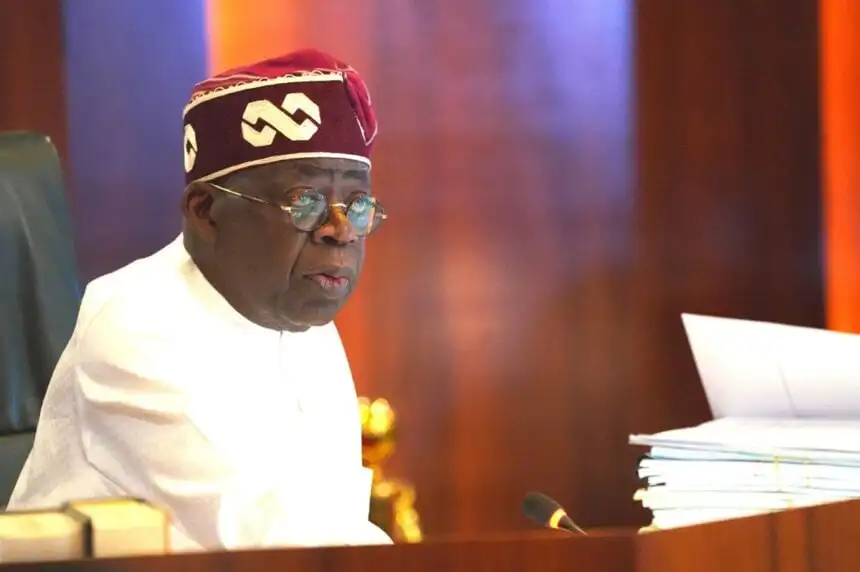
The Federal Government has reaffirmed its commitment to ensuring financial autonomy for Nigeria’s 774 local government areas, pledging to curb persistent encroachment by state governments on federally allocated funds.
The statement was made on Thursday in Abuja by Mohammed Shehu, Chairman of the Revenue Mobilisation Allocation and Fiscal Commission (RMAFC), during a 2025 budget performance review and 2026 budget defence before the House of Representatives’ Committee on Finance.

Shehu lamented the long-standing interference by state governments in local government finances, describing it as a major factor undermining grassroots governance. He disclosed that RMAFC plans to re-elish a Local Government Committee to monitor finances and ensure allocations are properly managed.
“I’m glad that Mr President spoke to the governors himself, that ‘if you don’t allow this (local government autonomy), I will issue an Executive Order.’ The Commission is fully in support of Mr President over this course,” Shehu said.
He noted that local governments historically performed better—even under military administrations—when granted functional autonomy. Shehu also commended the House Committee on Finance, chaired by Lagos lawmaker Abiodun Faleke, for strengthening RMAFC’s influence and fostering collaboration with key revenue-generating agencies such as Nigerian Customs and the Nigerian Upstream Petroleum Regulatory Commission.
In addition, Shehu reported that RMAFC had conducted an audit of oil assets across the Niger Delta and was finalising a new revenue allocation formula for all three tiers of government, including remuneration guidelines for political officeholders, which had been submitted to the Presidency for approval.
Faleke, in response, commended RMAFC for its role in improving revenue generation and enhancing fiscal oversight in the country.
Interference in local government finances has long been a contentious issue, with state governments often diverting funds through State–Local Government Joint Accounts, weakening service delivery, local infrastructure, healthcare, and education. Civil society groups, labour unions, and successive administrations have repeatedly called for reforms to strengthen grassroots governance.
Recent Supreme Court rulings and renewed federal pressure indicate a shift toward enforcing local government financial autonomy, with the Federal Government signaling that executive action may be taken if necessary to ensure local councils control their allocations.
















Leave a comment