

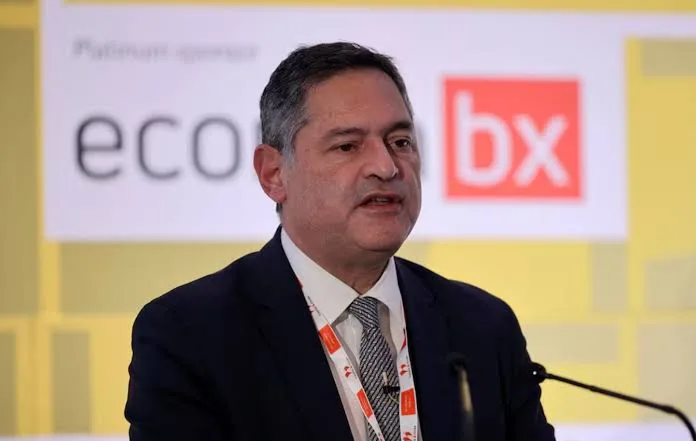
The governor of the Central Bank of Cyprus has thrown his support behind the European Central Bank’s decision to hold interest rates steady, even as he warned that inflation risks are gradually mounting due to stubbornly high energy prices. Christodoulos Patsalides told specialist financial news wire Econostream that while current data does not justify immediate monetary tightening, policymakers must remain vigilant as geopolitical tensions continue to keep oil markets elevated.
Speaking in an interview published this week, Patsalides defended the ECB’s recent decision to leave rates unced, arguing that inflation remains broadly aligned with forecasts and that second round effects have yet to materialize across the eurozone economy. He emphasized that inflation expectations remain well anchored and that there is no compelling evidence to support a rate hike at this juncture. However, the governor cautioned that risks are tilted to the upside, driven primarily by developments in global energy markets that show little sign of abating.

Patsalides elaborated on the delicate balancing act facing central bankers, noting that the longer geopolitical tensions persist without resolution, the greater the likelihood that elevated oil prices will seep into broader economic activity and eventually fuel wider inflation. He stressed the importance of preemptive action should conditions deteriorate, while maintaining that policy decisions must be grounded in comprehensive data assessment rather than reacting to any single indicator. The governor said he is monitoring closely whether higher energy costs are filtering into production expenses, consumer prices, wage demands, and inflation expectations across the economy.
Despite the heightened focus on energy driven pressures, Patsalides reported that there is currently no evidence of broad based cost push inflation outside the energy sector. Wage demands remain contained, he noted, suggesting that the transmission mechanism from energy shocks to wider price pressures has not yet taken hold. Still, he raised concerns about potential inflationary pressures emerging from fiscal policy, particularly as European governments ramp up defence spending and run higher budget deficits despite constrained fiscal space.
The Cyprus central bank chief also offered a robust defense of the ECB’s controversial decision to abandon forward guidance, a policy tool that had been a cornerstone of central bank communication for years. Patsalides argued that the current environment of elevated uncertainty makes it inappropriate and potentially damaging to signal future policy moves with any degree of specificity. Honesty, flexibility, and credibility would all be compromised if the ECB attempted to guide markets toward outcomes that may not materialize given the unpredictable landscape, he said. When asked to characterize the current policy stance, he described interest rates as being somewhere between neutral and restrictive, and at the right level for present conditions, though he acknowledged that assessment could shift as risks evolve.
Looking ahead, Patsalides indicated that discussions on operational framework ces, including minimum reserve requirements, should be incorporated into the broader ECB review scheduled to commence in the autumn. He cautioned against announcing major policy ces in the current climate of heightened market volatility, arguing that doing so could create unnecessary confusion among investors and market participants. As European policymakers navigate an increasingly complex economic landscape marked by geopolitical uncertainty and energy market volatility, the coming months will test whether the ECB’s cautious approach can successfully thread the needle between controlling inflation and supporting economic growth.




















Leave a comment