

Nigeria’s forest guards are environmentalists, not solrs, and expecting them to tackle the nation’s escalating security crisis is a dangerous miscalculation that could lead to further disaster. That stark warning comes from Usman Austin Okai, co-founder of United Nigeria Against Terrorism, who argues that the Federal Government’s reliance on forest guards to combat banditry, kidnapping and terrorist s fundamentally misunderstands both the nature of the threat and the capabilities of the personnel being deployed.
Speaking on a recent political affairs programme, Okai responded to the Tinubu administration’s Presidential Forest Guards Initiative, which has graduated over 7,000 personnel in recent months and approved additional recruitment across states plagued by insecurity. The government’s strategy aims to reclaim vast forest territories from criminal groups who use the dense vegetation as staging grounds for s. While acknowledging the need for innovative approaches, Okai insisted that forest guards are constitutionally mandated to protect wildlife and prevent deforestation, not to engage in armed combat with heavily weaponized terrorist groups.
The security expert emphasized that simply replacing one set of personnel with another will not resolve Nigeria’s deepening crisis. He called for a comprehensive strategy rather than piecemeal solutions that fail to address underlying structural problems within the security sector. According to Okai, forest guards require extensive combat training, sophisticated intelligence support and full integration with police, the Department of State Services and military forces before they can be safely deployed into active conflict zones. Anything less than complete coordination amounts to sending ill-prepared personnel into deadly situations.

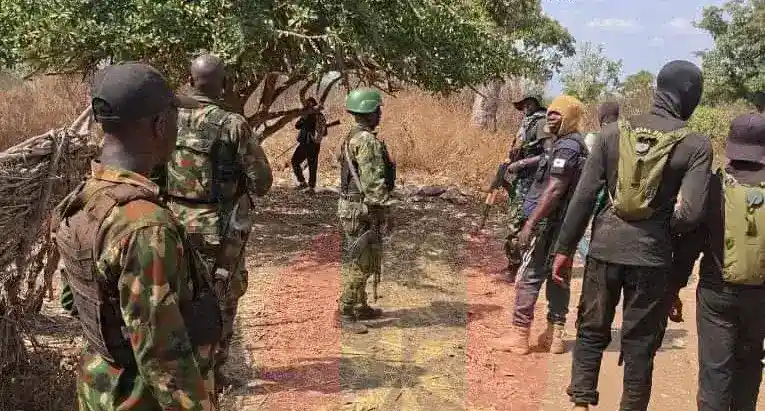
Okai warned that if the government intends to position forest guards in territories controlled by well-armed bandits and terrorist cells, these personnel must be equipped with firepower and protective gear equivalent to what their adversaries possess. Currently, most forest guards receive basic environmental training with limited exposure to counterinsurgency tactics or weapons handling. Deploying them without adequate preparation not only jeopardizes their lives but also risks creating new vulnerabilities that criminal networks could exploit. The gap between their training and the realities of combat operations represents a critical weakness in the government’s security planning.
Beyond equipment and training concerns, Okai advocated for greater operational autonomy within Nigeria’s security architecture and urged authorities to recruit experienced retired security professionals rather than individuals who might compromise sensitive intelligence operations. He stressed that effective counter-terrorism requires deep institutional knowledge, proven fieldcraft and the ability to cultivate community trust. Forest guards, however sed at environmental protection, lack this specialized expertise. Community engagement, intelligence gathering and professional security coordination must form the foundation of any successful strategy, rather than relying on hastily assembled forces with limited combat experience.

As Nigeria continues to grapple with one of its worst security challenges in decades, the debate over forest guards highlights broader questions about resource allocation, strategic planning and the political will to implement comprehensive reforms. Whether the government will heed these warnings and invest in proper training, equipment and inter-agency collaboration remains to be seen. What is clear, however, is that superficial solutions will not address the sophisticated criminal networks that have taken root across the country’s vast and vulnerable forest regions. The coming months will test whether Nigerian authorities can move beyond reactive measures toward a genuinely coordinated national security strategy.



















Leave a comment