

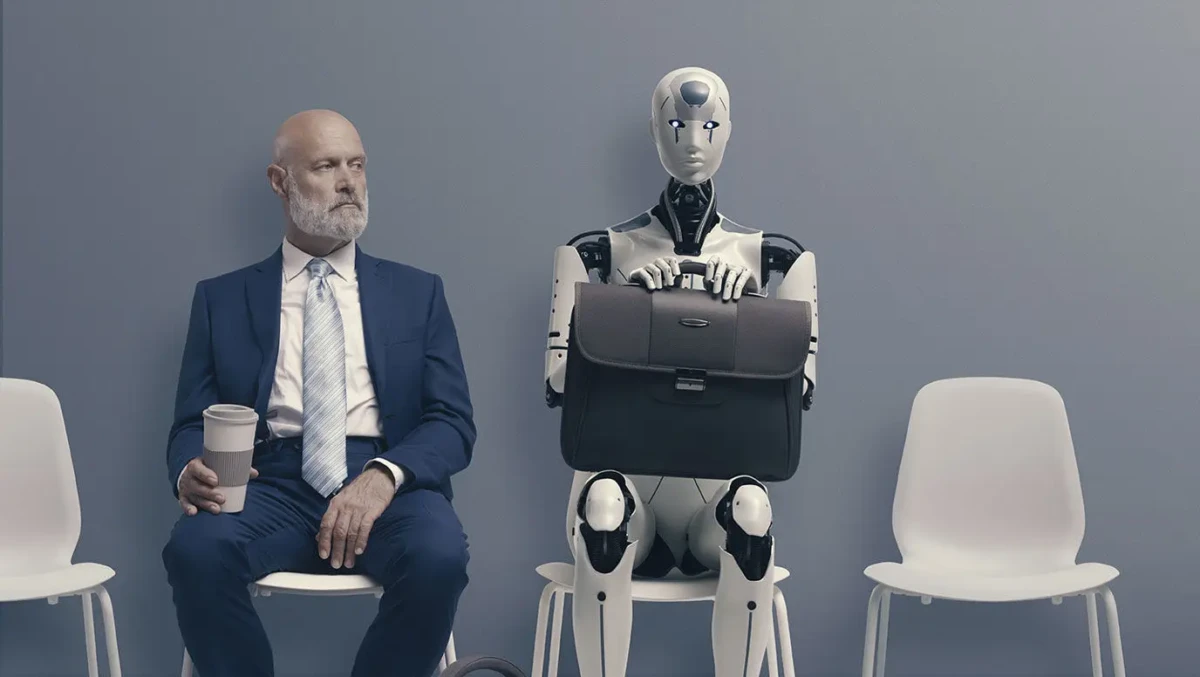
The rapid integration of artificial intelligence (AI) and automation technologies is reshaping the U.S. workforce, presenting both opportunities and challenges. While these advancements promise increased productivity and economic growth, they also raise concerns about job displacement and the need for workforce adaptation.
In 2024, U.S. businesses invested $109 billion in AI, surpassing expenditures in China and the UK. This substantial investment is driving significant economic ces, particularly in sectors like finance, healthcare, and media. Companies such as UBS and Anthropic are integrating AI into their operations, leading to enhanced efficiency and innovation. However, this swift adoption has led to disruptions, especially in entry-level white-collar positions. The flexibility of the U.S. labor market and a favorable regulatory environment have facilitated this rapid integration, positioning American firms at the forefront of AI deployment.

Nonetheless, concerns about youth unemployment and the broader social implications of AI are emerging, with public surveys indicating unease about the pace of technological implementation.
The World Economic Forum’s Future of Jobs Report 2025 highlights the dual impact of AI on employment. While AI and automation are expected to create 97 million new jobs by 2025, they may also displace 85 million roles, resulting in a net gain of 12 million jobs globally. The fastest-growing professions include big data specialists, fintech engineers, and AI and machine learning specialists. Conversely, roles such as clerks, administrative assistants, and accountants are anticipated to decline due to automation. This shift underscores the necessity for workers to acquire new ss to remain competitive in the evolving job market.
To address these challenges, companies are increasingly investing in resing and upsing initiatives. Schneider Electric, for instance, is integrating advanced robotics and AI into its operations while retraining employees to work alongside these technologies. This approach aims to alleviate fears of job displacement by demonstrating how automation can enhance human capabilities. Such strategies are believed to contribute to the resilience of the U.S. economy, enabling a quicker recovery post-pandemic compared to other global markets.
However, the impact of automation is not uniform across the country. Wealthy urban centers, which have traditionally benefited from industrial automation, may now be more vulnerable to job displacement due to AI-driven technologies. Sectors like coding, law, and finance, prevalent in cities such as San Francisco, New York, and Washington D.C., are particularly susceptible. A Brookings Institution study suggests that affluent regions might experience significant job disruptions, potentially reversing previous automation trends. Despite these challenges, these areas may also benefit from AI-driven productivity gains, given the presence of tech firms and corporate leadership.
In response to these developments, policymakers and business leaders are emphasizing the importance of strategic planning and investment in workforce development. The focus is on creating a balance between leveraging technological advancements and ensuring that workers are equipped with the necessary ss to thrive in an increasingly automated environment. This approach aims to harness the benefits of AI and automation while mitigating potential negative impacts on employment and social ility.
As the integration of AI and automation continues to accelerate, the future of the workforce will depend on proactive measures to foster s development, support displaced workers, and promote inclusive economic growth. The ongoing dialogue between technology, business, and labor will be crucial in shaping a workforce that is both adaptable and resilient in the face of rapid technological ce.
You May Like





















Isnt it crazy how technology is taking over jobs? Will robots rule the world soon? What do you think?
Isnt it crazy how automation is taking over jobs? But hey, maybe its not all bad – more time for hobbies, right?
Is automation really a threat to job growth, or could it actually lead to new opportunities? Lets discuss!
I think automation can create new job opportunities, but we need to ensure workers are prepared for the shift. What do you guys think?
I really think we should focus on upsing our workforce instead of fearing automation taking over jobs. What do you all think?
I think automation isnt all bad – it can create new job opportunities and boost efficiency. Lets embrace ce!
I dont buy into the whole automation panic. Maybe robots taking over jobs will force us to focus on more creative pursuits. Just a thought!