
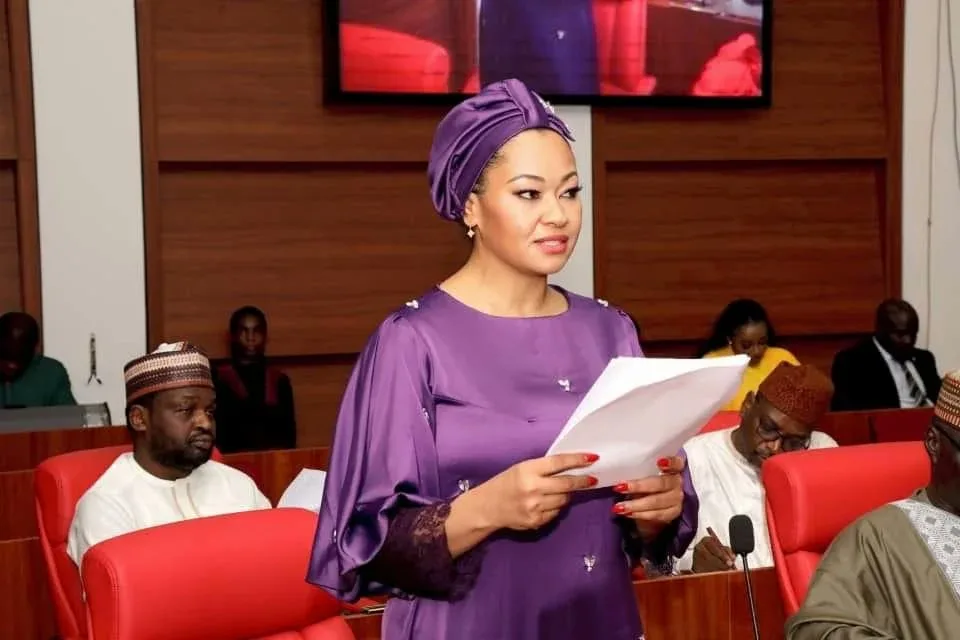
A Nigerian senator has called on the federal government to implement reciprocal visa restrictions against South African entertainers following allegations that popular Nigerian singer Ayra Starr was denied entry into South Africa, leading to the cancellation of scheduled performances. Senator Natasha Akpoti, representing Kogi Central, made the demand Thursday evening as controversy swirled around South African artist Tyla’s upcoming concert in Lagos amid growing tensions over the treatment of Nigerian nationals in South Africa.
Speaking through social media, Senator Akpoti urged the Nigeria Immigration Service and federal authorities to review visa applications from South African artists and their teams in accordance with elished diplomatic principles of reciprocity. Her statement comes at a time when many Nigerians have launched campaigns calling for a boycott of Tyla’s Lagos performance, citing what they describe as persistent s and discriminatory treatment of Nigerians living and working in South Africa. The senator emphasized that her call was not a personal on any individual artist but rather a matter of national dignity and mutual respect between nations.
According to Senator Akpoti, reciprocity represents a fundamental instrument of international diplomacy that Nigeria must employ to protect its citizens abroad. She argued that if reports confirming the visa denial for Ayra Starr and her crew are accurate, Nigeria should respond with equivalent measures until South African authorities demonstrate fair and respectful treatment toward Nigerian citizens and artists. The senator characterized the situation as one requiring decisive government action to ensure that diplomatic relationships are based on mutual respect rather than one sided accommodation.

In her detailed statement, the lawmaker lamented what she described as ongoing disrespect toward Nigerian nationals, asserting that the country’s foreign policy must prioritize protecting the dignity of its citizens wherever they travel. She insisted that when Nigerians face discriminatory or unjust treatment in foreign countries, the government must demonstrate that such actions carry corresponding consequences. Her position reflects growing frustration among Nigerian politicians and citizens over recurring incidents involving Nigerian nationals in South Africa, including reported xenophobic violence and bureaucratic obstacles.
Reports of Ayra Starr’s visa denial have not been officially confirmed by either the Nigerian or South African governments, though the cancellation of her South African performances has fueled speculation and anger among her fans and the wider Nigerian entertainment community. Meanwhile, South African singer Tyla, who recently achieved international success, faces mounting pressure as prominent Nigerian celebrities and social media influencers have publicly urged fans to boycott her scheduled Lagos concert. Some activists have threatened to disrupt the event unless the broader issues of Nigerian treatment in South Africa are addressed.
As diplomatic tensions simmer between Africa’s two largest economies, the incident highlights the delicate balance between cultural exce and political accountability in international relations. Whether Nigerian authorities will heed Senator Akpoti’s call for reciprocal measures remains uncertain, but the controversy underscores growing demands from Nigerian citizens for their government to take stronger stances in protecting nationals abroad. How both governments navigate this latest dispute could set important precedents for bilateral relations and determine whether artistic collaboration between the two nations continues to flourish or becomes another casualty of unresolved political grievances.














Leave a comment