
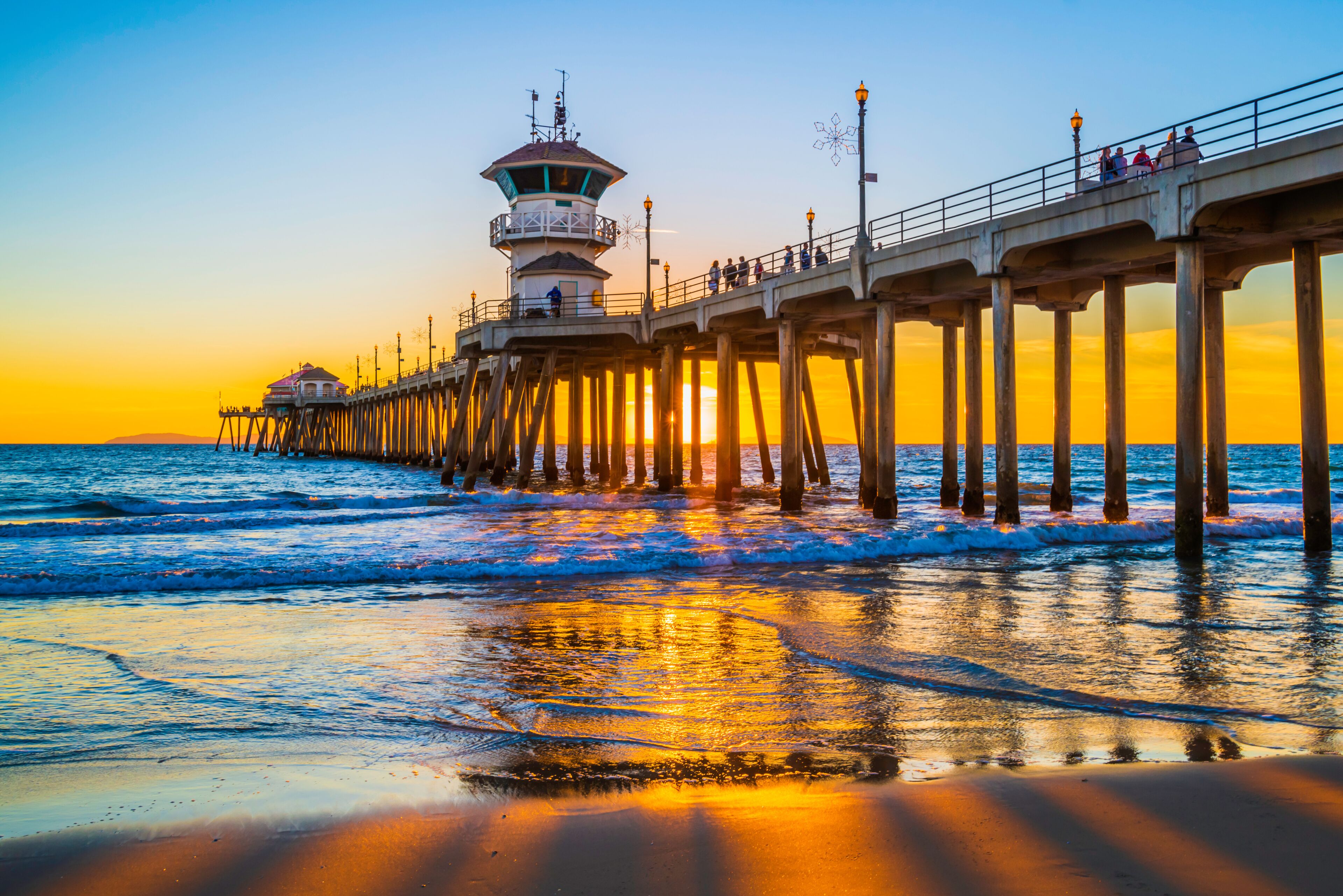
While much of California struggles with homelessness, political division, and exodus, one coastal community is showing the Golden State what it once was and could be again. Huntington Beach, the self-proclaimed Surf City USA, is hosting the Lexus US Open of Surfing this week, welcoming international visitors to a California experience that feels increasingly rare: optimistic, vibrant, and unapologetically free.
Politically, Huntington Beach has found itself under siege. As one of the few remaining conservative strongholds on the California coast, the beach town has faced relentless challenges from state officials and advocacy groups. Gov. Gavin Newsom and other Democratic leaders have targeted municipal policies they oppose. Private attorneys like Kevin Shenkman have successfully sued to overturn the city’s voting system, replacing it with ranked choice voting despite minimal public support for the ce. For residents who chose this community precisely because it maintained traditional values and local control, these interventions feel like s on their right to self-governance.
Yet the city’s spirit remains undaunted. Hurricane Fausto, churning safely westward far off the Pacific Coast, has delivered an unexpected gift: warm water and powerful swells that create ideal conditions for one of surfing’s most prestigious competitions. Spectators from around the globe are arriving fresh on the heels of World Cup visitors, finding a California that refuses to apologize for its success or surrender to political correctness. Here, the party never stopped.
What makes Huntington Beach special extends beyond politics into soing more fundamental about California’s identity. Walking the town feels like stepping into the state’s golden era, before urban blight consumed Los Angeles streets and catastrophic wildfires razed communities from Paradise to Pacific Palisades. Crosses still illuminate hillsides, visible reminders of the religious foundations that shaped California from Spanish missions to modern megachurches. Pedestrians once risked tickets for jaywalking, a public safety measure state legislators later deemed racist and abolished. These details matter because they reflect a worldview where order, tradition, and personal responsibility were seen not as oppression but as the framework for genuine freedom.
California built its legendary reputation as a place where dreamers could reinvent themselves, where innovation thrived without penalty, where success was celebrated rather than punished. People didn’t flee California; they flocked to it. Huntington Beach preserves this ethos in defiance of statewide trends that have transformed the Golden State into a cautionary tale of overregulation, overtaxation, and declining quality of life. Conservatives gravitate to Huntington Beach not merely for ideological refuge but because it demonstrates that California’s founding promise still works when communities are allowed to chart their own course.

As surfers carve through hurricane-fed waves and tourists rediscover what made California irresistible, the contrast with Sacramento’s vision grows sharper. Rather than ing communities that dare to differ from progressive orthodoxy, state leaders might learn from Huntington Beach’s example. California’s path forward need not accept urban decay and exodus as inevitable. Surf City proves the state can recapture what made it extraordinary: the wild, free spirit that once defined the California dream and still might again.










Leave a comment