
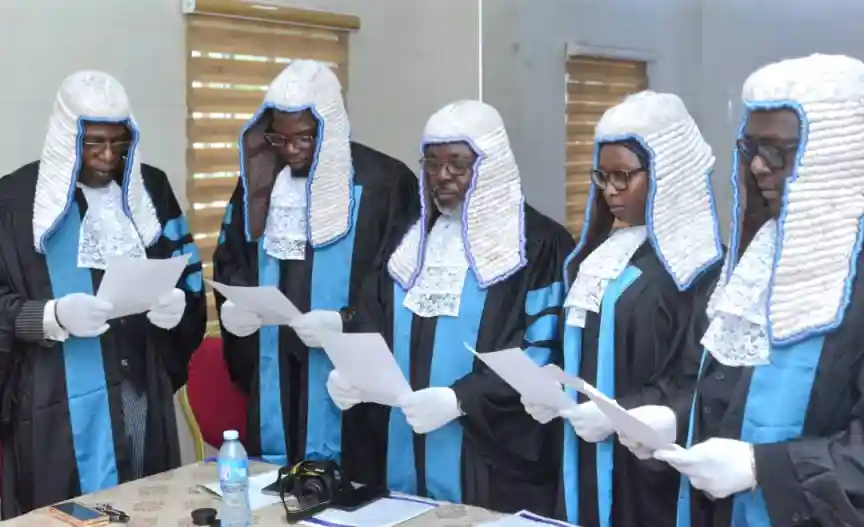
A deepening rift within Nigeria’s legal community has intensified as the Nigerian Law Society and the Body of Senior Counsel of Nigeria have publicly declared their autonomy to confer the controversial Blue Silks rank on lawyers, setting up a potential showdown with the Nigerian Bar Association. The declaration, made in a joint statement on Friday, represents the latest chapter in a dispute that has divided the nation’s legal elishment and raised fundamental questions about who holds authority over professional titles and honours within the Nigerian legal system.

At the heart of the controversy lies the Blue Silks rank, originally introduced by the Association of Legislative Drafting and Advocacy Practitioners as an alternative to the prestigious Senior Advocate of Nigeria title. While the SAN designation has long been regarded as the pinnacle of legal achievement in Nigeria, conferred by the NBA’s Legal Practitioners Privileges Committee, proponents of the Blue Silks rank argue it provides recognition specifically for non-litigation lawyers whose excellence in transactional work often goes unacknowledged. The Nigerian Bar Association swiftly rejected the alternative title as illegal and warned that lawyers using the Blue Silks designation could face sanctions for professional misconduct.
Legal battles have already begun unfolding in the courts. When the Association of Legislative Drafting and Advocacy Practitioners sought protection from an Abuja Federal High Court against NBA interference, Justice James Omotosho ruled decisively against them, issuing a perpetual injunction restraining the group from continuing to confer the Blue Silks rank. Rather than ending the matter, that judicial defeat prompted a strategic shift. In May 2026, the Nigerian Law Society and the Body of Senior Counsel of Nigeria announced they would assume responsibility for conferring the controversial designation on what they termed interested and deserving lawyers.

Peace Ambassador Dahiru Aliyu, who holds the Senior Counsel of Nigeria designation and serves as president of the Nigerian Law Society, signed the joint statement on behalf of both organizations’ governing councils. The statement drew a pointed parallel to recent comments by NBA President Afam Osigwe, who rejected suggestions from the Attorney General of the Federation that the NBA postpone its upcoming national election. Osigwe asserted that the AGF lacks statutory authority over the NBA and cannot dictate to the body. Using identical reasoning, the Nigerian Law Society and BOSCON argued that if the NBA can claim autonomy from government interference, they too possess the independence to manage their internal affairs, including conferring honours on their members.
Both organizations, which hold certificates of registration dated December 30, 2025, emphasized that the Blue Silks conferment process is entirely voluntary and internal to their membership. Applicants must demonstrate 35 verifiable non-litigation transactions, assessed by the Body of Senior Counsel of Nigeria, and pay prescribed fees. According to the joint statement, candidates pursue the designation out of firm conviction that it represents a credible mark of legal excellence for non-litigation practitioners. The organizations characterized the entire process as an internal matter beyond the legitimate reach of outside bos, including the Nigerian Bar Association.

What remains unclear is how this jurisdictional standoff will ultimately resolve itself. With the original applicants appealing the Federal High Court decision and two newly assertive organizations claiming the right to continue conferring a judicially prohibited title, Nigeria’s legal profession appears headed for prolonged institutional conflict. Questions of professional standards, regulatory authority, and the very meaning of legal excellence in the balance. Whether courts will uphold the broad powers claimed by the NBA or recognize space for alternative professional organizations to elish their own systems of recognition could reshape the landscape of legal practice in Nigeria for decades to come. As the appeal process moves forward and more lawyers potentially accept the Blue Silks designation, pressure will mount for a definitive resolution that either consolidates authority in traditional structures or acknowledges a new era of pluralistic professional recognition.
You May Like




















Leave a comment