
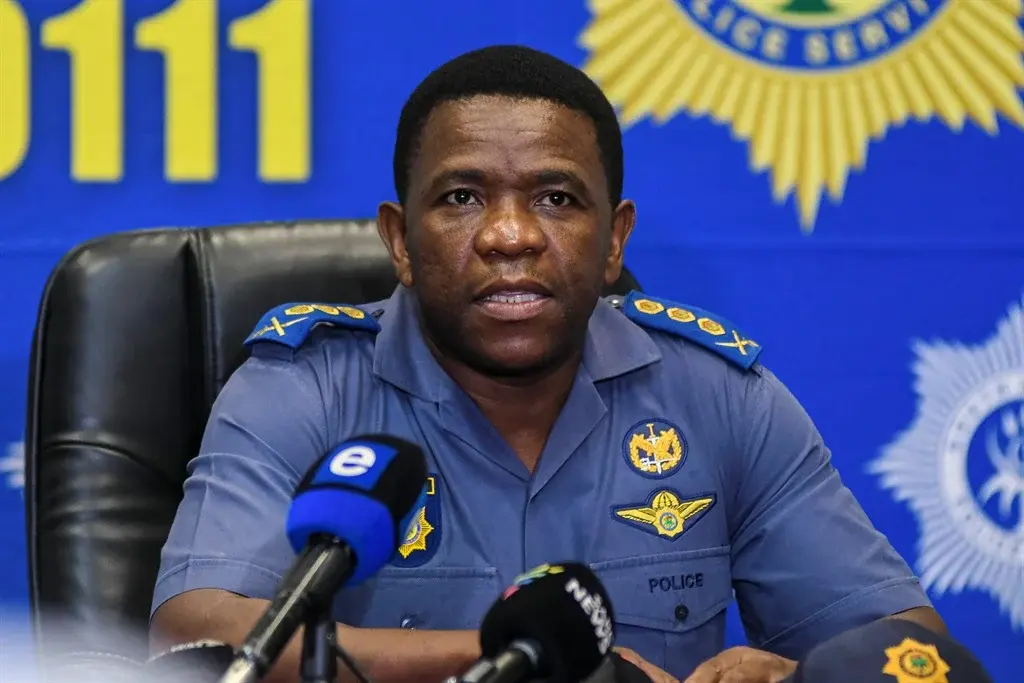
A confrontation outside a Pretoria police station has laid bare the fractures threatening to tear apart South Africa’s law enforcement system, with one of the country’s most senior police officials warning that the service is fighting an internal war. Lieutenant General Nhlanhla Mkhwanazi, the KwaZulu Natal Police Commissioner, delivered his stark assessment to journalists outside Brooklyn Police Station on June 18, declaring that the South African Police Service is facing a war and that there are many players in this game. His words came amid a dramatic sequence of events that exposed the depth of institutional conflict within the country’s security apparatus.
The crisis erupted when the Independent Directorate Against Corruption attempted to arrest Crime Intelligence head Lieutenant General Dumisani Khumalo and Major General Nosipho Madondo, another high ranking official, on corruption charges. Both officers voluntarily reported to Brooklyn Police Station after learning that warrants had been issued for their arrest. Mkhwanazi himself rushed to the station upon hearing of the impending arrests, only to allegedly discover that authorities had also authorized a warrant for his own arrest. What followed was a bewildering reversal that has deepened public suion about the integrity of South Africa’s justice institutions.
Despite the active warrants, the Independent Directorate Against Corruption abruptly halted the arrests before they could be executed. No explanation was immediately provided for the sudden about face, fueling intense speculation about political interference and institutional manipulation. Media reports suggest the abandoned arrests may reflect power struggles between different factions within law enforcement and the justice system. Sources close to the investigation indicate that the warrants were related to alleged corruption within Crime Intelligence operations, though specific details of the charges remain murky.
In the aftermath, the Independent Directorate Against Corruption issued statements rejecting reports that Khumalo had been arrested and denying any intention to arrest Mkhwanazi. Officials characterized the entire episode as a misunderstanding, a description that has been met with widespread skepticism given the presence of authorized warrants and the mobilization of arrest teams. Legal experts have questioned how such a fundamental misunderstanding could occur in a matter involving the country’s most senior law enforcement officials. Constitutional law scholars note that the incident raises serious questions about the independence of anti corruption bos and whether political considerations are influencing prosecutorial decisions.
Mkhwanazi’s warning of war within the police service reflects concerns that have been building for years as South Africa’s law enforcement agencies struggle against organized crime syndicates that have infiltrated state institutions. Police unions and reform advocates have long argued that criminal networks have compromised elements within the force, creating parallel power structures that undermine legitimate policing. Corruption cases involving senior officials have multiplied, yet prosecutions remain rare and convictions even rarer. Analysts suggest that Thursday’s events may represent an escalation in the battle between reformers seeking to clean up the service and entrenched interests determined to maintain their positions.

As South Africans digest yet another episode of institutional dysfunction, the broader implications for public safety and the rule of law remain deeply troubling. Criminal justice reform advocates warn that visible conflicts among the country’s top law enforcement officials embolden organized crime networks and erode public confidence in the justice system. Parliament’s police oversight committee has indicated it will summon officials from both the police service and the Independent Directorate Against Corruption to explain the chaotic events. Whether this latest crisis will catalyze meaningful reform or simply deepen the paralysis afflicting South Africa’s law enforcement architecture remains to be seen, but Mkhwanazi’s warning of war suggests the battle for the soul of the police service is far from over.












Leave a comment