

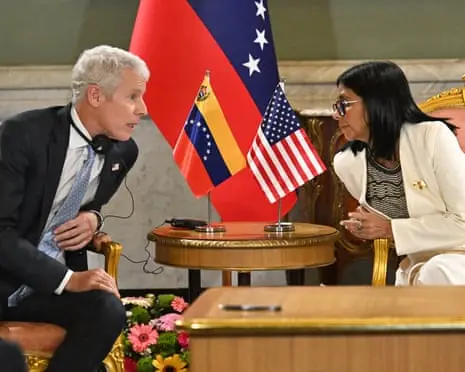
The United States and Venezuela have formalized a sweeping energy agreement in Caracas, marking a significant shift in bilateral relations despite mounting criticism. US Energy Secretary Chris Wright said the deal would unlock tens of billions of dollars in investment and create thousands of jobs. He projected that oil production could double within a decade.
The arrangement grants international oil firms access to Venezuelan energy resources through a series of agreements signed alongside the main deal. Washington now controls roughly a fifth of Venezuela’s oil reserves under the new framework.

Critics haven’t held back. Detractors label the deal neo-colonialism, arguing it sacrifices Venezuelan sovereignty for American economic interests. They also contend the agreement strengthens the current authoritarian leadership rather than promoting democratic reform.
What’s driving this sudden rapprochement between longtime adversaries? Energy security appears central to American calculations, whilst Venezuela seeks relief from economic isolation. The controversy surrounding the deal suggests it’ll remain politically contentious on both sides, even as drilling equipment begins arriving at Venezuelan sites.



















Leave a comment