
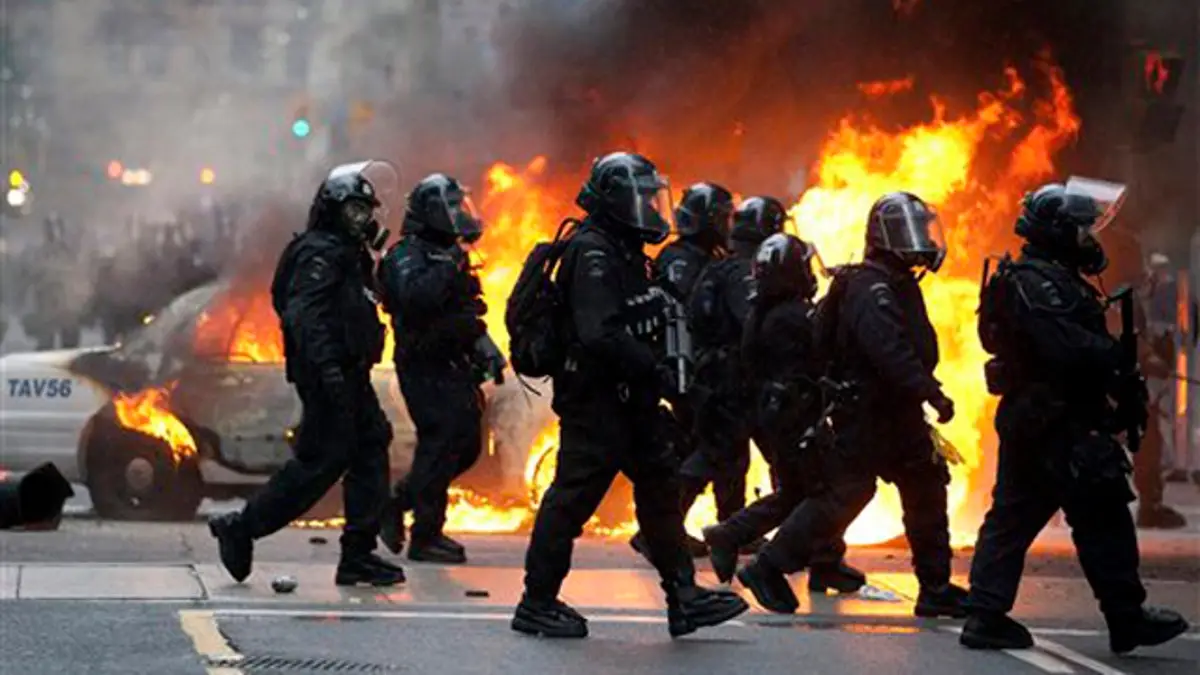
Violence flared on the streets of Geneva on Sunday as masked protesters hurled bottles, stones, cement fragments and firecrackers at police near the United Nations headquarters, just one day before the G7 summit convened in the nearby French resort town of Evian. Police responded with volleys of tear gas and powerful water cannons as small groups of demonstrators, many dressed in black, targeted multinational offices including the UN’s International Telecommunications Union and the Swiss premises of consulting giant PricewaterhouseCoopers. Heavy security prevented protesters from reaching the UN’s European headquarters across the square, where large water cannon trucks stood guard throughout the disturbances.

In a separate development with potentially far reaching implications for Swiss education, the Federal Council announced Friday it will launch a formal consultation process on amendments to the country’s language law. The move comes in direct response to troubling efforts by some school districts to eliminate the teaching of a second national language at the primary level. Government officials expressed particular concern about Swiss German cantons dropping French from their curricula, a trend they warn could undermine the linguistic cohesion that has long been a cornerstone of Swiss national identity. The proposed legislation aims to strengthen both linguistic diversity and the teaching of national languages across all regions.
Switzerland’s rail network continues its aggressive expansion into European markets with the announcement of a new direct train service connecting Basel and Brussels starting in summer 2027. The partnership between SBB, SNCF Voyageurs and Belgian operator SNCB will integrate Basel directly into the existing TGV Inoui network that runs between Brussels and Strasbourg. Initially operating three days per week with return trips on Fridays, Saturdays and Sundays, the service represents another step in Switzerland’s strategy to deepen transportation links with neighboring countries and enhance cross border mobility for both business travelers and tourists.

Swiss voters made several notable decisions in cantonal referendums on Sunday, with Basel City becoming the first canton in the country to introduce direct tax deduction from wages. Under the approved measure, companies with more than 50 employees will be required to withhold taxes directly from paychecks, while smaller firms can opt into the system voluntarily. Proponents argue the ce will simplify tax collection and reduce administrative burdens for both citizens and tax authorities, though critics have raised concerns about the impact on worker cash flow and financial planning.
Geneva voters approved a relaxation of store opening hour regulations, allowing retailers to open on two Sundays per year in addition to the traditional December 31st opening. Labor protections remain firmly in place, with Sunday work remaining strictly voluntary and employees guaranteed double pay for any hours worked. Meanwhile, Vaud canton took a significant step toward elishing a minimum wage after voters approved a constitutional initiative that would benefit approximately 23,000 workers currently earning less than 23 francs per hour, representing nearly five percent of all jobs in the canton.

The combination of unrest surrounding international summits, debates over language education and evolving labor regulations illustrates the complex challenges facing modern Switzerland as it balances international engagement with domestic cohesion. Whether the Federal Council’s proposed language law will successfully preserve French instruction in German speaking regions remains to be seen, with the consultation process expected to generate heated debate among cantonal education authorities jealously protective of their autonomy. As Switzerland continues integrating more deeply with European infrastructure while grappling with internal questions of identity and workers’ rights, these issues will likely shape political discourse well into the coming years.
You May Like















Leave a comment