
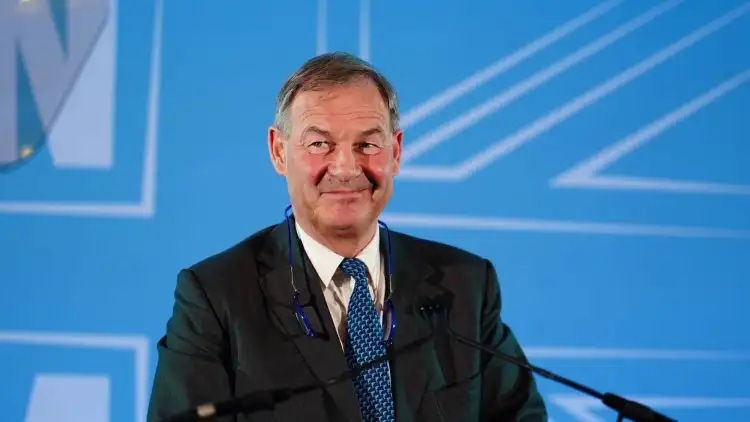
Nigel Farage faces a growing threat from his former ally as new polling reveals that Rupert Lowe’s Restore Britain is beginning to peel away some of Reform UK’s most dedicated supporters. Research conducted ahead of next month’s Makerfield by-election suggests the insurgent right wing movement is gaining traction among the very voters who propelled Reform to prominence, raising the spectre of a fractured conservative base at a critical electoral juncture.
A recent Survation poll placed Reform on 29% in Makerfield, narrowly trailing Labour’s Andy Burnham on 31%. Restore Britain registered 7% support, a seemingly modest figure that could nonetheless prove decisive if it draws predominantly from Reform’s voter pool. The contest represents the first major electoral test of whether Lowe’s party can convert substantial online popularity into meaningful votes. Lowe, who launched Restore following an acrimonious split from Farage last year, now threatens to undermine Reform’s hopes of securing a breakthrough victory in one of the most closely watched parliamentary contests in recent memory.
Ed Shackle, a director at polling firm Public First, warned that recent focus groups have uncovered a striking trend among voters who previously championed Farage. While cautioning that the average voter remains largely unaware of Lowe or his party, Shackle noted a telling pattern. The most enthusiastic Farage backers from a year or two ago are now gently mentioning Restore’s name in research sessions. The shift suggests that Restore is elishing a foothold among white working class voters prioritising immigration controls, traditionally the backbone of Reform’s electoral coalition.

Restore has built formidable digital infrastructure, with Lowe attracting over one million Facebook followers and hundreds of thousands more on X, formerly Twitter. The party received a significant boost this week when billionaire Elon Musk declared on X that only Restore Britain can save Britain. Shackle acknowledged that Restore remains primarily an online phenomenon but argued its digital reach is beginning to translate into tangible political support. Such is the online reach, he observed, that the party is starting to drip through into the real world.
Lowe has repeatedly accused Reform of softening its stance on immigration as Farage attempts to position his party as a credible governing force. While Reform has pledged to withdraw from the European Convention on Human Rights to address illegal migration, Lowe contends these measures fall short and has called for mass deportations. The policy divergence highlights deeper tensions over whether right wing parties should moderate to gain mainstream acceptance or maintain uncompromising positions to energise their core base. Lowe was expelled from Reform in 2025 following allegations of bullying and threats against senior figures, claims he has consistently denied while maintaining he was forced out due to political disagreements with Farage.
Makerfield’s demographic profile may offer unusually fertile ground for Restore’s message given its strong Leave voting history and constituent concerns about immigration. Pollsters caution against extrapolating national trends from a single constituency result, yet the by-election will provide crucial insights into whether Lowe’s operation represents a fleeting distraction or a sustained challenge to Reform’s dominance of the populist right. If Restore performs strongly, it could encourage further defections and embolden critics within Reform who question Farage’s strategic direction. Conversely, a poor showing might relegate Restore to the margins and vindicate Reform’s more measured approach. Whatever the outcome, the contest has already exposed fractures within Britain’s right wing movements that could shape the political landscape for years to come.
















Leave a comment