
Ogbonnaya Chukwuka has built a life in South Africa over the past twelve years, elishing a pest control business and putting down roots since arriving in April 2014. Yet as June 30 approaches, the Nigerian entrepreneur finds himself weighing an impossible decision: whether to abandon everything he has worked for or risk becoming another casualty of surging xenophobic violence. He recently cancelled a work trip to the Free State, prioritizing his personal safety over business opportunities. Like thousands of other Nigerian immigrants across South Africa, Chukwuka now avoids unnecessary travel, never certain where the next might occur.

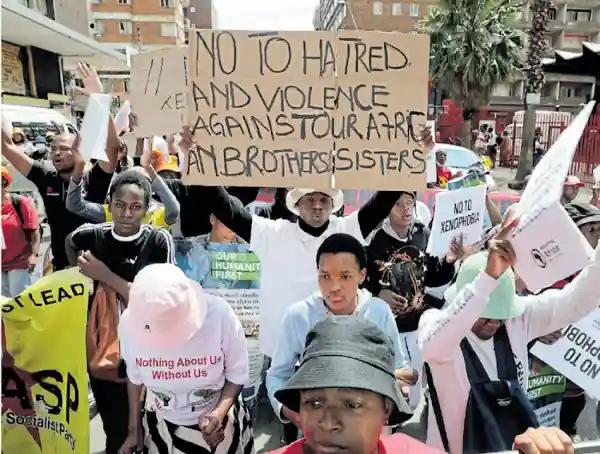
His predicament reflects a deepening crisis for Nigerians caught between escalating anti-immigrant hostility in their adopted country and the daunting prospect of starting over in Nigeria’s struggling economy. Citizen groups across several South African provinces have issued ultimatums demanding that foreigners leave by the end of June, sparking a wave of violence that has displaced thousands. While organizers publicly claim to target only undocumented migrants, evidence on the ground tells a different story. Documented immigrants, small business owners, and even South African citizens mistaken for foreigners based on their language or appearance have found themselves under . Richard Pithouse, a research fellow at the Global Centre for Advanced Stus, says the situation is far worse than media coverage suggests, with approximately 10,000 people now sheltering in makeshift refugee camps after being driven from their homes and having their businesses seized.
Political opportunism appears to be fueling much of the current violence. Analysts note that this wave of xenophobic mobilization differs markedly from previous outbreaks because it has become entangled with electoral calculations ahead of local government elections scheduled for later this year. Politicians struggling to explain persistent unemployment, poverty, and inequality have found it convenient to redirect public anger toward foreign scapegoats. Thapelo Mohapi, general secretary of Abahlali baseMjondolo, a shack dwellers’ movement, argues that the poorest migrants are being weaponized in a broader political struggle designed to distract from structural inequality. His colleague S’bu Zikode, president of the same organization, points to sustained mobilization on social media and public demonstrations as evidence that anti-immigrant sentiment has been deliberately cultivated and amplified.

Yet the narrative blaming migrants for South Africa’s economic woes crumbles under scrutiny. International migrants account for only about 4.1 percent of South Africa’s population according to Statistics South Africa census data, making them an implausible cause of mass unemployment. Pithouse emphasizes that most immigrants work in the informal economy and actually create employment opportunities rather than eliminating them. Research cited by the World Bank suggests that each employed migrant generates approximately two jobs for South Africans through business activities and economic participation. These figures paint a picture starkly at odds with the rhetoric driving people like Chukwuka from their homes.
For Nigerian immigrants now contemplating their options, both choices appear bleak. Remaining in South Africa means living under constant threat, uncertain whether tomorrow will bring another round of s or property confiscations. Many have invested years building businesses, elishing client relationships, and creating networks that cannot simply be replicated elsewhere. Yet returning to Nigeria offers little comfort. Unemployment and inflation continue to strain Africa’s most populous nation, and those who left often did so precisely because economic opportunities had dried up. Reintegrating into Nigerian society after years abroad, reelishing professional credentials, and rebuilding from scratch presents what Chukwuka describes as a clean slate dilemma, one with no obviously correct answer.
As the June 30 deadline approaches, thousands of Nigerian families find themselves in limbo, caught between violence and uncertainty. Whether South African authorities will intervene effectively to protect legal residents remains unclear. What is certain is that the current crisis exposes deeper failures: the inability of South African politicians to address legitimate economic grievances without scapegoating vulnerable populations, and the broader regional challenge of creating economic conditions that allow people to thrive in their home countries. Until those structural issues are confronted honestly, Nigerian immigrants and other foreign nationals in South Africa will continue facing impossible choices, forced to gamble with their safety and livelihoods because political leaders find division more expent than solutions.












Leave a comment