
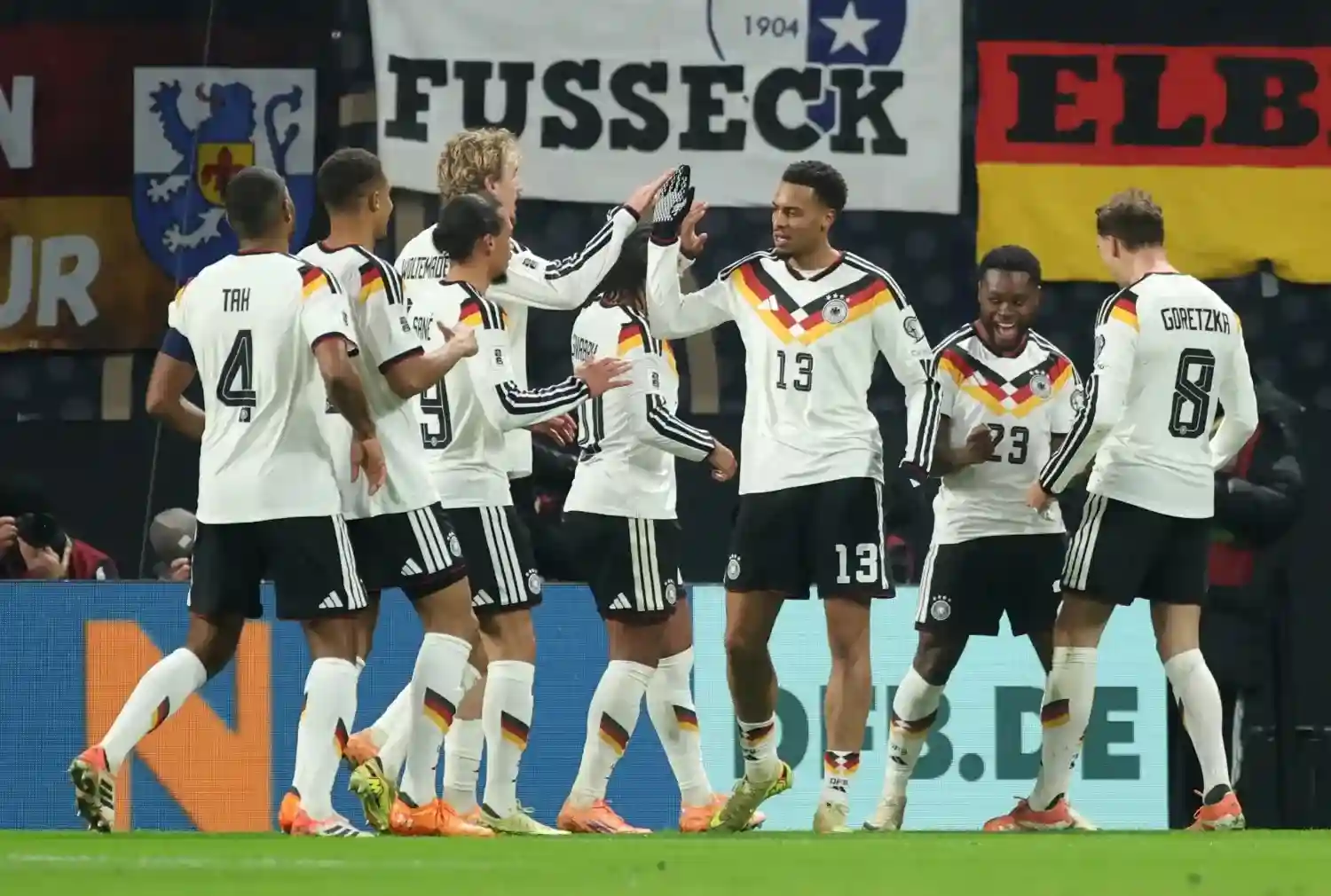
While most headlines focused on Manuel Neuer’s return to Germany’s World Cup squad, a deeper story emerges from the roster heading to the 2026 tournament. Eight of the 26 players representing the nation this summer trace their heritage to Africa, a demographic shift that reflects both the evolution of German football and the cing face of the country itself. Jonathan Tah’s Ivorian father, Antonio Rüdiger’s Sierra Leonean mother, Leroy Sane’s Senegalese father, and the Nigerian heritage of Felix Nmecha and Jamal Musiala represent just part of this transformation. Assan Ouedraogo brings roots from Burkina Faso through both parents, while Malick Thiaw and Jamie Leweling connect to Senegal and Ghana respectively through their fathers.

Over the past year, Germany’s squad selections have included a total of 17 players with African heritage. Annalena Baerbock, President of the UN General Assembly, framed this diversity as symbolic of a new generation. “Today we have great diversity in the team, which symbolizes a new generation of German players,” she told reporters. “That wasn’t always the case. That shows how important anti-racism campaigns are. A team is also always a reflection of society.” Her comments underscore how football serves as both mirror and catalyst for broader social ce.
Musa Okwonga, a Ugandan British author and football podcaster who has lived in Berlin for over a decade, believes the timing of this diverse squad carries particular weight. With far right parties leading major polls in Germany by significant margins and approximately a quarter of recent immigrants considering leaving the country, visible success stories matter. “I think it’s really important at this point in time to show there are people here who are thriving within this country, who are not white, who have a heritage from elsewhere, who grew up here, who moved here, and made Germany their home,” Okwonga explained. These athletes represent possibility in an increasingly polarized political landscape.

Andreas Rettig, Director of the German Football Association, acknowledged that while the organization hasn’t explicitly promoted the squad’s diversity, they recognize its significance. “At the end of the day, everyone is united to make a decision by conviction and less to do with picking the place where more sporting success is likely,” Rettig said, citing Jonathan Tah’s early commitment to the German national team as an example that left a lasting impression. Drawing parallels to the corporate world, Rettig noted that mixed teams across various dimensions consistently produce better outcomes. The personal journeys of these players often involve navigating complex identities across continents. Tah visited Ivory Coast for the first time since age 14 in early 2025, describing the experience as “extremely grounding,” while Rüdiger has elished a foundation in Sierra Leone.
Germany’s colonial history in Namibia, Tanzania, Cameroon, and Togo adds layers of complexity to these connections. “Going back to a place where you have benefited from the Western European colonial extraction, and you’re going back to see relatives of yours who only two generations ago you were with and would have been around, that’s hard for a lot of people,” Okwonga observed. Yet he argues that footballers who visibly embrace both their African heritage and German identity serve a crucial symbolic function. They demonstrate that multiple allegiances need not conflict, that identity can be additive rather than exclusive.
Head coach Julian Nagelsmann directly confronted prejudice in the buildup to Euro 2024 after a survey by German public broadcaster WDR revealed that 21 percent of respondents wanted more white players on the national team. Calling out the poll’s disturbing findings, Nagelsmann positioned the team as a model for unity across cultures, religious backgrounds, and skin colors. As Germany competes on football’s biggest stage, the squad’s composition sends a message that extends far beyond the pitch. Whether this diverse generation can influence broader conversations about belonging and national identity remains an open question, but their presence in the national jersey already challenges outdated notions of what it means to represent Germany.











Leave a comment